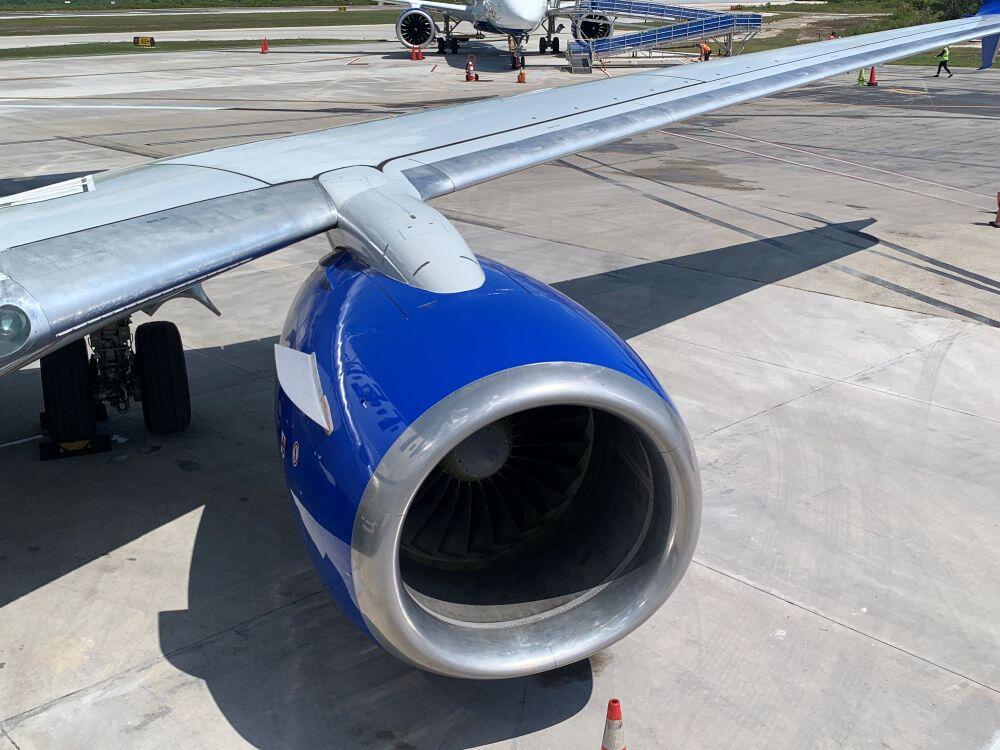
Demand for CFM56 overhauls remains strong amid historically low retirement numbers and sustained demand for the venerable narrowbodies it powers, a top GE Aerospace executive says.
“When we gave 2026 guidance last year, we said CFM56 retirements would be 3% to 4%,” GE CFO Rahul Ghai said at the recent Morgan Stanley Laguna conference. “At the beginning of the year, we took that down [to 2-3%]. Right now, what we're seeing is somewhere between 1.5% to 2%. So CFM56 retirements are really low,” the CFO said.
Alongside the low retirement figure of the engines, which power all Boeing 737 Next Generation variants and a large percentage of the Airbus A320ceo fleet, is a steady flow of overhauls.
CFM joint venture partners GE and Safran entered the year projecting about 2,300 CFM56 shop visits in 2026 and 2027. A strong start to the year prompted them to expand the range to 2,300-2,400.
“As we're sitting here today, we think that number for this year and next year is probably closer to 2,400,” Ghai said. “The engines continue to come off.”
Work scopes remain strong as well, driven in part by a high rate of life-limited parts that need replacing.
An early look at 2027 suggests more upward guidance revisions could be in the cards.
“As we fast-forward that into 2027, we expect that engine removals will be up [by] double digits, more than 10% in the [first half] of next year, which is the visibility that we have,” Ghai said. “Our long-run trend for services growth is double digits. Given the delinquency that we have, given the pent-up demand that exists from the airlines, there could be incremental growth on services for next year.”
Aviation Week's Fleet Discovery lists about 1,200 CFM56-powered aircraft as either parked or stored. About 1,000 are equipped with CFM56-5s or -7s.
Aviation Week's Tracked Aircraft Utilization database shows average monthly cycles for CFM56-powered aircraft are down slightly in recent months. July's figure was 117 cycles; a 6% decline compared with July 2025.

Related Content