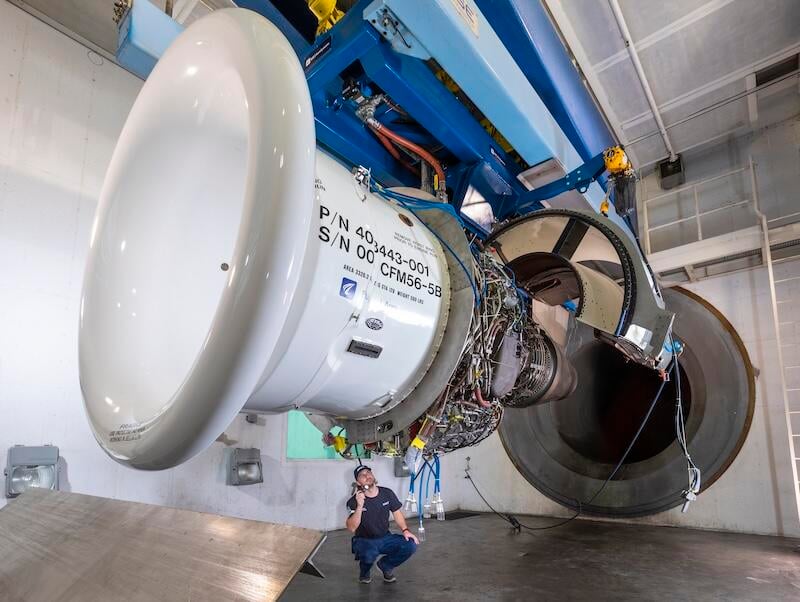
A mechanic working in the engine test cell at Lufthansa Technik’s facility in Tulsa, Oklahoma.
Lufthansa Technik (LHT) is building out its narrowbody engine maintenance capacity and capability in the U.S. with the expansion of a former business jet engine support facility in Tulsa, Oklahoma.
This furthers a North American push that saw the German company break ground on a new engine facility in Calgary, Canada, last year, both being part of LHT’s €2 billion ($2.2 billion) investment program in new and existing facilities around the world.
In Tulsa, meanwhile, LHT will increase the number of work bays at the facility from 28 to 46 to improve overhaul capacity and turnaround times for CFM56, IAE V2500 and Pratt & Whitney GTF engines. It will also continue to support Rolls-Royce Tay business jet engines.
The Aviation Week Network Commercial Fleet & MRO Forecast 2026 estimates that CFM56 and V2500 maintenance will be worth roughly $42 billion over the next 10 years, with annual demand peaking at $5.3 billion in 2029.
LHT said the expanded facility at Tulsa International Airport will support 100 extra jobs by the time it is fully operational by 2030.
The plans also include a dedicated module shop to meet growing market demand for full overhaul alternatives and lower turnaround times.
As part of its expansion, LHT has developed a dual-training program that combines hands‑on technical training with structured theoretical education. The full program takes approximately 18 months to complete, and successful participants test to earn the FAA powerplant certificate upon completion.
The Tulsa facility also includes a fully digital engine test cell.
“Our Mobile Engine Services network is a key differentiator for Lufthansa Technik, enabling rapid on-wing and in-shop solutions that help our customers maximize fleet availability,” said Harald Gloy, chief operations officer of Lufthansa Technik. “By nearly doubling our capacity in Tulsa, we are strengthening a critical part of our engine services network and enhancing our ability to support operators across the Americas.”

Related Content