Space Exploration

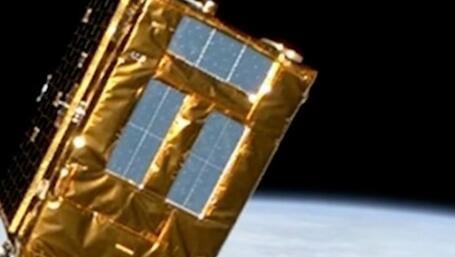
The era of modern space exploration is marked by ambitious missions that push the boundaries of human knowledge and technological capabilities. NASA's Artemis program aims to establish a sustainable human presence on the Moon, paving the way for future Mars exploration. Private companies like SpaceX are revolutionizing space travel with reusable rockets, making it more affordable and accessible. The James Webb Space Telescope is unveiling unprecedented views of the early universe, while robotic explorers like Perseverance rover on Mars and Dragonfly on Titan are expanding our understanding of the solar system. Future endeavors include asteroid mining, establishing lunar bases, and even interstellar travel as we continue to explore the vast cosmic frontier.

News & Analysis
Jul 21, 2026
Reusable rocketry might soon extend beyond the U.S., as China and Japan each approach operational capability.
Jul 18, 2026
India has joined the growing club of countries with a private orbital launch capability after startup Skyroot Aerospace successfully flew its Vikram-1 rocket.
Jul 17, 2026
As part of the upcoming Artemis III flight test, NASA plans to outfit its crewed Orion spacecraft with two mini lasers to connect with SpaceX’s Starlink network.
Jul 16, 2026
An unknown technical issue nixed the launch of SpaceX’s next-generation Starship-Super Heavy system in the final second before liftoff on July 16.
Jul 16, 2026
United Arab Emirates defense conglomerate Edge Group says it has acquired 100% of Brazilian aerospace and engineering firm Akaer, expanding its foothold in the South American country.
Jul 16, 2026
Satellite maker Swissto12 says it is looking to boost spacecraft production and integration capacity to keep pace with growing commercial and government demand.
Jul 15, 2026
AST SpaceMobile said late July 15 it is raising up to $1.15 billion gross via debt later eligible to be turned into stock or cash, in part for potential acquisitions or partnerships.
Jul 15, 2026
Voyager Technologies, a contender for a NASA-backed, privately owned space station in low Earth orbit, is adding Penn State University to its associated space research institute.