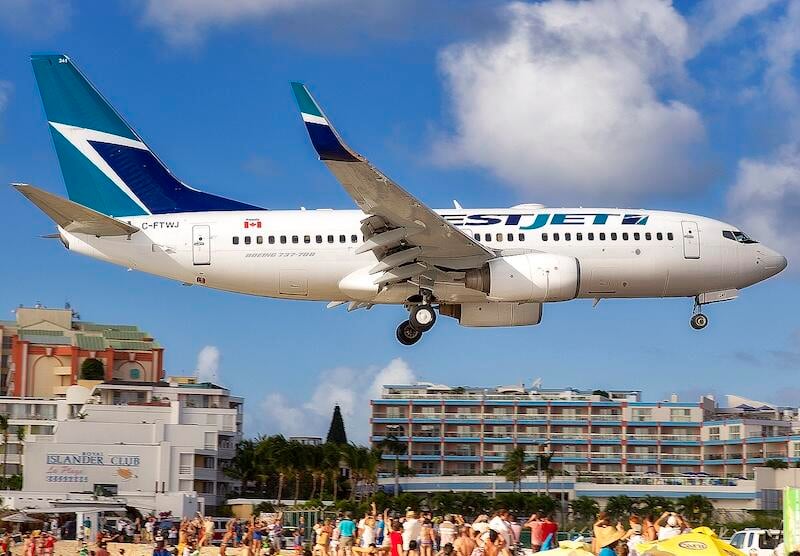
WestJet in September 2026 announced a deal with FTAI for the acquisition of 27 Boeing 737-700s, marking the beginning of the aircraft’s retirement from the carrier's fleet.
FTAI is conducting more sale/leaseback transactions as customers seek to add cash infusions to their guaranteed asset availability arrangements.
“We're seeing a lot more activity . . . on sale/leaseback because airlines are looking for liquidity,” President David Moreno said on a recent earnings call. “It's really two value-adds. It's the liquidity day one, but it's also saving cost for the airlines on the shop visits.”
FTAI is building a stable of midlife aircraft to lease out and then part out. The leased fleets are a byproduct of FTAI's broad strategy of keeping assets that use CFM International CFM56 and IAE V2500 engines active and in need of green-time engines. The company provides both engines and modules, which it acquires both directly and through purchases of entire aircraft.
FTAI groups its aircraft into investor-backed special purpose vehicles (SPV). Aircraft in the SPVs are customers of FTAI's engine-swap program. Its first SPV secured commitments for 301 aircraft, about 20% of which were sale/leasebacks, Moreno said. The rest were purchased directly from lessors.
Its second SPV has lined up 109 commitments, including 17 WestJet 737-700s, with more to come. Sale/leasebacks have accounted for 40% of the commitments so far, Moreno said. “I would expect that to continue to rise,” he added.
FTAI continues to boost its engine output activity. It produced 311 modules in the third quarter, boosting its year-to-date total to 877. “We remain on track for 1,200 [modules] in 2026 and 1,700 in 2027,” Moreno said.
Looking ahead, the company sees sustained demand for its services, even as legacy engine shop capacity frees up amid a rise in retirements and overhaul network expansion.
“Airlines are always looking for ways to raise liquidity, but especially now,” CEO Joe Adams said. “Shop-visit costs for engines are one of the biggest users [of FTAI's offerings].
“We can provide financing for a shop visit. We can change the lease structure so that we can swap engines immediately and not have cash outflows, and we can do sale leasebacks to generate immediate cash,” he said.
“The pitch to anyone in the industry is that we can deliver the same or lower cost than the airline could do on their own, and we can provide immediate availability with no downtime,” Adams added. “That removes all the costs of managing a shop visit, having spare engines, and then the risk of a negative surprise.”

Related Content