Aircraft Retirements Climb 29% In 2026, Still Below Historical Norms
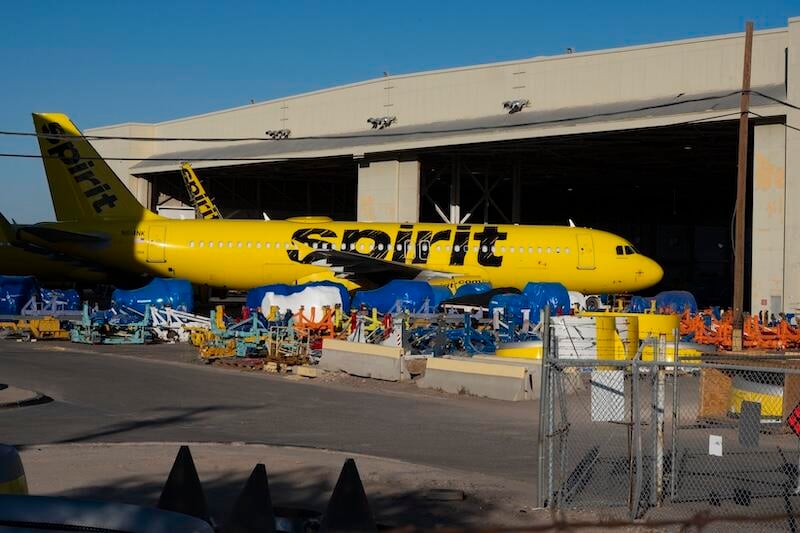
Spirit Airlines Airbus A320 parked at Phoenix Goodyear Airport in Goodyear, Arizona. The carrier ceased operations on May 2, 2026.
Retirements continue to trend upward as higher fuel prices put pressure on travel demand and operators taking new deliveries swap them in for less efficient, older aircraft.
Aviation Week Fleet Discovery cataloged 517 retirements in the first 10 months of 2026—a 29% increase over the same time period last year.
The retirement figure, which covers regional jets, narrowbodies and widebodies, represented 1.8% of the January 1 in-service fleet (ISF). Most annual retirements are recorded in the fourth quarter, with December’s figure usually topping the previous 11 months. Assuming 2026 follows this trend, annual retirements are on pace to be at or above 2% for the first time since 2023. While higher than both 2024 and 2025, the full-year percentage figure will likely remain below the 2.5-3% range seen as the consensus historical norm.
While low overall, retirement rates continue to differ within key sub-fleets. Fleet Discovery logged 234 retirements of aircraft powered by CFM International CFM56s, or 2.4% of ISF. Factoring out older variants, such as CFM56-3s, still left 217 retirements. The overall figure is a 30% increase compared with the same time period last year. The IAE V2500 fleet saw 82 retirements in the first 10 months, or 3.2% of the fleet—a 45% increase over 2025. Conversely, only seven GE Aerospace GE90-powered aircraft retired—less than 1% of the ISF.
The figures generally align with macro variables, including fuel prices and demand, as well as industry expectations. The International Air Traffic Association's (IATA) recent traffic figures show global revenue passenger kilometers rising slowly in September, but only after adjusting for cutbacks directly linked to Middle East instability. For the second time in the last four monthly reports, total available seat kilometers were down.
International and long-haul traffic remains stronger than domestic flying, the IATA figures show. This is helping drive demand for widebody flying and aftermarket support as airlines adjust to not having new aircraft—mostly yet-to-be-certified 777-9s but also some 787s, A330s and A350s—expected to be delivered by now.
GE Aerospace came into the year estimating 3.5-4% of the CFM56 fleet would retire, and has revised that estimate downward to around 2%. Aviation Week figures suggest retirements will be higher than the revised estimate, but will not reach the 4% threshold considered at the beginning of the year.
Pratt & Whitney parent RTX continues to see 2027 V2500 shop visits matching 2026’s total of around 800, even as more, older aircraft are idled.
“We see the same level of demand as we head into next year,” RTX CFO Neil Mitchill said Nov. 10 at the Baird Global Industrials Conference. “Retirements have been in line with what we’ve expected.
“There are going to be retirements,” he continued. “That’s not a surprise to us or the industry . . . I’d call it a structural decline.”

Related Content