This article is published in Air Transport World part of Aviation Week Intelligence Network (AWIN), and is complimentary through Aug 14, 2026. For information on becoming an AWIN Member to access more content like this, click here.

Airlines See Post-Pandemic Widebody Comeback

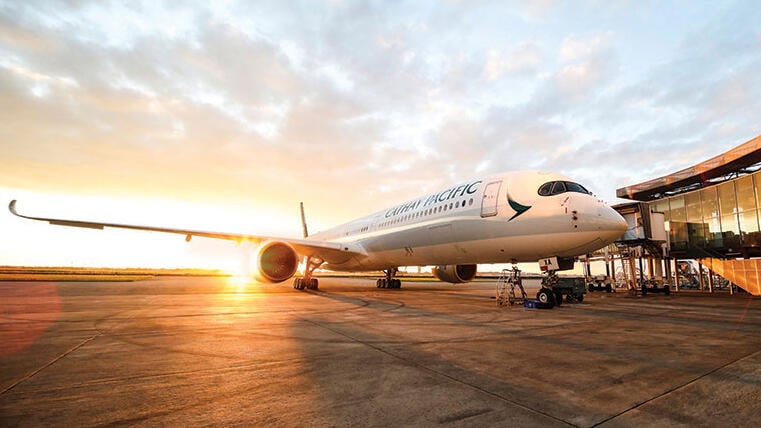
Airbus A350-1000

A Cathay Pacific Airbus A350-1000.

Credit: Cathay Pacific

Post-pandemic, narrowbodies seemed to rule the roost. However, widebodies never went away, and sales are rebounding as they continue to fill the long-haul, high-capacity sectors that the new generation of single-aisles cannot.

Recent years have seen a new class of narrowbodies spring to prominence. Airbus has found a sweet spot in the airline industry with its A321LR and XLR, which have opened long, thin routes previously traditionally served by widebodies. The combination of lower costs and fewer seats to fill to get to profitability have made this single aisle sub-set popular with many airlines and have been a significant facet of the huge backlogs of narrowbodies held by Airbus and Boeing.

However, the widebody market has seen its own resurgence since the pandemic, although it has been somewhat patchy.

Aircraft data
Note: Orders as of end April 2026. Source: Aviation Week Fleet Data

In 2021, as the pandemic ground on, sales were understandably slow, with only 54 widebody deals. The following year saw a small uptick, at 164, but it was 2023 that showed the real strength of the resurgent market, with 734 sales. 2024 saw a sharp drop back to 298, but last year saw the widebody sector reach a new post-pandemic height of 792 commitments.

This year has seen modest beginnings, with 119 orders made public through the end of April; eyes will be on the Farnborough Air Show in July to see if the biennial event produces a bump in the graph.

Despite the trend in recent years toward narrowbodies—to the point where some people were questioning if the widebody market would ever fully recover—the answer is emphatically yes.

The Airbus A350 and Boeing 787 have done particularly well with new orders and even some of the (relatively small) global fleet of Airbus A380s have emerged from long-term storage, something that few people would have predicted five years ago.

“I’m not convinced there was an issue with widebodies,” UK-based airline consultant at JLS Consulting John Strickland said. While the pandemic hastened the demise of very large widebodies, notably the 747, the 787 and A350 order flows were already big.

“It wasn’t that the airlines didn’t want widebodies, but we went through a phase where a lot of airlines retired their widebodies like the 747 and A380. Coming out of the pandemic … airlines didn’t know where demand was going to go, and it turned out to be very much stronger than expected.”

The hunger for narrowbodies, particularly the A321LR and XLR, was real, Strickland said, because of their lower fuel costs and mission capabilities. “But not all markets are small enough to handle a long-haul narrowbody; you do need widebodies.”

Airbus A350-900
A Delta Air Lines Airbus A350-900. Credit: Delta Air Lines

Strickland picked out Emirates Airline president Tim Clark as someone who never gave up on widebodies after his airline made its reputation by operating the world’s largest fleet of A380s. Clark has taken the view, Strickland said, that many airlines have adopted a “bean counter mentality, have become risk averse and not wanted to go so big.”

Although Clark was unsuccessful in his pre-pandemic campaign for Airbus to develop a stretched A380, he has urged both Airbus and Boeing to consider stretched variants of the A350 and 777X, respectively, to get closer to the capacity of the A380.

“If you look at compound growth in cities over the next 10-15 years, we’re going to run out of capacity at airports and if we’re not going to build runways or larger airports, how are you going to put more people through airports if you can’t get more runway slots?” Strickland said. “That was the argument for the A380 but, as [Clark] says, when we start to retire the A380s what are we going to do then?”

Long-range narrowbodies are increasingly being used on sectors such as Europe to Latin America or the US Midwest, that their predecessors could never have tackled. However, they have their weak points, Strickland noted. “On narrowbodies, there’s relatively little cargo capacity. Airlines want the combination of maximum passenger load and a decent contribution from cargo as well. The 777 is a great example of an aircraft with both passenger and cargo capacity.

“There has been this hypothesis that there’s been a focus on narrowbodies, but I don’t believe widebodies have gone away. It’s more [about] the cautious use of lower-capacity widebodies. Airlines like British Airways started off with the 787-8; they [now] think it’s too small and they should have gone for the -9 or -10.

“BA still has around 40 777-200s and 16 -300s, and I think with hindsight they wished they had ordered more -300s because the incremental cost of operating them would have been much less than what they would have gained on payload capacity.”

Much of the recent emphasis on longer-haul narrowbodies “is to do with exploration of new routes and making the economics work,” Aviation Week fleet data manager Simon Daly noted.

“The strategy of using [A321]LRs and XLRs allowed that. Aer Lingus has dipped its toes into expanding long-haul options.”

The capabilities of the new aircraft have enabled the Irish flag-carrier to opt for them, rather than the larger A330s, on some transatlantic routes.

The narrowbodies’ economics may turn out to be particularly important in 2026, with the number of passengers heading to the US from Europe being in general down this year, for reasons including costs of vacationing, nervousness at more stringent US entry requirements and decisions to explore other destinations. “The XLR has been a little diamond in the rough for them,” Daly said. “It allows airlines to explore thinner routes.”

The move to the longer-range narrowbodies has also been partly triggered by delays in widebody programs. “The 777X has been a disaster from the get-go,” Daly said.  “It’s just an opinion, but I think the economics of the 787 and A350 are better.”

He noted that “The vast majority [around 65%] of 777X orders are from the Middle East,” and 21% from Asia-Pacific because of their impressive passenger and cargo capacities.

Many more orders are possible, Daly added, if the 777X’s economics stack up and because of the substantial backlogs for other widebodies.

WINNING A350 AND 787

Daly noted that widebody orders saw a sharp uptick post-pandemic, with manufacturers experiencing a recovery as airlines rebuilt their long-haul networks and replaced ageing fleets.  Both Airbus and Boeing saw an upturn in orders for the A350 and 787, respectively, with those twin-engine types emerging as clear winners in the widebody recovery.

The 777X situation is particularly concerning for Boeing, he said, with the program facing repeated delays that have pushed service entry to perhaps early 2027, seven years behind the original target. While Emirates remains committed, with 205 orders, and Qatar Airways adding 30 orders in 2025, the prolonged certification process and uncertainty surrounding the aircraft’s eventual performance had caused many potential customers to defer decisions or to opt for the proven 787 or A350 instead.

Apart from the 777X, A330neo orders have also lagged, Daly noted. “The A330neo, despite its position as a cost-effective alternative, has struggled to compete against the new-generation A350 and 787, with airlines increasingly viewing it as a gap-filler rather than a strategic fleet cornerstone,” Daly said.

“The program has maintained steady but modest order activity, primarily from carriers seeking capacity between the narrowbody and widebody segments.”

Alan Dron

Based in London, Alan is Europe & Middle East correspondent at Air Transport World.

Comments

1 Comment
Emirates has a unique business model well suited for the 380. Basically funnel people from all over the world to Dubai and then connect them on different flights to their destination.

Sort of like Delta at Atlanta but on a global scale. No one else does that on the scale that Emirates does.