This article is published in Air Transport World part of Aviation Week Intelligence Network (AWIN), and is complimentary through Aug 24, 2026. For information on becoming an AWIN Member to access more content like this, click here.

EXCLUSIVE: Airbus Mid-East Chief Sees Good Prospects For Long-Range Narrowbodies
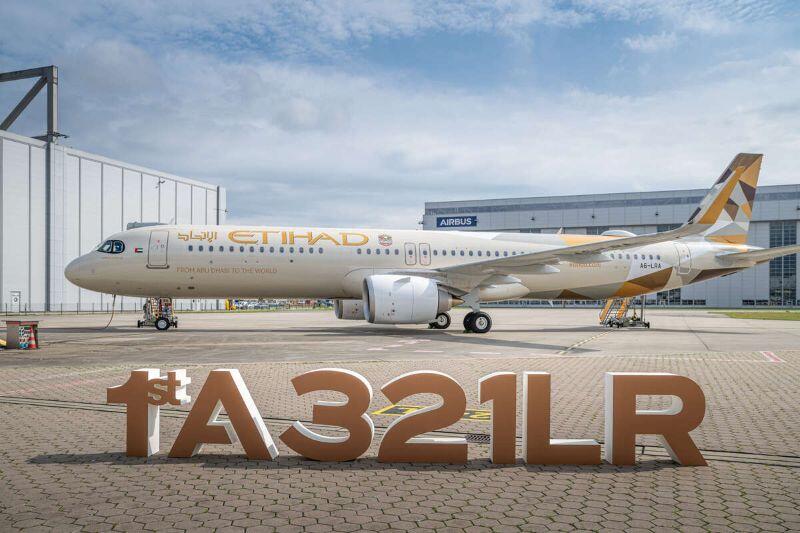
Etihad’s first Airbus A321LR.

Etihad’s first Airbus A321LR.

Credit: Airbus

FARNBOROUGH—Airbus anticipates more Gulf or Middle East airlines opting for long-range versions of its A321 as the variants become established in the region.

This year has seen the first A321XLR in the region being delivered to Saudia, while Etihad Airways has put the LR variant into service on sectors like Abu Dhabi to Phuket, Copenhagen and Zurich.

The interior layouts of each of the airlines vary considerably from those built for LCCs, which use the A321’s additional fuselage length to maximize seat capacity.

Both Etihad and Saudia have instead opted for configurations that incorporate lie-flat seats in the business-class cabins.

“Those business-class seats allow an airline to give a widebody feeling in a single-aisle,” Airbus president, Middle East and Africa, Gabriel Semelas told ATW in a one-on-one interview at the air show.

Semelas believes that further orders for the type may follow in the region. “We’re having a few discussions with customers in the region on that very similar model. It’s a tool to open up new routes and to increase frequencies with thinner volumes in terms of passengers. It’s proven a success so far,” he said.

The Middle East remains one of the fastest-growing areas of aviation globally, Semelas noted, with the ability to recover from events like the current war in Iran. Airbus has made all its scheduled deliveries to customers in the region over the last three months.

The current conflict has seen passenger numbers in the region drop by around11%, “which is not that much, considering what’s happening in the region,” Semelas said.

If the Iran conflict is settled and US sanctions are lifted, Iran is likely to be in the market for large numbers of airliners. During a brief hiatus in sanctions during the Obama administration a decade ago, Tehran placed huge orders with Airbus, Boeing and ATR, but only a few aircraft were delivered before the first Trump administration reimposed sanctions. Iran, a nation of 90 million people, therefore operates one of the world’s oldest national airliner fleets.

“It’s too soon to comment. Of course, there’s a need in that market. When export controls are lifted, it will be a market that’s very attractive for aviation,” Semelas said.

In Africa, meanwhile, a major challenge is the continuing lack of intra-continental connectivity. It is still necessary for some passengers wishing to fly from West Africa to East Africa, for example, to have to connect through external locations like Paris or Dubai. “This is something we need to change,” Semelas said.

He believes that African governments are increasingly seeing the economic benefits of encouraging aviation and its surrounding eco-system and noted that countries like Rwanda were successfully promoting their capitols as hubs for conferences, pulling in investment.

Airbus is trying to help build an aviation ecosystem within the continent, Semelas said, including investing in helping ensure training is available for pilots, technicians and others.

Major African operators like Ethiopian Airlines will continue to act as long-haul specialists, connecting Africa to the rest of the world, Semelas said, adding “but I think there’s going to be a big boost in regional connectivity. Aircraft such as the [Airbus] A220 will become a key asset in connecting those short-haul regional destinations.”

Alan Dron

Based in London, Alan is Europe & Middle East correspondent at Air Transport World.