“Strong and growing demand” for small narrowbody jets (SNJs) was behind Azorra’s purchase of fellow lessor DAE’s portfolio of Airbus A220s, according to a senior Azorra executive.
VP commercial, Andrew Zavatsky described the purchase of eight A220-300s as “opportunistic” following a larger acquisition of 49 Embraer E-jets from Dubai-based DAE.
“Following DAE’s acquisition of [regional aircraft leasing specialist] Nordic Aviation Capital, Azorra engaged with DAE to explore opportunities around the recently acquired portfolio,” Zavatsky said. “Through those discussions, we agreed to acquire 49 E-Jets on lease with 11 operators and were able to structure a mutually beneficial transaction to acquire DAE’s orderbook of eight Airbus A220-300s.”
The acquisition “reflects our long-standing commitment to the small narrowbody segment and complements our existing A220 purchase agreement. Aircraft such as the A220 offer a compelling combination of fuel efficiency, range, and right-sized capacity, enabling airlines to operate more flexible and cost-effective networks.
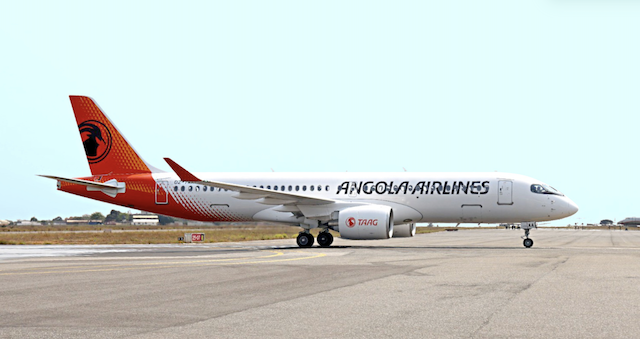
“This demand is evident in our recent leasing activity. We have placed A220 aircraft with a diverse and growing group of airline customers worldwide, with the most recent deliveries including Air Niugini, airBaltic, and Animawings. Additionally, two aircraft within the DAE portfolio are currently on lease to TAAG Angola Airlines.”
The current spike in fuel costs caused by the Gulf conflict means SNJs, such as the A220 and Embraer E2, are an appealing asset to airlines that currently “are more focused on trip cost.
“Operators are leveraging the A220’s versatility to open new routes, increase frequency, and optimize existing networks, particularly in markets where demand does not consistently support larger narrowbody capacity.”
However, while SNJs complement larger narrowbodies, “we would not characterize this as a simple trend toward downsizing from aircraft such as the A320,” Zavatsky said. “Rather, airlines are adopting a more balanced fleet approach, deploying small narrowbody aircraft alongside larger narrowbodies to better align capacity with demand on a route-by-route basis.”
Demand for the A220 is particularly noticeable in regions with strong growth potential where airlines are focused on expanding and optimizing their networks. “This is most notable in Asia-Pacific, where we are actively growing our presence. Azorra’s recent deliveries to Air Niugini, as well as other A220 operators in the region such as Qantas and Air Asia, highlight how the aircraft is well-suited to connect underserved markets and support network development across geographically diverse regions.
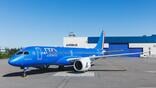
“At the same time, we continue to see growth in more established markets. In the Americas, operators such as Breeze Airways are leveraging the A220 to develop new point-to-point routes and increase operational flexibility. Meanwhile in Europe, airlines such as Air France, ITA and airBaltic are using the aircraft to enhance efficiency and frequency across their short- and medium-haul networks.”
Azorra currently has 28 A220-300s in service, with an additional 15 on order. The lessor does not operate any A220-100s, although it holds options for the smaller variant. It has 41 E2-family aircraft in service, with eight more on order.
The Florida-based lessor is actively looking at further potential opportunities to increase and evolve its portfolio, “including acquisitions of A220 and E2 aircraft from other lessors as well as direct purchases from OEMs. As the market evolves, we expect attractive opportunities to emerge across both secondary and OEM channels, and the company remains well positioned to act accordingly.”

Related Content