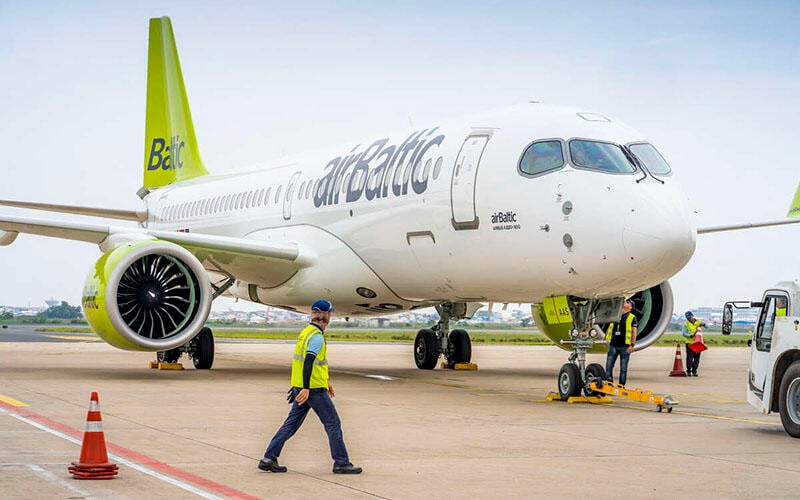
AirBaltic took delivery of its first Airbus A220-300 nearly a decade ago, when the program was still known as the Bombardier C-Series. With AirBaltic making headlines recently, this week’s Flight Friday examines the airline’s A220 utilization trends since 2023, as operations returned to a post-COVID normal.
The AirBaltic A220-300 fleet has almost doubled over the time frame to reach a fleet of 100 A220s. Correspondingly, AirBaltic’s aggregated utilization has grown accordingly, but the Latvian carrier has been impacted by the Pratt & Whitney geared turbofan (GTF) durability issue.
AirBaltic’s utilization is seasonal with the northern hemisphere schedule changes, and it is even more seasonal due to the nature of the amount of ACMI (aircraft, crew, maintenance and insurance) work that the airline undertakes on behalf of other operators, predominantly the Lufthansa group.
Summer highs in 2025 were around 13,000 monthly hours, and 7,500 cycles. This equates to around 275 hours, and 160 cycles, per aircraft, per month. Average monthly aircraft utilization in June 2026 dropped to 270 hours, but cycles went up to 164, showing a shift to shorter flights.
With the busy summer season ahead, AirBaltic will be trying to make as much cash as possible over the summer months, to help its current financial situation.
This data was put together using Aviation Week’s Tracked Aircraft Utilization database.

Related Content