This article is published in Air Transport World part of Aviation Week Intelligence Network (AWIN), and is complimentary through Aug 24, 2026. For information on becoming an AWIN Member to access more content like this, click here.

How The A220 Is Reshaping Airline Networks

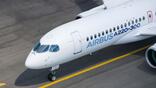
JetBlue Airways Airbus A220 close up

JetBlue Airways Airbus A220 close up.

Credit: Airbus SAS 2024

Ten years after Swiss launched the world's first commercial Airbus A220 service on July 15, 2016, the aircraft has evolved into an important network-development tool.

Then known as the Bombardier C Series, it was largely viewed as a highly efficient replacement for aging regional jets and small narrowbodies. Its appeal lay in lower fuel burn, longer range and a quieter, more comfortable cabin.

But rather than simply replacing older aircraft, the A220 has helped carriers to profitably serve markets that once fell into a gap between regional jets and larger Airbus A320-family and Boeing 737 aircraft. It has enabled airlines to launch thinner routes, add frequencies, bypass hubs and connect secondary cities that previously struggled to sustain nonstop service.

Analysis of OAG Schedules Analyser data shows that from 31 airport pairs operated by two airlines during its launch year, the A220 network had expanded to 1,383 airport pairs flown by 29 airlines by 2025. Annual departures increased from 2,426 flights to more than 530,000 last year, while scheduled capacity grew from about 305,000 seats to 72.5 million.

SWISS introduced the aircraft primarily as a replacement for its Avro RJ100 fleet, maintaining frequencies across its European network. Air France has since followed a similar strategy, replacing Airbus A318s and older A319s.

However, other carriers have used the aircraft to redraw their networks. Latvian airline airBaltic introduced the CS300 in December 2016 and subsequently retired its 737 and De Havilland Dash 8 fleets. It now has 56 A220-300s and 39 on firm order.

The A220s have enabled the carrier to support high-frequency services from Riga while expanding operations from Tallinn and Vilnius, serving everything from short intra-Baltic sectors to five-hour leisure routes. It has also enabled new base openings in Tampere, Finland, and the Canary Islands.

Elsewhere, Delta Air Lines has steadily deployed the A220 across hubs including Minneapolis-St. Paul, Detroit, Salt Lake City and New York LaGuardia to better align capacity with demand. Since introducing the type in 2019, Delta has grown its A220 network to become the world's largest operator by seats, with more than 10.9 million offered in 2025.

New York-based JetBlue Airways, meanwhile, has used the A220 not only to replace its Embraer E190 fleet but also to unlock greater network flexibility, deploying the aircraft on short Northeast sectors to transcontinental services.

For US carrier Breeze Airways, the A220 has been fundamental to the airline's business model. Unlike legacy carriers replacing existing fleets, the LCC built its network around the aircraft's ability to profitably connect underserved city pairs.

Since taking delivery of its first A220 in late 2021, Breeze has expanded to become the fourth-largest A220 operator by seats, offering almost 7.8 million seats across more than 260 airport pairs in 2025. As of July 2026, the carrier serves 283 nonstop routes using A220s and faces direct competition on just three of those sectors.

The timing of the A220's 10th anniversary coincides with a broader shift in airline network planning. In its latest Global Market Forecast, Airbus argues the next phase of aviation growth will increasingly come from direct links between secondary cities rather than simply adding capacity at global mega hubs.

The company says that more than half of the world's city pairs operating today did not exist two decades ago, and 78% of those new routes connect smaller cities. It also projects that the number of medium and small cities with populations above 250,000 will grow much faster than the number of megacities, reinforcing demand for point-to-point services using narrowbody aircraft.

Airbus says the A220 has already enabled more than 400 new routes across North America, Europe and Africa and identifies more than 2,200 additional unserved city pairs that could potentially support A220 operations. 

As the industry heads to the Farnborough International Airshow, attention will inevitably turn to whether Airbus can build on the 40 firm A220 orders and 44 options secured at Paris last year—and whether it offers any fresh clues on a larger A220-500.

David Casey

David Casey is Editor in Chief of Routes, the global route development community's trusted source for news and information.