This article is published in Aviation Week & Space Technology and is free to read until May 23, 2026. If you want to read more articles from this publication, please click the link to subscribe.

Boeing Global Services CEO On Efficiency Projects

 Boeing Global Services

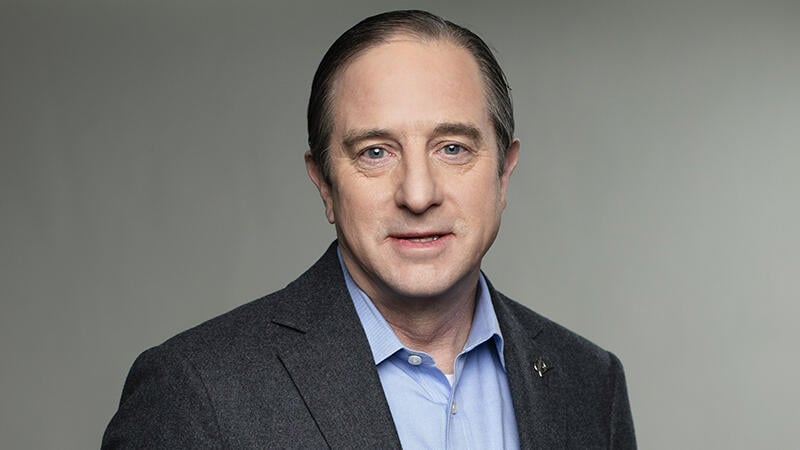
Boeing Global Services CEO Chris Raymond.

Credit: Boeing

Chris Raymond became CEO of Boeing Global Services Jan. 1, 2024. The unit handles parts and distribution, engineering and modifications, fleet sustainment, digital capabilities and training. Prior to that, he was Boeing’s first chief sustainability officer and served in other executive roles there. He spoke with Lee Ann Shay about the business’ evolution and current project focus.

During the fourth-quarter earnings call, Boeing CEO Kelly Ortberg said, “We made significant progress on our recovery in 2025 and have set the foundation to keep our momentum going in the year ahead.” So what does the next year look like? 

Since Kelly got here, we’ve been focused on really three things. One would just be the operational stability of our company, the financial stability of our company. The second one was we worked on the culture, and that’s sort of a never-ending journey, but we’ve been very focused on that the last 18-24 months. And then the third thing would just be restoring trust with each of our different stakeholders.

We see about 42,000 airplanes over the next 20 years. It’s about 50-50 growth and replacement. I know Inside MRO has covered this a lot, but the retirements have slowed a bit over the last few years. Right now, about 20-25% of our deliveries are going to what we would call replacement. Historically, that’s been more like 50%. So the fleet age will continue to creep up, and I think that will mean for services, it will remain a pretty robust environment for the foreseeable future. We forecast it to be about 3.8% growth over the next 20 years, which would equate to about $4.7 trillion. And we think that’ll be an industry that needs about 2.4 million qualified people.

How are you leading the business into the future, but also changing the culture? 

It’s not just Boeing Global Services (BGS); it’s Boeing period that’s been working on culture. It started with a refresh of our values and our behaviors. We put together a diverse team of employees from across the globe and asked them to come up with what they thought the values and behaviors should be. They then presented to our executive committee. It was intended to not be “corporate speak,” so people have really resonated with the refresh of the values and specifically the behaviors under each of those values. Then we spent a lot of time surveying the workforce. We took a baseline survey early last year, then did another snapshot at the end of 2025, and we’ll do another one in the third quarter of this year. But some of that is just to start seeing and feeling—is it working? Are people seeing a different company? A big part of that is focused not just on what somebody gets done, but also how people get that work done. Are they working in alignment with the values and behaviors? And so now we have put that into our performance and development system to make sure that we’re evaluating people not only on what they get done, but how they do it. And that will color a lot of our development programs for new managers and even senior leaders and vice presidents.

How are you measuring values and performance? 

At the executive council level, we brought back balanced scorecards that cover things such as customer value and performance, workforce development and stakeholder value, which is where your financial metrics and some longer-term metrics related to strategy reside. That doesn’t go all the way down through the organization. We still count on managers to work with their people and load specific goals for individuals, aligned to the company’s goals. Then we put those on a schedule. We’re making sure people establish goals early in the year, and [we] make sure midway through the year people sit down and have a candid discussion about what’s going well, what isn’t going well, what do you need help on? And then be a lot more candid at the end of the year, too, about how things went and be candid on both what you got done and also how you were working and collaborating with other people inside the company and outside the company.

Congratulations on BGS’ performance—revenues of $20.9 billion in 2025, which is an increase of 5% year over year, in 2025. 

I use this term “codependency” for our services business. We have the benefit of sitting beside two OEMs called Boeing Commercial Airplanes and Boeing Defense. If we’re doing our job right, hopefully we’re supporting them well, and when they have opportunities to sell airplanes, we’re doing our job right in between. And when they sell airplanes, it’s obviously good for our services business. So it’s really a one Boeing sport.

When Boeing was designing concepts for the new midsize airplane, manufacturing, engineering and maintenance seemed to be more integrated from a design standpoint. Given connectivity’s increasing importance, how will future designs change from a maintenance standpoint? 

Airplanes today generate so much data, so the ability to use that data for predictive things has gotten better. I’m really excited about the conditional-based maintenance changes that I think we’re going to see over the next couple years in our industry, partly enabled by predictive tools and connectivity. I think we will be much smarter about how to think about the whole life cycle of the product when we launch a new airplane. We’re already working on long-range studies with commercial airplanes and with our defense colleagues on new programs, making sure we’re putting that life cycle/aftermarket thinking and customer feedback into that from the very beginning, versus waiting to design an airplane and then thinking about all that.

Are condition-based monitoring and predictive tools encouraging more collaborative, interdisciplinary thinking?

I definitely think that’s true inside and outside of our company, and I think it’s only going to get more true that these technical information-sharing agreements or technical exchange agreements between ourselves and customers and suppliers is only going to get more intense. We’ve got about 10 airline customers that we’re collaborating with on our Parts Planning Hub—a digital exchange. It’s a way to enable them to share data on inventory and demand forecasting with us, so we can better plan for and stock that inventory.

If I think about commercial training, pilot training, we’re already in data analytics sharing agreements with almost 50 airlines. So the airlines are sharing anonymized training data, which then lets us focus and give recommendations because we can see across a number of airlines. So we can give feedback to that airline on, ‘Hey, how are you doing on these parameters?’ versus other airlines in an anonymized way. Then that helps tailor the training areas that maybe we want to put more or less focus on. So I think across our whole business, digital data sharing is going to get more prevalent and sophisticated, and we just have to stay up on that.

How does this fit in with Boeing’s planned digital journey? 

We’ve thought about our digital journey in three main buckets. The first one is the foundational systems. Companies have to modernize and replace big systems like [enterprise resource planning]. They don’t happen every day, and they take a while. The second thing we focused on is customer offerings and customer experience, which include tools such as aircraft health monitoring or onboard performance tools. Those need to get more sophisticated, because the airplanes are going to be capable of sharing more data with us, but we have to turn that into predictive, usable insights. And the customer experience is really about making sure that all the places where customers interact with us and interface with us digitally are better and better. The third bucket is workplace and operations, which includes digital tools you can use now that can integrate across legacy databases and produce insights. Some people call them analytics. Some people call it artificial intelligence. We’re focused on supply chain and operations. We’ve got these amazing digital tools you can combine with the Lean work to improve quality, reduce flow time, match customer clock speed, reduce costs.

What are examples of supply chain and operations projects? 

We’re doing drone-based inspections at one of our government MROs. The exciting part is the algorithm—the automated damage and detection system. If we can keep making that algorithm better, we don’t have to put people in harm’s way high above an aircraft. Over time, airplane after airplane, the software’s predictive capability is going to get better and better for things like lightning damage and early signs of corrosion. That is going to reduce flow time and improve operational safety. On the supply chain side, it’s things like low-dollar transactional proposals. We process thousands of those for our government customers. There’s no reason why, for the low-dollar ones, we can’t take a bunch of flow time out of that by using the analytics and bots to produce the purchase order from the purchase requisition information that might reside in multiple databases. We’re very focused on that one so we can turn around customer orders faster.

Cabin modifications, freighter conversions, cabin refresh and connectivity are hot topics lately. How’s that part of your business? 

We really saw strong demand for that. What we have to really focus on for customers is reducing the lead times. Some of that gets into the certification timelines and the new certification rules around things like aircraft seats or interiors, or just the certification timelines that we’ve seen.

Back to the fleets being kept longer, that has generated a big mods business for interiors. Things like seat refreshes, stow bins, new Space Bins for the airplanes and connectivity.

To your point on the connectivity side, we put a lot of investment into something we called AeroShroud, which is a structural housing for the airplane. It should let these new antenna systems for low-Earth-orbit satellites and connectivity more easily come and be modified into the airplane and upgraded over time.

Airline costs have been increasing. What is BGS doing to decrease their maintenance costs? 

We have to reduce lead times. As an example, we’re focused on our modifications business right now, to reduce the lead times in the contracting and proposing process, and then focus on reducing the lead times in the execution, which includes certification. As the fleet has grown, we’re finding we need to have customer support people in different places and time zones. But we’re really focused on lead time and flow time. And then, how do we get better at having more certification capacity? If we’re going to do more mods and ramp up production of new airplanes, at the same time drones and autonomous vehicles and everything else are crowding the agenda of our regulators, we have to work on certification capacity.

Are you talking FAA certification? 

FAA, the European Union Aviation Safety Agency (EASA) and the different regulatory bodies. We created an EASA [supplemental type certificate] capability for some interior capabilities. We have to work on those kinds of things so that we have different pathways for the aftermarket business to try to reduce lead times.

Boeing closed the acquisition of Spirit AeroSystems in December, and that purchase was designed largely to help production stability and quality, but it also includes MRO. How’s the integration going? 

There are three main areas where that touches BGS. One, Spirit had a big aftermarket business. In fact, they were a fabrication and a supplier to some of our spare parts business, so that will be relatively straightforward to get integrated into our transactional spares business. They also had MRO capacity in the U.S., so that will come to our business as well, and we’ll figure out how to best integrate that MRO capacity into our services business.

And then the third piece was the Belfast operations of Spirit, which is now called Short Brothers, a Boeing company in Belfast, and that also connects to our services business. So we’re working with them on operational stability and what their path to the future is, and that will take the better part of the year to work on the integration of those three things.

Lee Ann Shay

As executive editor of MRO and business aviation, Lee Ann Shay directs Aviation Week's coverage of maintenance, repair and overhaul (MRO), including Inside MRO, and business aviation, including BCA.