This article is published in Aviation Week & Space Technology and is free to read until Dec 17, 2026. If you want to read more articles from this publication, please click the link to subscribe.
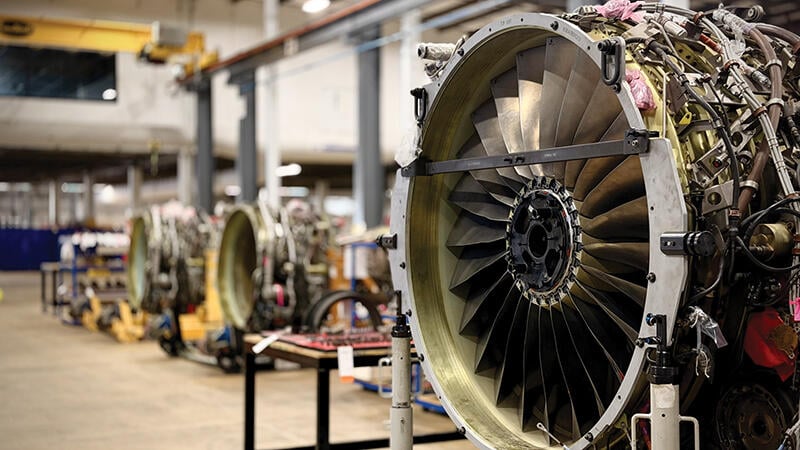
Pricing has soared for engine material and sought-after rotable components as demand exceeds supply.
A sharp slowdown in aircraft retirements is increasing scarcity in popular used serviceable material as parts providers compete to source aircraft for teardown. The resulting scramble for parts is reshaping how the aftermarket sources, verifies and prices material.
According to Aviation Week’s 2026 Commercial Fleet & MRO Forecast, aircraft retirements fell to 3,400 in 2021-26 from more than 4,600 in 2015-20. Aircraft deliveries plummeted at the start of the COVID-19 pandemic and are not forecast to surpass their 2018 peak until 2027. As a result, airlines have kept older aircraft operating longer, inflating demand for maintenance and parts while restricting supply.
Add the increasing adoption of used serviceable material (USM) by airlines and the eye-watering cost and strained supply of new parts alongside healthy passenger traffic, and it is clear why USM prices have risen.

“Over the past year, we have seen prices in the USM market keep increasing over a broad range of products, with no sign of slowing down,” says Morten Espenhein, chief operating officer of aviation components specialist Corax.
In some cases, values have moved sufficiently to spur part-out professionals to consider aircraft historically regarded as too young for teardown, says Abdol Moabery, CEO of Florida-based GA Telesis.
“For the most sought-after material, particularly engine material and high-demand rotable components, pricing has increased significantly because demand continues to exceed available supply,” he says. “Operators are keeping aircraft and engines in service longer, OEM lead times remain extended, and shop visit demand remains very strong.”
Moabery cautions that the USM market is not “uniformly inflationary,” meaning that feedstock selection for part-outs remains important. “There is still plenty of material in the market that is not scarce and has not experienced the same appreciation,” he says. “USM is becoming increasingly bifurcated between highly liquid, scarce material and everything else.”
High-pressure turbine and high-pressure compressor blades, nozzle guide vanes and line-replaceable units are among the most in-demand items, according to Darren Naughton, vice president of engines at USM supplier APOC Aviation.
“Used serviceable material pricing has stayed firm across most narrowbody and widebody engine types,” he says. “Material continues to be the constraining factor on shop visit turnaround times (TAT) and remains in high demand due to the fact that OEM list prices escalate, on average, by 5-6% a year. We expect much of the same into 2027.”
SOURCING PARTS
GA Telesis says it is dismantling a record number of aircraft and engines despite the slow pace of retirements because strong demand is forcing younger assets into part-out territory in some cases.
“Historically, companies tended to think about teardown primarily as an end-of-life activity,” Moabery notes. “Today, scarcity has made the sum of the parts worth more than the aircraft at a much earlier point in its economic life cycle.”
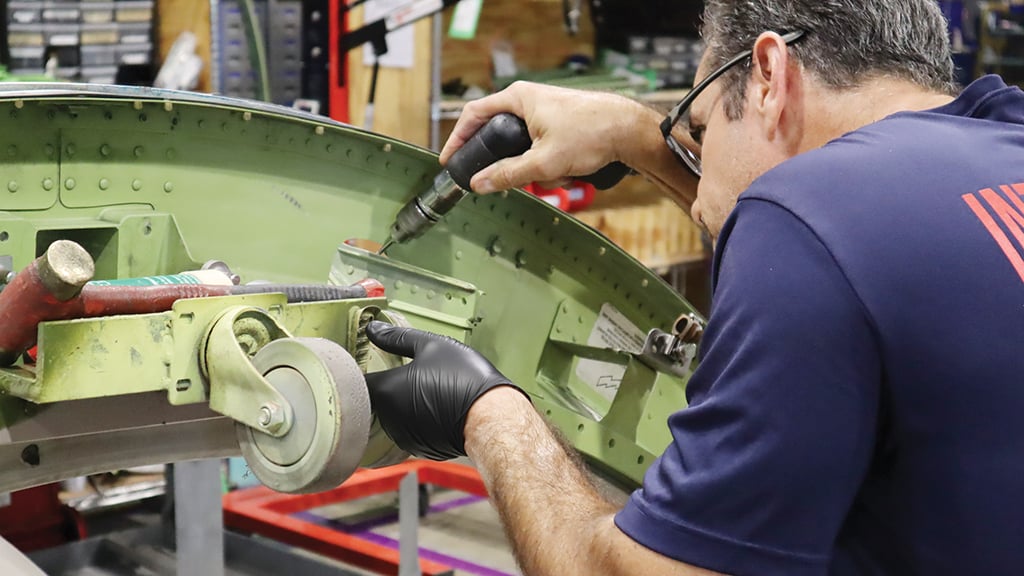
Another big parts trader, AJW Group, also reports an active acquisition pipeline that is skewing younger as the value proposition changes. “We continue to look at whole aircraft for purchase, teardown and part-out, and our focus has increasingly included modern-generation assets,” AJW Chief Commercial Officer Scott Symington says. “The [teardown] decision is increasingly about the value of the asset rather than simply its age.” High-value components such as engines, landing gear, auxiliary power units and avionics are priority targets for reuse, he adds.
That is also the case for material supporting large installed fleets, where supply remains constrained, Moabery says. Examples include USM for the Airbus A320ceo and Boeing 737NG platforms and selected material for the Boeing 777.
“We have also started to position ourselves for the next generation of USM, including A320neo and 737 MAX 8 material from part-outs in 2026,” Moabery adds. In October, GA Telesis announced its first 737-8 disassembly.
On the engine side, APOC is planning to increase investment in popular narrow- and widebody turbofans during the next year, adding to a stock of material dominated by the CFM International CFM56, IAE V2500 and GE Aerospace CF6-80 and CF34-10 types. “We’re also exploring GE90 and CFM Leap engine types,” Naughton adds.
For a small number of high-value engine parts, airlines now also have the option of parts manufacturer approval (PMA) alternatives, notably on the CFM56 with material developed by Chromalloy. Naughton does not expect this to pose an immediate competitive threat to USM suppliers such as APOC, largely due to many lessors’ aversion to PMA use in their assets, but he says this could change.
“The reality is that hot-section parts are now so expensive that one has to entertain the case study for PMA and in turn measure that against the impact on asset and residual value,” Naughton says.
Moabery, meanwhile, views PMA parts as complementary to USM, providing a different solution to a similar problem: the restricted, expensive supply of new spare parts. He adds that despite growing competitive overlap with high-value used parts, PMA parts will not affect USM pricing until adoption catches up with new and used OEM parts.
“Airlines increasingly want OEM new, USM, [designated engineering representative] repairs, PMA and other approved alternatives available to them rather than being dependent upon a single source,” Moabery says. “I believe the aftermarket companies that ultimately win will be the ones capable of providing that entire spectrum of solutions rather than defending one category of material.”
STIFF COMPETITION
Unsurprisingly, rising demand for USM has attracted more capital to the market—private equity, institutional investors and lessors are all seeking involvement. This has intensified competition for part-out opportunities and buoyed acquisition values.
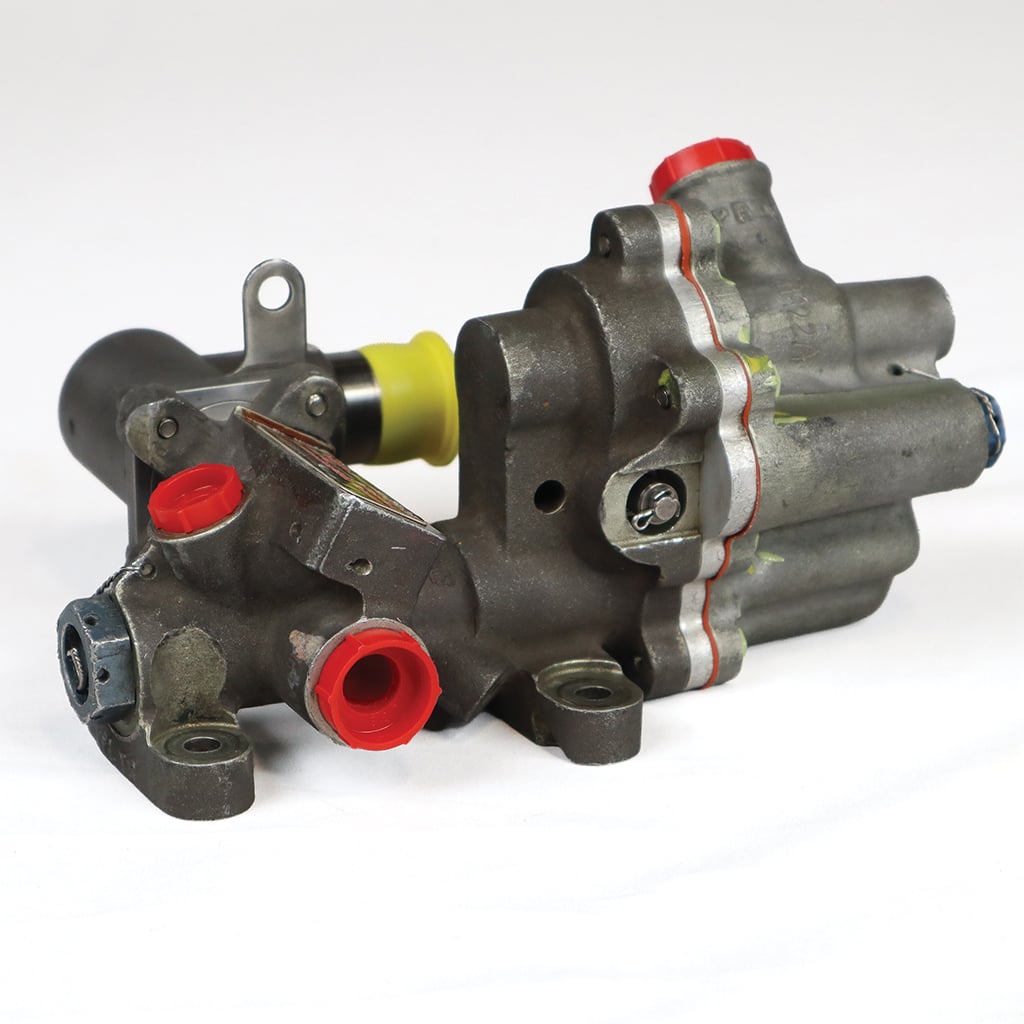
“Competition for quality feedstock is intense, and capital has become much more plentiful since the pandemic,” Moabery says. But he warns that inexperienced investors in the parts market risk paying too much.
“Newer entrants tend to bid on modeled returns rather than on what a teardown actually yields,” APOC’s Naughton adds. “The gap between the two can be unforgiving.”
Both traders emphasize the importance of experience and established customer networks in maximizing teardown value. This means optimizing inventory TATs and repair costs, understanding certification and obsolescence issues, and avoiding excessive customer concentration.
Aircraft and engine lessors, although new investors in the parts market, should have a good understanding of these issues because they must consider similar variables for their residual value calculations. Many lessors either have or are launching parts businesses as they seek to integrate vertically across the aircraft life cycle and maximize the value of older assets.
“Lessors have notably increased their activity in acquiring engines for teardown, tearing down in-house or at least developing partnerships with end-of-life specialists,” Naughton says. “As an asset gets older, the residual value weighting sits in the sum of its parts.”
GA Telesis is active in leasing and parts trading, and Moabery concludes that lessors will remain important participants. “But I also expect partnerships between asset owners and established aftermarket companies to make more economic sense than every lessor attempting to recreate a global USM platform.”
AJW’s Symington says lessors are an “excellent” addition to the parts market. “[It] brings fresh capital into the sector and is driving greater integration between aircraft ownership, parts and MRO,” he says.
REBUILDING TRUST
While rising values have attracted more institutional and private equity capital to the parts market, they have also motivated a small number of bad actors. This came to light in the AOG Technics scandal, which culminated in the February jailing of its founder, the former techno DJ Jose Alejandro Zamora Yrala, for fraudulently supplying more than 60,000 uncertified parts to the aviation aftermarket.
“The AOG Technics scandal exposed a fundamental weakness in the aviation aftermarket: Our industry still relies heavily on documents to establish the identity, provenance and airworthiness history of components, and documents can be altered, fabricated or separated from the assets they are supposed to represent,” Moabery says.
In the scandal’s wake, airlines and MRO providers have been more vigilant about the provenance and traceability of used parts.
“Full back-to-birth documentation, supplier audits and proper due diligence on new counterparties are now standard expectations,” Naughton says.
He adds that this benefits established parts companies such as APOC, which already met those standards before the scandal. Danish parts company Corax notes that traceability concerns had been growing even before the scandal.
“Airlines and MROs are selecting much more carefully which part providers and suppliers to use, even on a single-component basis [and], ultimately, which approved repair shops they accept a component tagged by,” Corax’s Espenhein says.
However, extra scrutiny can only go so far, says Moabery, who contends that a document-based system—whether paper or digitized—can never fully allay concerns about traceability.
“The objective is not simply to digitize a piece of paper,” he says. “A fraudulent document converted into a PDF is still a fraudulent document. The objective is to create a trusted chain of provenance where records are established and validated as events occur and become part of the permanent history of the asset.
“Aviation should reach a point where a buyer, airline, MRO, lessor or regulator can immediately verify the provenance of a component and the authenticity of its life-cycle records,” Moabery concludes.
To meet this goal, GA Telesis has created the Worldwide Integrated Lifecycle Blockchain Unified Registry (Wilbur), a blockchain-based system designed to create an immutable digital record that follows an asset throughout its life, providing transparency and immediacy around its identity, ownership, maintenance history and supporting documentation. The system recently entered beta testing with industry participants.
ARTIFICIAL INTELLIGENCE
Another technology that could have a major impact on parts trading is artificial intelligence (AI). Given the vast amounts of data generated in the parts aftermarket, including historical trading, repair events, market movements and customer behavior, AI has considerable potential to provide meaningful analysis that optimizes investment decisions, inventory placement and parts pricing.
“Automated inventory tracking and forecasting can help reduce errors and delays, while our own inventory management system, Apollo, uses probabilistic modeling to help balance service levels with capital investment,” AJW’s Symington notes. “I expect that predictive capability to become increasingly important, helping businesses identify demand and position material before it is required.”
Naughton agrees, although he cautions that human judgment remains vital to assessing a part’s condition and traceability. “The differentiator over the next few years will be the quality of in-house data rather than the model sitting on top of it,” he says. “Nevertheless, its functionality can offer significant improvements to TATs on certain tasks—we are already seeing that throughout the business, not just trading.”
Moabery has observed numerous “paper tigers” in the AI space, whose claims do not match up to the reality of their products. “A chatbot attached to an [enterprise resource planning] system is not an AI strategy,” he says. “The competitive advantage will belong to companies that have proprietary data, understand that data, have the infrastructure and people to use it and can demonstrate that AI is actually changing decisions and financial outcomes.”
GA Telesis began investing seriously in AI in 2022 and today incorporates a specialized arm to assess how to use data, analytics and AI capabilities to improve how it prices, buys, repairs and positions inventory.
“I think AI will ultimately have a profound impact on parts trading, but we should be intellectually honest about where the industry is today,” Moabery says.
TEARDOWN UPTURN?
Despite elevated fuel prices due to the Iran war—with airlines passing costs on through fare increases—global passenger demand has held up relatively well this year. As a result, demand for new- and current-generation aircraft and associated maintenance remains strong, retirements are still low, and USM prices are buoyed.
But how quickly could this change? The Middle East is still volatile, and oil prices could spike again. Some airlines say they are near the limit of fare increases. If oil prices stoke global inflation, exacerbating cost-of-living pressures, passenger demand could soften. Airlines might then cut older aircraft from their fleets to optimize capacity and fuel efficiency, leading to more teardowns and falling values of current-generation equipment.
At GA Telesis, Moabery does not expect a rapid exit of midlife and older aircraft from the fleet. “We have been predicting a major retirement wave for several years, and it keeps getting pushed to the right,” he says. “Airlines cannot retire an aircraft simply because a newer aircraft is more fuel-efficient if they cannot reliably replace the capacity and assess the cost of that new aircraft versus one that is materially less cost in terms in terms of ownership.”
Supporting this argument is how fuel savings of new narrowbody aircraft are sometimes counteracted by the extra maintenance burden of their less reliable engines, although both the CFM International Leap and Pratt & Whitney geared turbofan are starting upgrade programs that promise significant time-on-wing improvements.
Even so, Moabery expects parts providers to benefit if more older aircraft and engines exit the fleet.
“If there is a sudden wave of aircraft moving to retirement, the ultimate beneficiary will be the USM providers and the airlines because of the component availability this will create,” he says. “This will be a real gold boom if it happens, and perhaps the only one that might not have an obvious role in the boom will be the OEMs.”
APOC Aviation also expects a gradual shift to newer equipment. Naughton highlights the impact of strained engine maintenance capacity, which restricts the appeal of less durable new engines. “Because of this, operators keep flying older aircraft,” he says. “The big shift will come when shop TATs normalize, not simply from fuel price savings of new engines alone.”
Another limiting factor on the speed of any transition is the accumulated effect of years of new aircraft delivery delays. At the same time, new markets are opening up to USM, notably China.
“Historically, acceptance of USM in China has lagged North America and Europe,” Moabery says. “That is changing as operators become increasingly focused on cost, availability and aircraft utilization. At the same time, the ecosystem required to support USM—including disassembly, certification, documentation, repair and distribution—is becoming more sophisticated.”
Naughton adds: “Recent news that the Civil Aviation Administration of China has now recognized [Aircraft Fleet Recycling Association] Disassembly Accreditation should provide a regulatory pathway for overseas disassembly organizations seeking to supply USM into the Chinese aviation market”.
Chinese regulations still constrict its USM market, meaning “adoption will probably be evolutionary rather than instantaneous,” Moaberry says.
“I do see considerable long-term potential because the math is difficult to ignore,” he adds. “China has an enormous installed fleet, those aircraft are aging, and operators face many of the same supply chain and maintenance cost pressures as airlines elsewhere.”

Related Content