This article is published in Aviation Week & Space Technology and is free to read until Dec 16, 2026. If you want to read more articles from this publication, please click the link to subscribe.
Supply Chain Pressures Strengthen PMA Adoption Across Global Markets
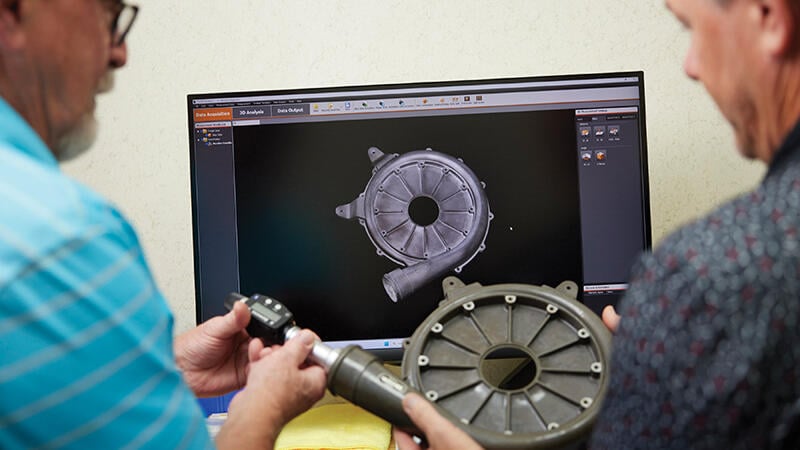
As supply chain issues continue to constrain OEM parts availability, airlines and MRO providers are driving a growing market for parts manufacturer approval, which continues to expand into more complex systems and attract investment capital.
“I believe [parts manufacturer approval (PMA)] will increasingly be viewed as one component of a broader alternate material and supply chain strategy rather than simply a lower-cost substitute for an OEM part,” says Teddy Gil, chief administrative officer of Sheffield Aerospace, an aviation engineering consultancy in Texas.
Gil notes that among the trends driving that evolution are continued OEM supply chain constraints, pressure on airline operating costs, longer aircraft service lives, greater airline experience with PMA parts and more sophisticated use of procurement and consumption data to identify opportunities.

“I also expect programs to become increasingly data-driven,” Gil says. “Rather than reviewing large catalogs of potential alternates, operators will increasingly use actual consumption, pricing, availability, reliability, fleet applicability, supplier information and historical procurement data to determine where an alternate solution creates the greatest value.”
“We see steady continued growth in PMA investment, development and market adoption, with a growth rate of about 5% annually over the next decade,” Alton Aviation Consultancy Managing Director Adam Guthorn says. “However, PMA still comprises a small share of the aviation aftermarket material demand—about 2% today, growing to 3% by 2030, based on Alton’s internal assessment and market forecast.”
According to a 2025 International Air Transport Association survey cited by Guthorn, PMA parts usage is most prevalent in consumables and cabin items. Of airlines that use PMA parts, 94% use consumables and 88% use cabin parts. Fewer than 10% use engine PMA parts generally, while even fewer use them in the engine hot section. “A recent development has been Chromalloy’s [International Aero Engines (IAE)] V2500 and [CFM International] CFM56 core airfoil PMAs, which may attract additional user interest as the engine platforms mature,” Guthorn says.
Victor Mendelson, co-CEO of PMA giant HEICO, anticipates that usage will continue to rise. HEICO focuses on a broad range of parts for engines, components, interiors and airframes, he reports, with strong demand across its product lines.
“HEICO pioneered PMA nearly 40 years ago and has grown considerably, so we think the future trends are excellent for continued PMA adoption,” Mendelson says. “Everybody is looking for the highest-quality part with the shortest lead time at the best price, whether an airline is flying a modern or legacy fleet.”
Asked about comparative pricing with OEM parts, Mendelson says that, based on his company’s experience, the exact savings depend on the length of time over which a customer purchases HEICO parts. “Compared to OEM parts, it may start out at 25-35%, but it can grow to over 50% over a decade if the customer agrees to purchase a significant volume of parts,” he says.
Mendelson also points out that the company’s customers have initially suggested many HEICO parts. “While our customers are mostly motivated by the significant cost savings achieved by purchasing our parts, there are many instances driven by OEM parts shortages,” he says.
According to Max Dunmire, marketing manager of Growth Industries, which currently has more than 3,500 PMA parts in its portfolio—both landing gear and airframe-related—the company’s objective has been to provide an alternative FAA-approved solution for components where operators are experiencing high costs, long lead times or limited sourcing options.
Landing gear parts are high on the list of customer demand, Dunmire notes. “These parts operate in a demanding environment, and operators need dependable availability,” he explains. He adds that when inquiring about PMA parts, the conversation has evolved beyond simply asking, “How much cheaper is the part?” to “Can you provide a quality approved part when I need it? ”
“The supply chain environment, I think, has caused some operators who may not have seriously considered PMA previously to take another look,” Dunmire says.
REGIONAL DEMAND
Asked about the company’s perspective and opportunity pipeline, Dunmire replies that North America remains an extremely important market for the supplier “due to a mature understanding of the FAA PMA process” among airlines and MROs. Still, he sees increasing opportunities in Europe, Latin America, the Middle East and the Asia-Pacific region, where there is more interest than has historically been the case.
Asia-Pacific airlines and MROs are now undeniably moving toward PMA, he emphasizes, although it is not clear how quickly they are doing so.
“I would characterize it as a gradual shift rather than saying that every Asian carrier is moving toward PMA,” Dunmire says. “There are still differences among individual airlines, regulatory environments, leasing arrangements and internal engineering policies. But as operators become more familiar with the FAA approval process and continue to deal with cost and availability pressures, I believe PMA will receive greater consideration throughout the region.”
Guthorn says that PMA adoption is nonetheless increasing among Asia-Pacific carriers. He specifically notes the domestic development of PMA parts in China. “That should serve to further increase PMA usage in the region,” he says.
Keith Lipscomb, CEO and president of Aviation Component Solutions (ACS), shares that view. “Asia currently represents about 15% of our revenue, but we believe the long-term opportunity is considerably larger,” he says. “Asian airlines and MROs will likely grow faster than mature Western markets. As they mature and carriers become increasingly focused on maintenance economics and supply-chain resilience, PMA adoption is expected to expand. We are positioning ourselves for that growth.”
Lipscomb says ACS initially concentrated on highly engineered mechanical components, such as fuel systems and other precision mechanical parts with demanding tolerances, materials, coatings and performance requirements. That has been expanded to include ATA Chapter 25 interior components and avionics-related products, he says.
“We see opportunities across the aircraft but generally have been more selective in flight-critical areas such as engine components, where PMA adoption can be more challenging,” Lipscomb notes.
As Lipscomb points out, the strongest opportunities in PMA involve what he terms “meaningful solutions to customer problems,” such as an OEM part with a very high price, a component with an extended or unreliable lead time or a part that operators are replacing frequently because of durability or performance issues. “Those are particularly attractive PMA opportunities because we can potentially provide the customer with not just a lower purchase price but lower life-cycle cost, improved availability or improved service life,” he says.
For example, Lipscomb notes that customers dissatisfied with the performance or service life of an existing part directly originate a significant portion of ACS’ PMA parts development projects. In those cases, ACS will not simply copy an existing component and offer it at a lower price. The company will instead “figure out why the part is failing or wearing prematurely and engineer a solution that provides greater durability or longer service life,” he says.
While supply chain issues have pushed more operators toward PMA parts, Lipscomb says this is only a portion of the story. “Operators are under tremendous pressure to control maintenance costs,” he says. “PMA introduces competition into markets where OEMs possess monopoly pricing power.
“There is also a fleet age component, where aircraft have remained in service longer than many people anticipated,” Lipscomb adds. “That increases maintenance requirements and demand for replacement components. All three factors—cost, availability and aging fleets—have strengthened the demand for PMAs.”
ENGINE MARKET
Chromalloy CEO Chris Celtruda says the constrained OEM engine parts supply chain continues to drive higher demand for alternative solutions for aero and aeroderivative applications.
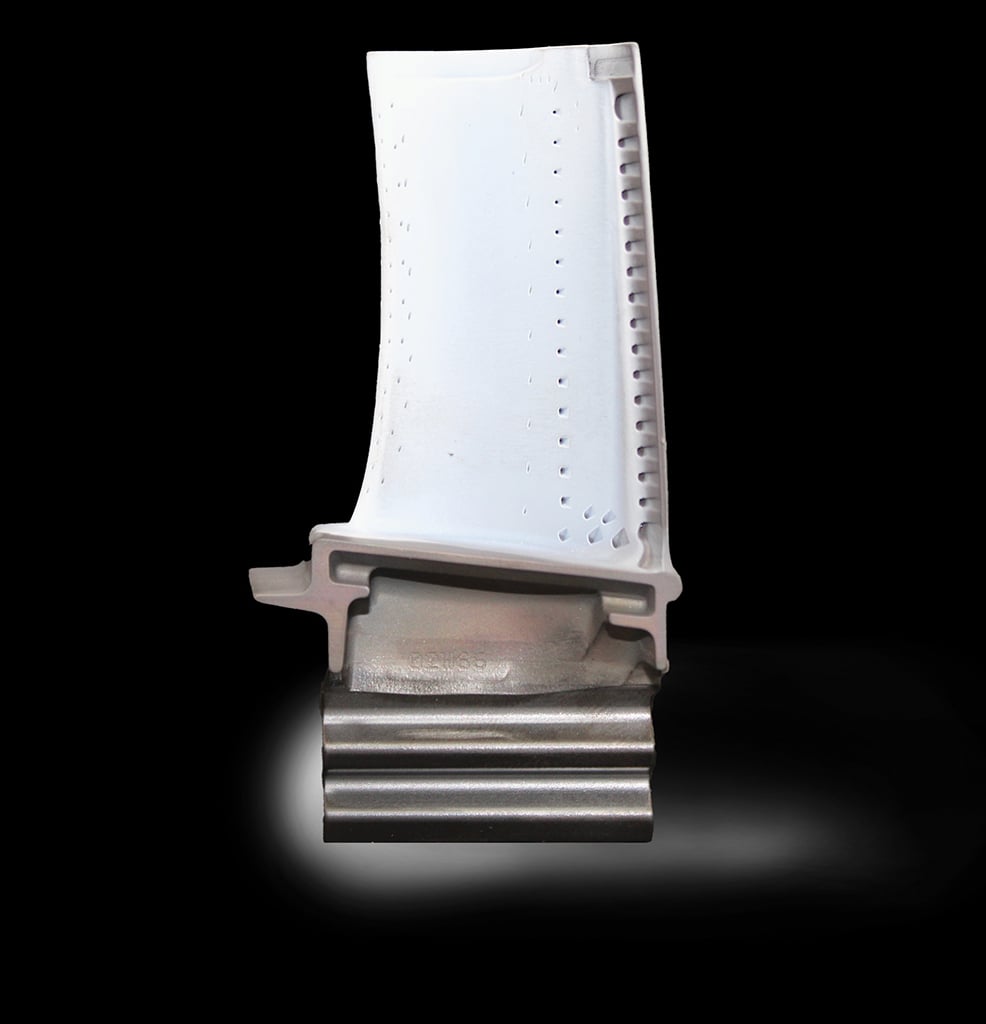
“While there is high parts demand for all sections of the engine, the high-pressure turbine [(HPT)] is a critical area of focus in almost every service visit,” he says. “The parts within the HPT, such as the blades and vanes, operate in very harsh conditions, leading to high scrap rates and consequent high demand.”
Celtruda adds that the ability to overhaul and build engines is, in fact, paced by the supply of HPT airfoils, which are highly engineered and very complex to manufacture. “There is a limited supply base for single-crystal/directionally solidified investment castings and specialty coatings that go into making these parts,” he says.
According to Celtruda, the “aero-engine MRO ecosystem” is experiencing teething issues on newer-model engines, which are slowing down retirements and keeping older platforms running longer. This has led to higher demand for replacement parts.
“In parallel, the rapid increase in demand for aeroderivative engines from [artificial intelligence] data centers has created a completely new consumption path for parts,” he says. “Both factors have conspired to create an unprecedented level of demand that is expected to last for years to come.”
As Celtruda notes, Chromalloy manufactures a variety of engine gas path parts, including HPT blades, vanes, nozzles and shrouds, low-pressure turbine vanes and compressor blades for a number of aero and aeroderivative engines. The company recently celebrated the 20th anniversary of its GE Aerospace CF6-80C2 HPT Stage 1 and 2 PMA blades, which have accumulated more than 1 billion part flight hours since their introduction in 2005. More recently, Chromalloy received FAA PMA approval for the CFM56-5B/-7B Tech Insertion HPT blade and HPT vane, and the IAE V2500-A5 Select HPT Stage 2 blade and Stage 5/8 compressor blades.
Along this line, Fabio De Santis, director of corporate procurement consumables, expendables and alternates at Lufthansa Technik, points to the MRO’s collaboration with Chromalloy on PMA turbine and compressor blades for the IAE V2500 SelectOne engine powering the Airbus A320ceo family.
“With Chromalloy, we have developed six turbine blade types to date,” De Santis notes. He points out that a Stage 2 HPT blade and a Stage 7 high-pressure compressor blade have received FAA certification and are already flying with Lufthansa Group airlines.
“By October 2025, the blades had been installed in a double-digit number of engines, accumulating around 1,800 flight hours and more than 1,100 flight cycles with very satisfactory in-service results,” he adds.
“Our work with Chromalloy on the A320ceo’s V2500 engine is a case where approved alternative parts can provide an additional source of supply and support long-term fleet operation,” De Santis says.
With growing interest in approved alternative material across the wider airline industry, Lufthansa Technik has established a dedicated PMA Integrator offering.
“In this role, we help airlines systematically identify, evaluate and implement PMA opportunities across their operations by bringing together PMA manufacturers, technical data, regulatory requirements and airline-specific needs,” De Santis says. “Lufthansa Technik serves as the interface, supporting customers with part selection, regulatory integration, quality and compliance oversight and supply chain management.”
THE LEASING FACTOR
Aircraft lease agreements have historically restricted PMA usage, preventing an airline from using a part even when its own engineering and maintenance organizations are comfortable with it. That might be changing.
According to Lipscomb of ACS, restrictions prohibiting the use of PMA parts on leased aircraft are gradually lifting as lessors compete to remain commercially competitive. “It is economically irrational for an airline to accept lease terms that prevent it from realizing potentially tens of millions of dollars in annual maintenance savings, when competing airlines are free to realize those savings through the use of FAA-PMA approved parts,” he says. “Consequently, airline legal departments are increasingly demanding lease provisions permitting the use of any FAA-approved part or, at a minimum, provisions permitting PMA use subject to back-to-birth conditions.”
Lipscomb notes that one of the principal commercial arguments for restricting PMA parts historically has been that they could impair an aircraft’s residual or resale value because certain airlines, jurisdictions or secondary-market purchasers would not accept them.
“As PMA acceptance becomes more widespread, however, the universe of potential purchasers objecting to PMA parts will continue to shrink,” he says. “The asserted residual-value justification for PMA restrictions should therefore weaken correspondingly, placing additional competitive pressure on lessors to eliminate or materially relax those restrictions.”
Nonetheless, Sheffield Aerospace’s Gil does not expect lessors to abandon their asset protection requirements.
“Rather, I believe the trend will be toward a more technically informed and selective approach—evaluating the specific part, application, certification basis, reliability history and potential impact on the asset instead of treating all PMA parts identically,” Gil says. “Ultimately, supply chain necessity combined with greater industry experience may continue to move the discussion from ‘no PMA’ toward ‘which PMA, and under what conditions?’ ”


Related Content