MRO M&A Rides An Investment Wave

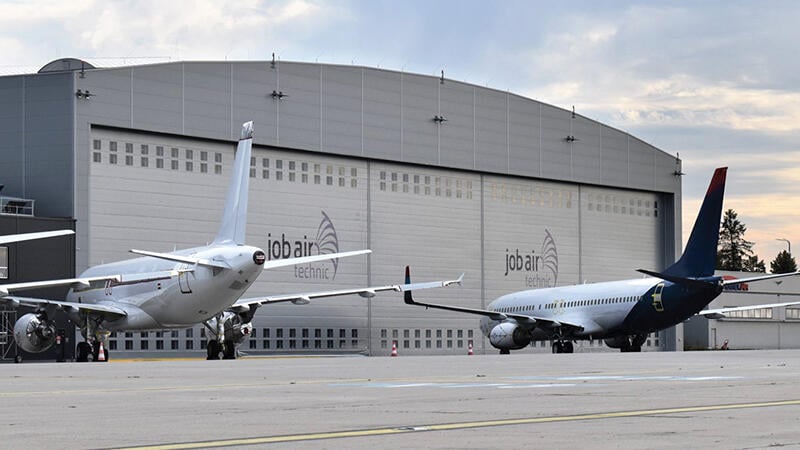
JOB AIR Technic MRO in Mosnov, Czechia

FL Technics, part of Avia Solutions Group, acquired Job Air Technic, an MRO in Mosnov, Czechia.

Credit: FL Technics

The aviation aftermarket is in a “super-cycle” that attracts a variety of investors, making the mergers and acquisitions market very competitive. This appetite for investment is reshaping the sector’s landscape as buyers of MRO companies seek predictable returns, scale, new capabilities or capacities, intellectual property and new customers. “It’s a super-dynamic environment,” Oliver Wyman Partner Chris Higgins says.

Four primary factors are driving aftermarket mergers and acquisitions (M&A).

First, aircraft ages have climbed because airlines have deferred retirements due to new aircraft delivery constraints. “As Boeing gets back to rate, as the OEM supply chain normalizes, is that going to cool aftermarket activity?” says Larry Gelwix, partner and head of industrials at investment bank Solomon Partners. “We don’t think so.”

Bain Capital / ITP Aero MRO facility in Spain
Bain Capital acquired ITP Aero in Spain from Rolls-Royce in 2022 for about $2 billion. Credit: ITP Aero

Second, Gelwix explains, “there are a number of private-equity-owned aftermarket service providers that private equity firms will need to exit, so there is good evidence that there will be a steady flow of sale transactions.” For instance, Solomon Partners advised the Sterling Group on its sale of West Star Aviation to the Greenbriar Equity Group. And some MRO company sales, postponed due to the COVID-19 pandemic because they needed more time to recover, are reaching their return thresholds. “There’s still a lot of shakeout” from the pandemic, according to Standard-Aero Chief Strategy Officer Alex Trapp.

Third, “public companies in the aftermarket are by and large trading quite favorably, which would suggest that they will also look to continue to grow, including through acquisitions,” Gelwix says. As of mid-May, RBC Capital Markets predicts aftermarket stocks overall should hold their value through the second half of 2026 and into 2027.

Fourth, leading aftermarket companies consistently deliver good margins—especially those involved with engine parts or services. “Private equity buyers like recurring, predictable revenue streams with high-quality customers, regulatory-driving maintenance cycles and high switching costs,” Janes Capital Partners Managing Director Stephen Perry says. “MRO certainly delivers.”

Jonathan Berger, managing director at consultancy Alton Aviation, says a sustained demand-supply imbalance in nearly every segment—alongside a growing in-service fleet of more than 34,000 aircraft and a robust airframe orderbook backlog exceeding 17,000—means tailwinds remain strong for M&A.

Strong interest from financial investors in M&A activity exists across virtually every MRO segment, with the market ripe for further investment and consolidation.

Private Equity/Investment Bank View

Janes Capital analyzed the MRO M&A market and found that five private equity firms combined—AE Industrial Partners, ATL Partners, GenNx360 Capital, Greenbriar Equity and Vance Street Capital—acquired 23 commercial aviation MRO businesses in the past three years (see chart, MRO 13). Perry predicts AE Industrial and Greenbrier “will likely continue their acquisition spree for another 12-18 months.” He also expects Bain Capital, H.I.G. Capital, Snow Peak and Warburg Pincus to continue making selective acquisitions.

Private equity firms typically hold companies 4-6 years—the time needed to “ripen and complete the value creation,” Perry says. “A key trend here is that to the extent private equity has been a seller, the question is, who have the buyers been?” he asks. “It’s a pretty limited group, frankly, of about five strategics—TransDigm, HEICO, Loar, Arcline and VSE, all of whom have been active each and every year.”

Janes Capital divides the MRO market into segments, based on the highest valuation and earnings before interest, tax, depreciation and amortization (Ebitda) multiples, in descending order:

  • Proprietary intellectual property (IP)/sole source.
  • Parts manufacturer approval (PMA) parts.
  • Component repairs.
  • Distribution.
  • Line maintenance.

While the aftermarket is global, Perry says “95% of the [recent] transactions have been U.S. buyers with U.S. targets.” The aviation aftermarket is known for being fragmented, with many small companies, so it makes sense that about 65% of the businesses sold are privately owned—often family-owned—and built up over time.

Private equity firms have very strong interest in the aftermarket—so much so that a number “have really become aerospace and aftermarket specialists,” Gelwix says. Because of their sophisticated theses as well as their relationships within and knowledge of the industry, they act “almost more like strategics than not,” he says.

While every transaction is unique, “the market is trading at elevated multiples [of] M&A transactions,” Gelwix says.

Solomon Partners is watching for potential in “the ever-increasing adoption of PMA”; used serviceable material, which has generated significant activity in the last few years (sidebar, MRO 15); engine and component repair; the return of widebody heavy maintenance to North America from Asia; and aircraft modifications and completions, he explains.

M&A interest in modifications and completions is “not something we’ve seen in all cycles, but that’s been an area of more interest recently,” he says, citing Fortress Investment Group-backed Mammoth Freighters, which received FAA certification for its Boeing 777-200 passenger-to-freighter conversion in April.

“The best acquirers tend to be those that are clear in their strategy—they know what they want; they have done the work ahead of time to understand what fits and what doesn’t,” Gelwix says. They “have trained their M&A muscles” through deal experience, he adds. The most sophisticated buyers understand what they are buying, where the value is and when to stand down. “Discipline is really, really important,” he emphasizes.

What Strategics Seek

Engine and component repair companies see high interest from buyers because they tend to generate higher margins, including proprietary information or IP, and have higher barriers to entry than other parts of the aftermarket.

“That is sort of the holy grail of where everybody wants to be,” Perry says. That is because “multiples for engine aftermarket parts are dramatically higher” than for others, he notes. “That has always been the case, and frankly will always be the case.” He cites “well-heeled strategics”—HEICO, Loar Group, StandardAero and TransDigm—“all of whom love to be in that space.”

Publicly traded HEICO has acquired 110 businesses—roughly 80% companies and 20% product lines—since 1997. With a $35.4 billion market capitalization as of mid-May, the MRO is known for being able to close quickly. That stems from “tremendous experience on cutting the deal and focusing on what’s really important, as opposed to what the lawyers think is important,” says Eric Mendelson, co-chairman of the board and co-CEO. HEICO also has grown to $5 billion in annual sales, employing 13,000 people and operating 100 businesses. “We’re able to do due diligence, and we’re able to build conviction quickly, and we have confidence due to our rigorous process,” he says. “Then we’re able to act on it quickly. That’s why we’ve done multimillion-dollar deals within 30 days.”

Mendelson explains that HEICO operates as a “decentralized, entrepreneurial, nonpolitical structure” that purchases businesses to keep indefinitely—it does not sell what it buys. “We rely very much on the companies that we acquire to continue to build and grow those companies,” he says.

Because HEICO retains companies, the people part is important, too—not just a strategic fit. “We’re looking for companies that really treat their customers, team members and suppliers in a very good and sustainable way,” Mendelson says. Knowledgeable staff who are invested in the company’s success are key to long-term growth.

“We’re very strong believers in benevolent capitalism and responsible, sustainable capitalism,” Mendelson says. “We think that for a successful capitalist society to thrive and grow, there’s an obligation on the business to treat people properly—and that includes team members, as well as customers and suppliers.” That philosophy contributes to its acquisition success, too: “The numbers speak for themselves,” he says.

What is his market outlook? Mendelson says investors view the aerospace market as favorable because “it’s one of the few places that [artificial intelligence] is going to have a hard time disintermediating—it’s got sticky product and a lot of pricing potential.” However, these same features have attracted many buyers who do not understand the aviation aftermarket and the competitive alternatives.

“I think the market is frothy, and I definitely think there is going to be a shakeout,” Mendelson says. “People have gotten over their skis, in my opinion, and are making investments they don’t fully understand. Those of us who have been in this market for a long time know what it’s like to have stable pricing and margins that are squeezed, and I think that day will come back.” He did not predict that time frame but characterized the froth as “a temporary phenomenon.”

In addition, Mendelson cautioned buyers to be careful about buying a “peaker” supplier—one that sells products for high prices during a tight market like today—because when the market comes back down, “they don’t necessarily have a competitive cost structure.”

Another strategic MRO, StandardAero, has grown organically and through acquisitions. The engine aftermarket service provider has acquired 14 companies since 2015, when private equity company Veritas Capital purchased it from Dubai Aerospace Enterprise. (The Carlyle Group purchased StandardAero in 2019 and is the current owner.) Those acquisitions “added a combination of strategic engine platforms, access to new customers, new capabilities, new geographies and incremental intellectual IP to our port-folio,” Trapp says.

As of May, Unified Turbines, an FAA repair station in Vermont that repairs and overhauls hot section components, is StandardAero’s latest acquisition and checks all of those boxes, he says. “It’s perfectly aligned with our core engine MRO business for key engine platforms [and] certainly, it’s supportive of long-term accretive growth.” Unified Turbines is also a strategic financial fit because “component repair businesses typically are higher-margin than the heavier overhaul side of the business, so these are always margin-enhancing, and that’s good for the overall enterprise,” Trapp says.

He notes that StandardAero takes a proactive approach to identifying market opportunities and does not just wait for bankers to contact him. The MRO’s business units are close to the market and identify potential organic and inorganic opportunities that they share with him.

Trapp looks at dozens of potential acquisition targets each year. While that number is growing, he stresses that StandardAero will “continue to be disciplined” and “pretty selective about the deals we run after and get.” The company will not buy just to scale—acquisitions must be a strategic fit and match its return thresholds.

Even though there are a variety of buyers—private strategics, publicly traded strategics and private equity—pursuing the engine aftermarket, Trapp says, “I’ve got plenty of balance sheet firepower.”

He credits StandardAero’s acquisition and integration playbook, as well as its “track record of delivering on the synergy commitments that we underwrite when we buy companies, so that actually allows us to pay a market multiple.” By having an efficient integration process, “we effectively buy down the multiple to where it becomes very accretive for us to do acquisitions,” he explains.

StandardAero has refined that playbook with multiple acquisitions. Once the company starts the bidding process, “we have a team of internal functional experts and external advisors, which allow us to keep pace in bidding and diligence processes, which is important because if you’re competing, it’s about not only price but the speed at which you can move, and also the certainty of closing for a seller,” Trapp says. “We can compete just based on how we can keep pace.”

Among the most active companies in North America’s commercial aftermarket in recent years is publicly traded VSE. With investors including BlackRock and Vanguard, VSE has acquired four companies in the past two years and has grown its presence in the engine MRO segment. These deals comprise Florida-based Kellstrom Aerospace for $200 million and Turbine Controls for $120 million in 2024, New Hampshire-based Aero 3 for $350 million in cash in 2025 and the largest, Atlanta-based Precision Aviation Group (PAG), for $2 billion this year. “The acquisitions of Kellstrom Aerospace and Turbine Controls accelerated our commercial engine-focused strategy by expanding our technical capabilities, repair offerings, customer reach and OEM relationships,” VSE President and CEO John Cuomo says. “PAG and Aero 3 further expanded our capabilities across commercial, business aviation, rotorcraft and component repair markets.”

Cuomo explains that the engine aftermarket is particularly attractive because it combines resilient long-term demand with opportunities for technical differentiation and value-added service. “We saw, and continue to see, attractive long-term fundamentals in engine accessories, components, specialized distribution and repair capabilities where OEM partners and operator customers increasingly value technical expertise, reliability, turn time and solution-oriented support,” he says. However, he stresses that VSE’s M&A approach will remain disciplined. “We focus on the quality of the asset, the strategic fit and whether it deepens customer relationships, expands technical differentiation and strengthens our position in attractive aftermarket niches.”

In Europe, the more fragmented aftermarket has not seen North America’s volume of large-scale deals but has nevertheless seen notable consolidation activity, particularly among MROs seeking midmarket bolt-on capabilities. Europe-based aftermarket providers have looked at acquisitions to address market constraints, including capacity shortfalls for engine programs, a shortage of maintenance slots and niche capability acquisitions in areas such as engine component repairs.

Lithuanian aftermarket provider FL Technics has made four acquisitions in the past decade. The most recent, a February acquisition of Czech MRO specialist Job Air Technic, further expanded its base maintenance capabilities for Airbus A320ceo/neo and Boeing 737NG and MAX aircraft. FL Technics operates a network of facilities in Europe, the Asia-Pacific region and the Americas. “[The acquisition] enables us to immediately serve our clients with eight fully operational aircraft maintenance bays, eliminating 3-4 years typically required for construction and certification,” FL Technics CEO Žilvinas Lapinskas says.

Lapinskas believes the aftermarket is moving through a consolidation phase, particularly in Europe, but sees this reflected more in airline acquisitions than in independent MRO companies. He describes FL Technics’ approach as selective. “We are interested in acquisitions that strengthen our existing network, improve operational flexibility and create long-term value for customers,” he says. “Ultimately, the goal is to build a stable and globally integrated MRO platform capable of supporting airlines consistently across multiple regions.”

While much of this acquisition activity is capability-driven, the labor market is becoming an increasingly crucial factor. “We look not only at facilities and infrastructure but also at workforce stability, training capabilities, local labor markets and long-term talent pipelines,” Lapinskas says. “A hangar without access to qualified technicians has no value. That is why we pay close attention to local education systems, employee retention, licensing structures and the overall ability to expand technical teams sustainably.”

U.S.-based STS Aviation Group, primarily owned by investment firm H.I.G. Capital since October 2024, started making incursions into Europe before the pandemic by acquiring several sites in the UK and Ireland. In England, these included Apple Aviation in Newquay and the former Monarch Aircraft Engineering facility in Birmingham in 2019, as well as a facility formerly operated by defunct leisure airline Thomas Cook in Manchester in 2022. In Ireland, STS operates a modifications and interiors business shop acquired from UJet in 2018.

The company furthered its Europe strategy last year by acquiring independent shop GT Engine Services, later rebranded to STS Engine Services, based at Stansted Airport 40 mi. northeast of London. That acquisition brought online ready-made engine capability, with the shop specializing in workscopes just short of full overhauls on multiple narrowbody and widebody programs.

STS Aviation Group President Mark Smith says the company viewed GT Engine Services as a strategically important acquisition for immediate technical capability, experienced personnel and established relationships with engine OEMs, including CFM International, GE Aerospace, Rolls-Royce and Pratt & Whitney.

“More importantly, it positioned us inside one of the most constrained segments of the aftermarket at a time when airlines are looking for partners capable of delivering quality work, competitive turnaround times and speed of execution,” Smith says. “The aftermarket is no longer competing on technical capability alone. The real differentiator now is who can absorb disruption without losing control of the operation.”

When sizing up acquisition targets, Smith considers a combination of geographic expansion, technical capability, customer access—and reflecting Lapinskas’ opinion, workforce expertise. “Geographic expansion matters because aviation is ultimately a global business, and proximity matters when supporting operators under pressure,” Smith explains. “Technical depth matters because customers increasingly want integrated solutions instead of fragmented support. Customer relationships matter because trust in this industry takes years to build. And workforce expertise may be the most important piece of all.”

Bilbao, Spain-headquartered ITP Aero was spun off by Rolls-Royce in 2022 and acquired by a consortium led by private equity firm Bain Capital for about $2 billion. In 2024, the company completed the acquisition of Dallas-based, family-owned BP Aero to expand its footprint in commercial engine programs, targeting maintenance activity to account for 20-25% of total revenue over the next five years. ITP Aero most recently brought additional capabilities online through the late 2025 acquisition of Aero Norway, an independent repair specialist of CFM International CFM56 and Leap engines in Stavanger, Norway, a move pointing to further consolidation of Europe’s independent engine aftermarket providers.

An ITP Aero spokesperson tells Inside MRO that the company is taking a “strategic and selective” approach to expansion, having identified the commercial aftermarket as a key growth area following its acquisition by Bain Capital. “We assess opportunities based on how well they strengthen our capabilities on key engine platforms, enhance technical depth and bring us closer to customers,” the spokes-person says.

Looking forward, ITP Aero is exploring options with a strategic focus on building a global component repair network to aid ramp-ups on programs such as the Pratt & Whitney geared turbofan. The MRO joined the network for the PW1500G and PW1900G variants last year. “Opportunities that strengthen component repair and aftermarket services are of particular interest, provided they deliver clear industrial synergies and align with our long‑term strategy,” ITP Aero says.

Alton Aviation’s Berger anticipates further consolidation among independent engine MRO providers “in an effort to increase scale to better compete against the OEMs, to include geographic footprint expansion in addition to pursuing vertical and horizontal integration growth opportunities.” He pinpoints lighter workscopes, such as hospital shop visits and module swaps, as attractive propositions for would-be investors, referencing asset management company FTAI Aviation’s recent acquisitions of such facilities in the U.S. and Canada as well as its purchase of a stake in IAG Engine Center Europe’s shop in Rome. “Persistent supply chain disruptions, engine durability issues and shop capacity shortages have led to an increase in demand for smaller workscope hospital shop visits and growth of the module swap industry,” Berger adds.

Most of the competition is expected to play out in North America and Europe and to a lesser extent other regions. Dubai-based DTX Group—which spun off from Drayton Aerospace last year as Chinese private equity investor Lion Capital took over Drayton’s China business—is actively targeting emerging aviation regions, with facilities in Brazil, the United Arab Emirates, and soon India.

“In emerging markets, there are not enough players to force a consolidation strategy,” DTX Chairman Hussein Lookmanjee says. “That being said, I believe China will see a strong consolidation strategy over the coming years, as there is a generational transition of ownership. Due to the one-child policy, entrepreneurs have limited opportunities to pass it on to their families. With the challenges of the local capital market, the only viable exit will be via M&A activity.”

Advice to Buyers and Sellers

What should sellers do to transact an MRO business successfully?

“Find a time when the business is doing really, really well, and you expect it to continue to do really, really well,” Perry says. “That’s the precise time to sell, because to optimize a valuation, it’s not just your Ebitda—it’s the multiple that’s going to multiply that Ebitda.” He cautions that owners often want to hold on to their businesses when they are performing well, and they do not account for future dips. They use up the growth, resulting in a lower multiple.

Mendelson says the first things companies that are considering selling should do is “think about what’s important to them” and what they want to accomplish. They should determine whether it is securing a high price, leaving a legacy for entrepreneurs who have built a business or “the future of the business, culture and opportunities for the people,” he notes. Especially for family businesses, he cautions against bankers or business brokers who will do anything to get a high price.

Trapp adds that potential sellers should know what they want after the deal closes. “I think that’s where [Standard-Aero] ends up being a good fit for a lot of these businesses, because we are not just a platform where their business is going to be bolted on,” he says. “We integrate the companies, put our arms around them, make them part of the family.” Buyers feel good about selling to StandardAero because “they know that we’re going to do right by them and seek to grow their business.”

Trapp also advises owners to make sure they are truly ready to sell and “emotionally ready to let it go.” Owners who change their minds during the process lose credibility.

Gelwix cautions that selling a company is a long exercise—from preparing to sell to closing. “We love it when we can spend time with and get to know these companies well in advance of a sale to help them prepare for the sale process,” he says. “There’s nothing like excellent financial preparation, organizational preparations, operational preparation and emotional preparation to help smooth a sales process. But no matter how well run, there will inevitably be some bumps along the way, because M&A transactions are in many ways unnatural acts to bring organizations together.”


MRO M&A Deals So Far in 2026

VSE acquired Precision Aviation Group, which provides MRO, supply chain and distribution services, for $2 billion on May 5.

Investment firm H.I.G. Capital completed its acquisition of International Aerospace Coatings in May.

Canadian aerospace holding company Maverick Aviation Group acquired Genaire, an Ontario-based specialist in aircraft fuel systems, ground support equipment and manufacturing in May.

Satair completed its acquisition of Unical Aviation, a parts supplier, and its subsidiary ecube, which dismantles and stores aircraft, from Platinum Equity in May.

Sunvair acquired Aircraft Systems, a Miami-based component MRO, in May.

StandardAero acquired Unified Turbines, a Vermont-based provider of hot section component repair and overhaul service, in an all-cash transaction in May.

Ametek announced on April 30 an agreement to acquire First Aviation Services, which provides MRO and component manufacturing services, from First Equity.

HEICO acquired in April 80% of the stock of Sherwood Avionics and Accessories, which provides MRO, distribution, engineering and manufacturing services.

TransDigm closed its acquisition of Jet Parts Engineering and Victor Sierra Aviation from Vance Street Capital in April for about $2.2 billion in cash.

CCE Group acquired Houston-based cabin interiors specialist InTech Aerospace from Argosy Private Equity and Azalea Capital in May.

FL Technics completed its acquisition of Job Air Technic, an MRO in Mosnov, Czechia, in February.

Chorus Aviation acquired Kadex Aero Supply, a Canadian parts distributor and MRO service provider, in April for about $50 million.

HEICO acquired EthosEnergy Accessories and Components in February.

Setna iO acquired a majority stake in J&C Aero, a cabin interiors specialist in Vilnius, Lithuania, from the MRO’s five founders in February.

Avmax Group acquired Condor Aircraft Accessories, a component repair company in Calgary, Alberta, in January.

Satys purchased Sabena Technics’ four aircraft painting facilities in February.

Launch Technical Workforce Solutions, owned by Capitol Meridian Partners, acquired JMC Aviation, an aviation recruitment and engineering solutions company in Exeter, England, in January.

Lee Ann Shay

As executive editor of MRO and business aviation, Lee Ann Shay directs Aviation Week's coverage of maintenance, repair and overhaul (MRO), including Inside MRO, and business aviation, including BCA.

James Pozzi

As Aviation Week's MRO Editor EMEA, James Pozzi covers the latest industry news from the European region and beyond. He also writes in-depth features on the commercial aftermarket for Inside MRO.