This article is published in Aviation Week & Space Technology and is free to read until Sep 27, 2026. If you want to read more articles from this publication, please click the link to subscribe.

What The Aviation MRO Market Shares With Industrialist Henry Ford

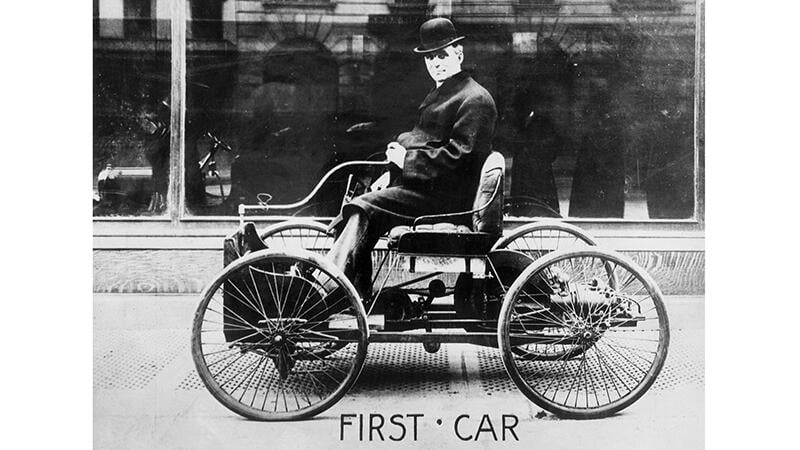
1896 Henry Ford Quadricycle

Henry Ford and his Quadricycle.

Credit: Spooner & Wells/Hulton Archive/Getty Images

The saying “auto racing began 5 min. after the second car was built” is widely attributed to Henry Ford, who founded Ford Motor Co. in 1903. That statement, linking competitive spirit to innovation, applies to many things.

Since childhood, Ford was curious about how machines worked, and he became an apprentice machinist in his late teens. He continued building his machinery knowledge and eventually became an electrical engineer at the Edison Illuminating Co. In his spare time, he experimented with engine designs and built his first vehicle, the Quadricycle, in 1896. That invention and engine patents led to other car designs and the eventual launch of the Ford Motor Co.

That continuous innovation, technical advancement and perseverance—combined with curiosity—that Ford demonstrated are at the heart of the aviation aftermarket as well.

Inside MRO’s September issue captures that momentum and demonstrates how the industry is evolving. Companies are experimenting. They are implementing new processes and technologies to work smarter, cut turnaround times and produce better products.

Lindsay Bjerregaard’s cover story provides many examples of companies doing exactly that. For instance, she cites GE Aerospace, which developed a tool at its MRO facility in Brazil to ingest various sources of engine data. Why is this note-worthy? For an engine shop visit, “there’s actually a confluence, I don’t think people realize, of five different types of technical data that have to come together,” GE Aerospace Chief MRO Engineer Nicole Jenkins says. “There’s a significant amount of work that goes on behind the scenes in terms of conformance and certification of the engine configuration.” And all that happens before maintenance starts.

Another back-end process innovation comes from Gameco, which is developing an in-house enterprise resource planning system it aims to have fully operational by year-end. The Guangzhou, China-based MRO also is experimenting with some “AI-driven robotics projects to optimize our facilities,” General Manager Marc Szepan says.

Predictive maintenance has become a standard part of technical operations, but it is definitely not static. Companies such as Delta TechOps use an iterative approach to keep fine-tuning its effectiveness.

These types of behind-the-scenes innovations do not always receive the attention they should, but they drive the aftermarket to improve continuously

I think Henry Ford would marvel at how far aviation has come since his company branched out from cars to produce the Ford Trimotor airplane.

Keep innovating.

Lee Ann Shay

As executive editor of MRO and business aviation, Lee Ann Shay directs Aviation Week's coverage of maintenance, repair and overhaul (MRO), including Inside MRO, and business aviation, including BCA.