This article is published in Aviation Week & Space Technology and is free to read until Dec 06, 2026. If you want to read more articles from this publication, please click the link to subscribe.

Early tests have not identified any maintenance burden associated with the use of 100% SAF.
As sustainable aviation fuel advances from test cells to commercial operations, early results suggest it will not increase maintenance demands. However, MROs say the industry still lacks the long-term, engine-level exposure data needed to establish whether its use will eventually change component conditions or maintenance requirements.
For now, sustainable aviation fuel (SAF) is designed as a “drop-in” fuel, meaning approved blends can be used in existing aircraft and engines without modifying the fuel system or engine. The question is whether it will have a maintenance profile similar to conventional Jet A-1 in the long term, as operators and MROs seek more evidence from real-world engine experience.
According to ST Engineering, not enough long-term operational and maintenance data exists to draw conclusions about measurable differences in engine condition. The company also confirms that current OEM-approved maintenance procedures do not differentiate between SAF and conventional jet fuel. In addition, ST says individual engine SAF histories are difficult to obtain. Maintenance providers generally rely on collaboration with operators, OEMs and industry stakeholders to build a broader understanding of SAF exposure and its potential effects.
AFI KLM Engineering & Maintenance (AFI KLM E&M) goes a step further. Vincent Benoit, director for engine products, says the current SAF proportion in Europe—about 2%—is simply too low to expect differences in CFM International Leap engine condition. He also notes that SAF is generally blended into airport fuel systems on a mass-balance basis, making it difficult to establish exactly how much SAF an individual engine has consumed.
Early 100% SAF engine tests conducted separately by MTU Maintenance and AFI KLM E&M found no obvious differences in engine condition.
In 2024, International Aero Engines (IAE) completed a landmark V2500 test run on 100% SAF at MTU Maintenance Hannover in Germany, marking the first time an MRO facility performed a full-engine evaluation of the type on neat SAF.
IAE said the V2500 operated normally throughout the test sequence with hydroprocessed esters and fatty acids synthetic paraffinic kerosene (HEFA-SPK) supplied by Finland-based Neste, and it produced no findings different from those seen with conventional Jet A-1. IAE says the results reinforce the engine’s readiness as the company works toward future 100% SAF approval.
MTU adds that Pratt & Whitney geared turbofan (GTF) engines are similarly designed for SAF use, although it has yet to build up direct data from regular SAF-blend operations.
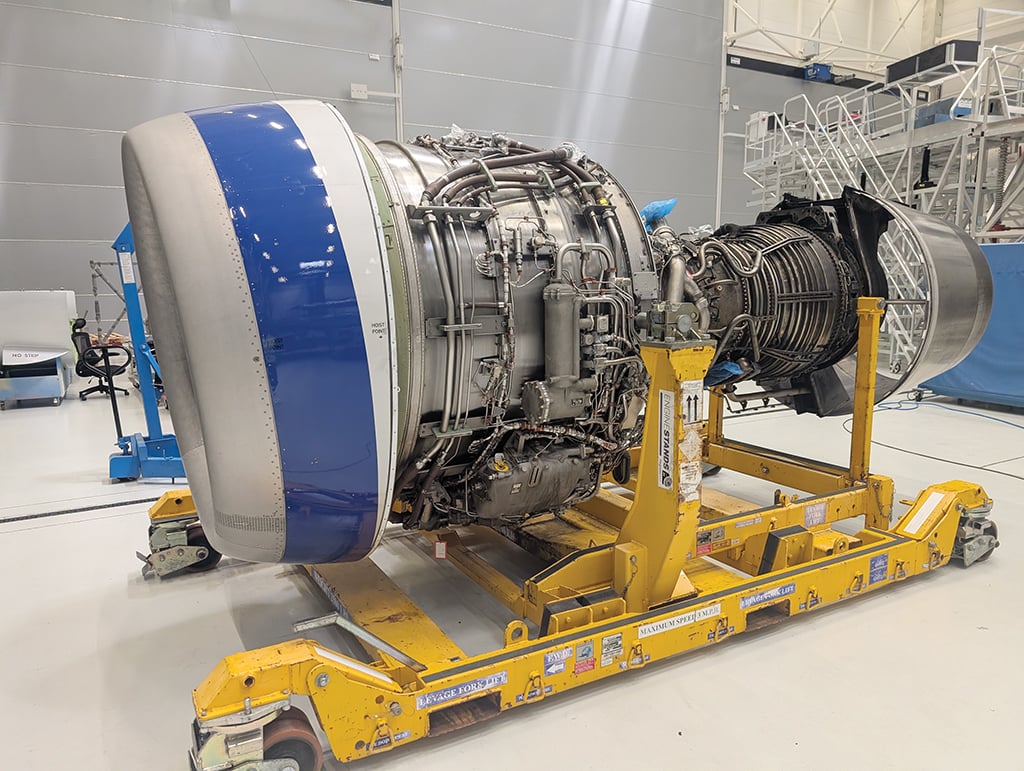
In 2023, AFI KLM E&M ran a CFM International CFM56-7B first on conventional kerosene and then on 100% SAF in its test cell. The MRO measured engine pressure and temperature and carried out extensive inspections and investigations during and after the test. Neste supplied the SAF, which was produced from used cooking oil.
Benoit says AFI KLM E&M ran the tests on engines that were subsequently due for full shop visits, during which parts were inspected, and no specific findings were identified.
INSIDE THE ENGINE
The potential maintenance implications of SAF largely depend on how its chemistry interacts with the engine and fuel system. That includes components such as seals, fuel nozzles and injectors, where differences in fuel composition could affect material behavior.
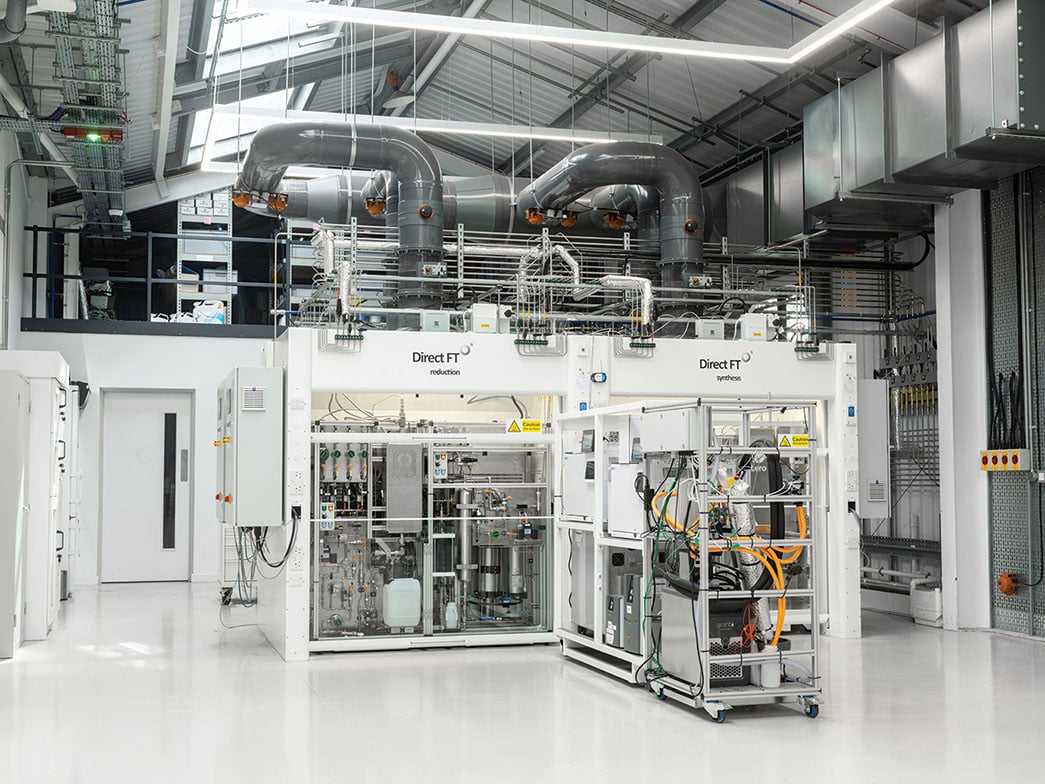
One company examining these issues from the fuel side is UK-based Zero Petroleum, a deep-tech startup founded in 2020 that is developing synthetic fuels from carbon dioxide and green hydrogen. The company recently said it had matched more than 70 chemical and physical properties of conventional Jet A-1, including aromatic content, lubricity, thermal stability and electrical behavior.
“What gives us confidence is that we are starting with a fuel whose major chemical and physical properties already sit within the range of Jet A-1 that today’s aircraft and engines experience,” Zero Petroleum Founder and CEO Paddy Lowe tells Inside MRO.
A key consideration is aromatic content, which can affect the behavior of elastomeric seals used in aircraft fuel systems. “One consideration is compatibility with elastomeric seals in fuel systems, where aromatic content can influence how those materials behave,” Lowe says.
Neste, which supplied the HEFA-SPK used in the 100% SAF V2500 test at MTU Maintenance Hannover, similarly points to the importance of fuel chemistry. It says current sealing issues are more closely associated with changes in aromatic content between flights than with SAF itself, and changes in sealing materials could address the issue.
Fuel nozzles and injectors are another area of interest. Lowe says the potential impact depends on how closely a synthetic fuel matches conventional Jet A-1. He notes that Zero Petroleum’s fuel contains no sulfur, which could prevent sulfur-related deposits in nozzles and on turbine blades.
SCALING EXPOSURE
The challenge will become more significant as SAF exposure increases. Today’s relatively low blend levels make it difficult to build a sufficiently long maintenance history, but that situation is expected to change as mandates and supply expand.
Neste says approved SAF blends should not create a different long-term maintenance profile from that of conventional jet fuel, provided that they remain within the relevant fuel specifications. The company also points out that SAF supply remains limited, meaning most current aircraft will continue to operate on relatively small proportions of SAF as production ramps up.
Benoit at AFI KLM E&M emphasizes that engine-level tracking of SAF exposure is not currently available, and more data will be needed to separate fuel-related effects from other variables, such as operating conditions and harsh environments.
Benoit says several industry changes are needed to track an engine’s SAF exposure, including the ability to track SAF blends delivered to aircraft through large airports’ fuel distribution systems and the implementation of tools to record SAF exposure at the individual engine level. “It will take significant time to build the expertise needed to determine SAF’s influence,” he says.
Zero Petroleum’s Lowe also cautions that demonstrating fuel chemistry is only the starting point. Long-term component behavior and maintenance requirements still must be established through engine and fuel-system testing before unrestricted use of a new fuel can be considered.
DATA AND QUALIFICATION
While early evidence suggests SAF can be integrated without maintenance penalties, the path forward requires more data and rigorous qualification to distinguish any fuel-related effects on engine condition.
For newer engines, such as the CFM Leap and Pratt & Whitney GTF, this is particularly relevant. Their service histories contain enough conventional jet fuel experience but comparatively little sustained SAF exposure. As SAF volumes increase, the industry should gradually accumulate the data needed to identify whether any trends emerge in fuel-system components, injectors, combustors or hot-section hardware.
For fuel developers, demonstrating that a synthetic fuel can replicate conventional jet fuel is only the starting point. Lowe says Zero Petroleum has been working with Airbus, Boeing and Rolls-Royce on its synthetic aviation fuel development for several years through agreements that include technical collaboration.
“They are important partners because ultimately the aircraft and engine manufacturers need to be satisfied that a new fuel behaves correctly in their equipment,” Lowe says.
Zero Petroleum does not claim to have completed all the necessary work. What it has demonstrated so far is the fuel’s chemistry, Lowe says. “The next job is to take that through the appropriate qualification and evaluation process,” which includes demonstrating the fuel’s chemistry through OEM evaluation, certification and testing, he adds.

Related Content