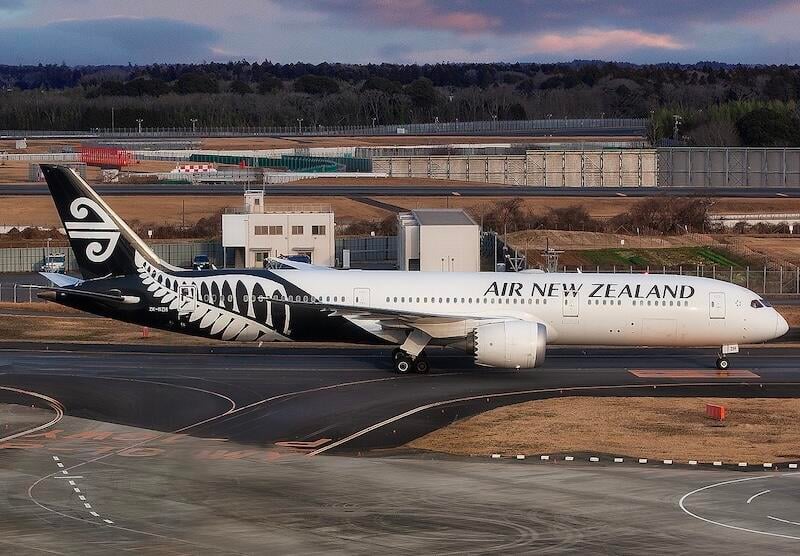
Air New Zealand Boeing 787-9
Air New Zealand has praised the “relentless” work of its staff with Rolls-Royce and Pratt & Whitney for returning to service most of its wide- and narrowbody aircraft that had been grounded due to engine issues.
The flag carrier was unlucky to see its fleet struck by durability problems on both the Rolls-Royce Trent 1000 for the Boeing 787 and the Pratt & Whitney geared turbofan for the Airbus A320neo family, causing up to 20% of its aircraft to be grounded. In 2025, then-CEO Greg Foran described the airline’s engines predicament as “unprecedented.”
This meant five of its 14 787s and six of its 20 Neo units were out of service at the peak of the disruption. Now, the last of the 787s has returned from long-term storage and only two Neos are still parked, with their return to operations expected in 2027.
Rolls-Royce said at the end of the July that it had “effectively eliminated aircraft on ground” for its customers.
To mitigate the disruption of the past three years, Air New Zealand took out extra engine and aircraft leases at considerable cost, causing an estimated NZ$190 million ($112 million) of earnings headwind in its financial year to June 30, net of compensation from the engine manufacturers. Some of the leases still have time to run, meaning the airline expects another NZ$70-90 million headwind in the current fiscal year.
“We carried the fixed cost of aircraft, people, infrastructure and systems, and we incurred additional costs through leased aircraft and engines to protect the network and schedule,” Air New Zealand CEO Nikhil Ravishankar said late August on an earnings call.
The airline also noted that unplanned maintenance on short-term loan engines helped drive a NZ$139 million increase in maintenance costs, alongside a 787 thrust reverser overhaul program and the timing of life-cycle events. Air New Zealand expects its maintenance bill to be up to NZ$100 million lower in the current financial year.

Related Content