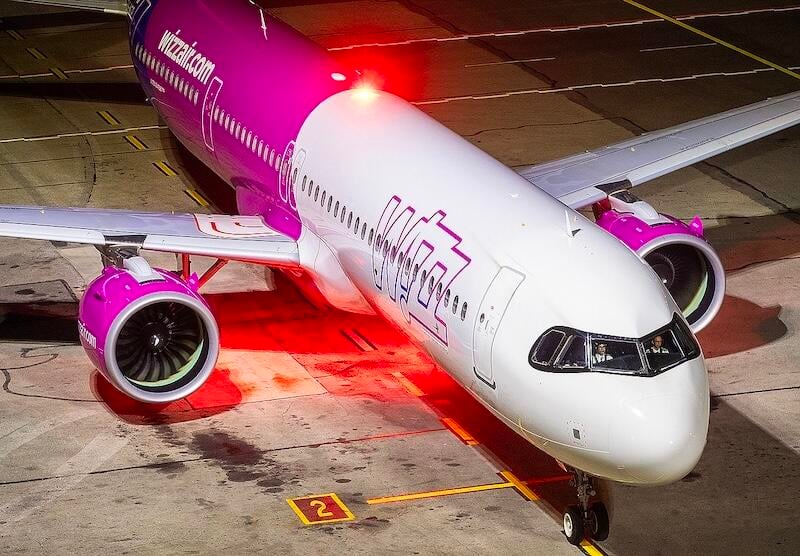
The CEO of Wizz Air has said the Pratt & Whitney GTF engine is delivering a “stronger generational improvement” than the CFM Leap, over which it has a “clear emissions advantage.”
In its latest results, the Hungarian low-cost carrier (LCC) said it had 22 GTF-related engine groundings at the end of September but expects all of its grounded PW1100G-powered aircraft to be back in service by the end of 2027. That aligns with previous guidance from the end of the prior quarter, when it had 33 aircraft grounded due to GTF powdered-metal issues, seven fewer than a year earlier.
On its latest earnings call on Nov. 12, CEO József Váradi said that both the Leap and GTF had suffered from immaturity and “significant reliability issues and supply chain constraints” but that the Pratt & Whitney engine is now showing better performance improvements.
“We are seeing a stronger recovery on the GTF than on the Leap, but you can talk to other people, experts in the industry, to verify that statement,” Váradi said on the call. “We are seeing fuel consumption improvements [on the GTF] continuing, another 0.5%, what we were tracking,” he continued, “and we believe that when you kind of add up all these factors, that are putting us significantly forward versus the rest of the industry.”
Of Wizz Air’s all-Airbus A320-family fleet, 78% are now PW1100G-powered Neo aircraft, and the airline expects this to reach 100% by 2029.
For the three months to Sept. 30, Wizz Air reported revenue of €2.3 billion ($2.55 billion), up 20% from a year earlier on 19% capacity growth. Operating profit for the quarter climbed 9% to €448 million despite a 29% increase in fuel costs, but operating profit for the first half of fiscal 2027 was down by almost 40% year-over-year after a disrupted first quarter.
Váradi said high fuel costs have given Wizz Air a strong competitive advantage in its local Central European market, where it estimates 20% of passenger aircraft are more than 20 years old, versus an average aircraft age of 4.6 years at Wizz Air.
“The operators of that kind of aircraft are under severe pressure, and those operators tend to be the ones lacking operational scale, certainly market scale to impose pass-through on ticket fares, and they tend to be the ones weakest on liquidity. We think that those airlines, those operators, that segment of the market—are subject to fail in the current environment.”

Related Content