Business Aviation Leaders' Predictions For 2026

To glean insights for the coming year, we asked 16 leaders from a variety of segments within the business aviation industry to weigh in on the following question:
What do you think will be the biggest challenge or concern for the business aviation industry and/or your segment of the industry in 2026?
 Ed Bolen, National Business Aviation Association (NBAA) president and CEO:
At a time we all feel a national imperative to build a new air traffic control (ATC) system, we need to be sure that work is not sidetracked by another government shutdown or other distractions. There is a push from proponents of ATC privatization—there have been calls by organized antagonists to our industry that called for the grounding of general aviation during the shutdown that have said that we’re not paying our fair share, and they really used that opportunity to resurface old ideas and mischaracterizations of our industry.
The challenge will be to make sure that business aviation can get out the true and accurate information about who we are and what we do for the U.S. We’re a vital link in our national transportation system, an important engine for the economy and we are a vital source of innovation and technologies that enhance safety and efficiency. All of those things are going to be really important. There are organized and well-funded antagonists that are out there disparaging us. We need to make sure that policy-makers and opinion leaders understand the essential nature of business aviation in the U.S. and around the world.
 Ron Draper, Textron Aviation president and CEO:
As business aviation continues to grow and evolve, the industry faces challenges tied to modernization, regulatory harmonization, supply chain capacity and a widening manufacturing skills gap. Our focus remains on timely implementation of the FAA Reauthorization Act and adequate funding for the Aircraft Certification Service to accelerate approval of safety-enhancing technologies and integrate advanced air mobility. Improving international validation processes is critical to bring innovations to customers faster, and we continue to advocate for strong bilateral cooperation as we introduce new products and integrate advances from our development teams.
While supply chain recovery shows encouraging progress, persistent issues with material availability and generational workforce turnover—resulting in a very real skills gap—demand attention. Addressing these priorities will strengthen the industry’s foundation for long-term innovation and competitiveness. Our industry is evolving rapidly, and we’re committed to equipping current and prospective employees with the skills they need to lead that evolution. Investing in technical training isn’t just about filling roles—it’s about building a pipeline of highly skilled professionals who will innovate, adapt and grow with us, shaping the industry for years to come. Whether it’s through our partnerships with local institutions, our internal development programs or our commitment to provide a meaningful career to those transitioning out of military service, we’re committed to creating opportunities that empower people to grow their aviation design, manufacturing, maintenance and support careers.
 Brian Foley, founder of consultancy firm Brian Foley Associates:
The backlogs are getting a little top-heavy with fractional fleet orders, which are currently more than could ever be absorbed into the system. The risk is that when (not if) the economy takes its next tumble, there could be outsized order cancellations and deferrals from the frax crowd. The next downturn could be on steroids because of this imbalance.

Jon Howard, Mach 2 Underwriters CEO:
The biggest ongoing challenge for Mach 2’s segment of the industry in 2026 will be the repairability of older aircraft. Limited parts availability has driven prices higher. Combined with a shortage of qualified civilian aviation mechanics, this has made the repair process slower, more complex and more expensive. In some cases, these issues have caused repairs to be economically unviable. This has reduced the number of older, lower-cost aircraft available on the market, pushing buyers toward newer options that are often unaffordable.
From an insurance perspective, this has forced the industry to raise rates on older aircraft, often to an unaffordable point for consumers. Additionally, some insurers are choosing not to insure some older aircraft altogether, knowing the difficulty of repairs.
 Janine Iannarelli, founder of Par Avion, an aircraft marketing firm:
If trade negotiations do not result in an amicable resolution to tariffs, this could continue to impact aircraft sales and maintenance.
Without executed treaties confirming agreements that have been reported or otherwise in the works with the U.S., buyers and sellers are still exercising caution. 2025 saw deals unravel or never gain traction due to the uncertainty surrounding tariffs. Aviation by definition is a global marketplace and the ability to pursue an opportunity in other parts of the world helps keep inventory levels in balance.
 Sheila Kahyaoglu, Jefferies managing director:
The biggest challenge is likely the full impact of tariffs and economic uncertainty. To date, order activity has held up despite negative consumer confidence indicators in the U.S. (~70% of market); however, any tariff impacts that have been absorbed by the OEMs may be passed on to customers with annual list price increases in 2026. This may put incremental pressure on the industry despite the typical customer not being particularly price sensitive. Additionally, there may be shifts between OEM market share related to adjustments in relative pricing.
 Tony Lefebvre, Signature Aviation CEO:
The biggest challenge for the industry in 2026 is closely tied to what will ultimately define its success: the ability to keep pace with growing demand. Capacity, both physical infrastructure and systemwide limitations, will be the central pressure point. Even if the overall number of aircraft remains steady, customers continue upgrading into larger, longer-range models that require more hangar space, more ramp capacity and more sophisticated support.
Airspace and ATC capacity add another layer of constraint. With continued growth from fractional operators and an influx of first-time users, the system must evolve quickly to meet rising expectations.
Next year will really test how well the industry can keep up. The companies that can add capacity where it’s needed, update their facilities and processes, and stay responsive to how customer needs are changing will be in the best position to succeed as the market gets busier and more demanding.
 David Lovejoy, Dassault Systèmes North America vice president of industry sales, aerospace and defense and government solutions:
Business aviation will be challenged to introduce breakthroughs in time to market which are being experienced in other aerospace segments. With regulatory agencies being laggards in understanding and embracing new means of developing and managing complexity, the current product development and manufacturing process will struggle to find efficiency breakthroughs. With new technologies in product development, techno business aircraft can be developed more thoroughly with more traceability than evolutions of legacy product lines, but regulatory agencies have to adapt to accepting new means of compliance.
 George Mattson, Wheels Up CEO:
The industry is subject to and somewhat dependent on healthy macro-economic and market conditions. If we were to see a domestic or global recession, which nobody is predicting at this point, or a significant decline in financial markets that lasts for a period of time, it would impact demand. While we are not expecting to see that in 2026, one always needs to be prepared to adapt and adjust course.
For Wheels Up, we have a clear plan and path forward that we are intently focused on executing against every day. Our transformation involves driving change in operations, fleet, programs, sales, teams and culture. I am confident we have the right plan and the right team executing against that plan. We are making clear, measurable and substantial progress; it feels like the flywheel is accelerating. This requires relentless focus and teamwork—every day.
 Jason Middleton, Silver Air Private Jets founder and CEO:
ATC remains one of the biggest challenges, and I don’t see that changing in 2026. Between staffing shortages, aging technology, and operational disruptions—including things like government shutdowns—the system is still under significant strain.
We’re heading into what will likely be a very busy year, both for airline traffic and private aviation. That puts even more pressure on an ATC system that’s already stretched. While a new FAA administrator came into office in July 2025 and there’s clear recognition that these issues need to be addressed, meaningful fixes, especially on the technology side, take time. From an operator’s perspective, ATC capacity and reliability remain a major concern.
 John Odegard, International Aircraft Dealers Association (IADA) chair:
The largest hurdle in business aviation will continue to be supply chain challenges and the impact on the business aviation experience. For aircraft owners, having to deal with longer and longer downtime during shop visits sours the ownership experience and adds additional cost and burden to continued operations. For business aircraft transactions, a priority will continue to be on turnkey, operationally ready aircraft. Supply constraints for this type of aircraft will widen the pricing gap for in-demand models with a premium paid for turnkey options and a discount expected for “project airplanes.”
 Jack Pelton, Experimental Aircraft Association (EAA) chair and CEO:
The two items that certainly continue to put pressure on bizav are controller shortages and landing fees. The controller shortage impact has had periods where demand on certain routes can be delayed or limited due to not enough controller capacity to handle the traffic. It will take time to build the controller workforce to necessary levels. The use of ADS-B equipment mandated for safety enhancement to collect data for airports to charge for landings has got to be fixed legislatively.
 Todd Simmons, Cirrus Aircraft president of customer experience:
The biggest challenge will remain the same one we’re actively working to address: maintaining a strong pilot pipeline while upholding the highest safety standards. As demand for aviation grows, the industry must continue investing in flight training and technology that supports the next generation of pilots. The economic pressure on the supply chain will require a longer-term strategy to ensure stability and manufacturer consistency and predictability across the industry.
 Alex Strehlow, AeroDynamic Advisory analyst:
Supply chain challenges for flight-critical hardware are a headache that will not disappear in 2026. Hopefully it will be better, but it will not go away. Skilled labor attraction and retention are growing concerns that are sometimes overlooked. The aerospace industry has lost its luster. We are facing a serious loss of knowledge and experience as the older generation of technicians retires in the next decade.
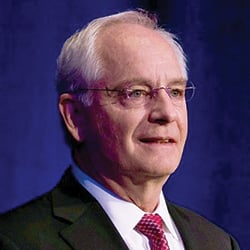 Rolland Vincent, president of advisory firm Rolland Vincent Associates:
Aviation safety. While it is refreshing to see that budgets have been authorized and investments are being made in the U.S. ATC system, there is a very long way to go and much work to do. Front and center is the need for much tighter coordination between U.S. civil and military aircraft operations, a prominent news story in 2025. Bizav is the perennial easy target, and we cannot rest on past successes and safety statistics. We need smart and highly integrated systems, continuous training and daily diligence.
 James Viola, General Aviation Manufacturers Association president and CEO:
We will most likely face challenges aimed at disrupting business aviation. It will be important that we continue to illustrate the robust opportunities and economic and societal benefits that our industry provides around the world.
General and business aviation is a technology incubator for civil aviation—our evolution is spurring more sustainable propulsion systems, safety enhancing avionics capabilities, advanced material manufacturing and improved maintenance, training and support.
Related Content