“This is an exciting time,” said U.S. Transportation Secretary Sean Duffy. “I’m thrilled.”
“It’s going to be the biggest change in general aviation that I have probably seen in my lifetime,” Jack Pelton, CEO of the Experimental Aircraft Association, said. “I’m excited to see where people will start thinking they can go with it and what they’ll do.”
- Cessna 172s and Piper PA-28s now qualify as light sport aircraft
- Just 7,000 light sport pilots after two decades
- A faster, more economical path to piloting
After those enthusiastic comments, the Aircraft Owners and Pilots Association presented its President’s Award to those responsible for the changes.
What aviation development generated such praise? Fleets of free flivvers? Personal teleportation? Keg parties in coach? Nope. Rather, it is the Modernization of Special Airworthiness Certification (Mosaic).
Mosaic is a multiyear effort by the FAA, in close consultation with the aviation community, to ease rules and regulations affecting those seeking a sport pilot certificate and operating light sport aircraft. The final rule was unveiled last summer, and revised piloting regulations took effect in October. Standards pertaining to new light sport aircraft will come into effect in July.
Some of the most notable elements resulting from Mosaic include:
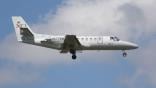
• Allowing sport pilot certificate holders to fly more types of aircraft, including popular Part 23-certified models, such as the Cessna 172 Skyhawk and Piper PA-28. However, they may carry only one passenger.
• With additional training, sport pilots can operate aircraft with retractable landing gear, constant-speed propellers and various power sources as well as operate into airports with control towers.
• Sport pilots can use a valid U.S. driver’s license in lieu of a medical certificate. Pilots with a private license or higher can operate under sport pilot rules but not if their most recent medical was denied, suspended or revoked.
The regulatory changes resulting from Mosaic extend well beyond the foregoing and have generated lots of questions within the aviation community. The revisions’ broad intent was to make piloting more accessible, affordable and utilitarian while ensuring the highest appropriate level of safety. Although these are early days for implementation, industry reaction seems generally positive and hopeful.
The rules for sport pilots and light sport aircraft warranted significant adjustment, as underscored by the fact that after two decades of the category’s existence, the FAA reported that just 7,300 pilots held sport certificates. By comparison, some 500,000 pilots hold private, commercial and airline transport pilot certificates.
The eased technical restrictions on light sport category aircraft—Mosaic removed takeoff weight limits and increased the stall and maximum airspeeds—put a large population of existing aircraft within the amended regs, expanding the light sport fleet significantly.
Consequently, training organizations like Celestial Kinetics Flight Academy at Wisconsin’s Waupaca Municipal Airport are entering the sport pilot training arena, now that their legacy fleets qualify.
Kent Sykes, Celestial’s founder and chief flight instructor, says: “We’re excited” about the opportunity. “This opens the door for us.”
Thanks in part to the fact that sport pilot trainees need a minimum of 20 flight hours, compared with the 40 hr. required for private pilot certificates, Sykes anticipates those in the former group could save about one-third in comparable training costs.
He also expects that a good number of licensed pilots who are worried about future medical exams will settle for sport flying with their driver’s license.
Although insurance availability is always a matter of concern, the Experimental Aircraft Association notes that insurers have generally been willing to cover those operating under sport pilot rules.
As for new designs tailored to the revised regs, they are coming. Ken Byrnes, professor of aeronautical science and flight department chair at Embry-Riddle Aeronautical University’s campus in Daytona Beach, Florida, maintains that Mosaic broadens the potential manufacturer base, including nontraditional companies. The changes allow them to design aircraft within the expanded performance envelope that can be equipped with modern avionics and systems and be brought to market more rapidly than if they were to seek costly and time-consuming type certification.
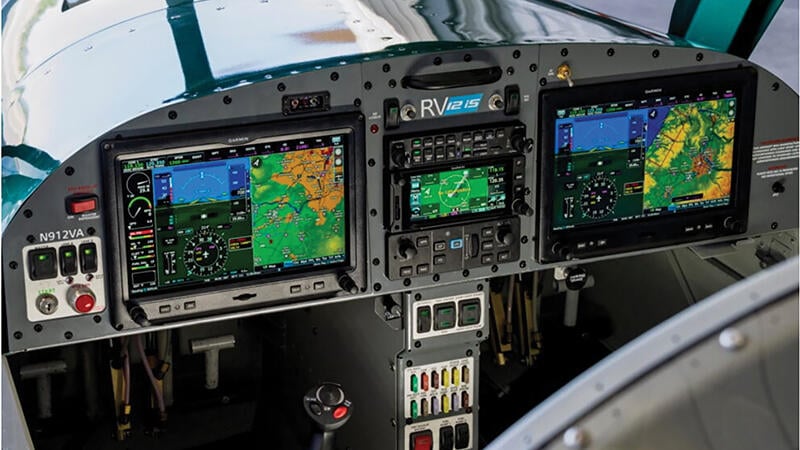
Illustrative of that is the RV-12iS (see photo). Designed and built by Van’s Aircraft in Aurora, Oregon, this two-seat, low-wing, fixed-gear trainer falls within the former and revised light sport plane requirements and can be used for basic and instrument instruction. It features a Garmin avionics suite and a fuel-miserly 100-hp Rotax engine and carries a flyaway sticker price of $255,000, or roughly half that of a new CE-172 or PA-28. Other light sport manufacturers are responding as well.
Considering all that, Messrs. Duffy and Pelton have good reasons to be excited.

Related Content