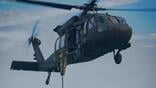
Podcast: Questions Swirl Around MV-75 And Army Aviation
Ahead of AUSA, editors discuss the MV-75 and the U.S. Army’s modernization plans, including long-range fires, air defense, space capabilities and the budget challenges shaping its next steps.
Subscribe Now
Don't miss a single episode of the award-winning Check 6. Follow us in Apple Podcasts, Spotify or wherever you listen to podcasts. If you prefer to watch, most of our episodes are now released on our YouTube channel.
Discover all of our podcasts at aviationweek.com/podcasts
AI Summary
The episode explores how the U.S. Army is reshaping its role in a future conflict by building a connected system for sensing, targeting and striking across long distances. Rather than treating missiles, drones, air defenses, space assets and sensors as separate programs, the Army increasingly sees them as parts of a network that must work together. This shift is ambitious, and budget uncertainty complicates the transition. Efforts to reduce spending on legacy systems can leave the Army in limbo when Congress slows or pauses those cuts before replacement capabilities are ready.
The discussion also highlights a changing approach to weapons and costs. High-end systems remain important for difficult targets, but the Army is seeking cheaper, more numerous options to sustain combat and avoid relying solely on scarce, expensive munitions. In space, the Army wants to retain a direct role in targeting and counterspace operations, while ensuring that information from satellites and sensors reaches soldiers in a useful, timely form.
Air defense presents a related challenge: rebuilding depleted interceptor stocks while developing affordable ways to counter large numbers of incoming threats. Production capacity and industrial resilience matter as much as the technology itself. Across these areas, the Army is extending its reach beyond traditional battlefield distances and positioning itself as a distributed long-range strike force. The central challenge is making this broad modernization effort coherent and executable: Systems must connect, users must be able to act on the information they receive, and new capabilities must arrive without leaving dangerous gaps in present-day readiness.
Key Topics:
- The Army’s shift toward connected strike systems
- Budget uncertainty and modernization delays
- Balancing high-end weapons with affordable alternatives
- The Army’s role in space and counterspace
- Delivering usable space-based data to soldiers
- Rebuilding air-defense interceptor stockpiles
- Scaling production and industrial capacity
- Expanding long-range strike capabilities




Related Content