This article is published in Aviation Week & Space Technology and is free to read until May 09, 2026. If you want to read more articles from this publication, please click the link to subscribe.

FAA Moves To Allow Recognition Of Foreign Maintenance Certificates

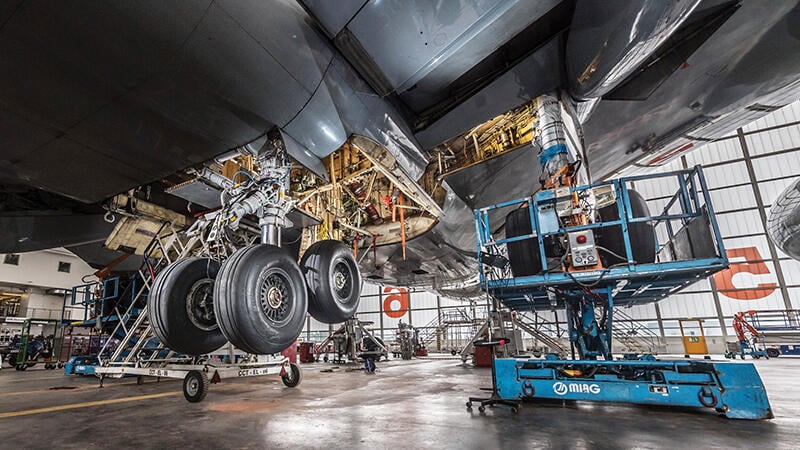
underside view of aircraft undergoing maintenance

A new FAA rule would reduce regulatory audits, saving repair stations money and time.

Credit: Lufthansa Technik

The FAA has launched a rulemaking that would enable the agency to recognize non-U.S. maintenance organization certificates through bilateral agreements—a long-sought step that affected certificate holders say will save them money and time.

“We’re doing it. We’ve entered it into rulemaking,” Chris Parfitt, general aviation group manager for the Flight Standards Service at the FAA, said during the Aeronautical Repair Station Association’s (ARSA) annual symposium in mid-March. “It is going to be a permissive role. It will allow us to enter into a bilateral, mutual agreement. It does not force us to do so, and the details of any of those would be worked out within the bilaterals themselves.”

The change addresses a quirk of U.S. law that limits which international treaties have legal weight. Bilateral aviation safety agreements (BASA), which are not ratified by Congress, are considered executive pacts that cannot supersede U.S. law, including FAA regulations.

Because of this, the agency must issue its own approvals for foreign repair stations, even if the shop is in a country—such as France—that is covered in a BASA designed to encourage mutual recognition of similar regulatory standards.

The only exception is Canada, because the FAA’s Part 43 regulation permits mutual recognition of Transport Canada-issued certificates to domestic aviation maintenance organizations (AMO).

Most other countries face fewer restrictions, making mutual recognition within a BASA a common practice outside the U.S. The trend has been gaining momentum at the European Union Aviation Safety Agency, Transport Canada and the National Civil Aviation Agency of Brazil—three of the four members of the global regulator Maintenance Management Team. The fourth member is, of course, the FAA, which cannot take advantage of bilateral-level language unless its rules are changed.

The proposed rule would expand the process to other countries and groups of states, including the European Union, that have a BASA with the U.S.

“We’ve been watching these bilaterals being inked by which, at least in the component space, you don’t need to have a certificate from the other authority,” ARSA Executive Vice President Christian Klein said. “But the FAA, by virtue of how Part 43 is written, requires that you have an FAA approval. What we’re doing is trying to tweak Part 43 a little bit so that somebody with a foreign approval, it’s recognized under a bilateral by the FAA.”

While the rule’s language has not been made public and must go through the typical public notice-and-comment period before being finalized, the FAA’s move appears to align with a yearslong industry push.

An ARSA-led coalition of 14 organizations petitioned the FAA in 2020, seeking a formal rulemaking. The group requested amended regulations “to enable reciprocal acceptance of AMO certificates issued by designated U.S. bilateral partners and the approvals for return to service issued by those organizations,” the petition said.

The coalition’s proposed language would give the FAA, “at its sole discretion,” the ability to “enter into a reciprocal acceptance arrangement for maintenance organizations with its bilateral partners,” the petition explained. “The FAA would, of course, retain the right to negotiate the specific terms of any such arrangement with each bilateral partner, thereby assuring the FAA’s ability to exercise its State of Registry prerogatives as it does today.”

Aftermarket providers have long sought more streamlined regulatory approvals to permit work on aircraft from around the world. Duplicative audits against similar sets of rules from different countries are costly and time-consuming.

A 2011 ARSA-commissioned study found certification activity cost U.S. repair stations 50-200% more, depending on the certifying agency, when the work was done without mutual recognition under a BASA.

“Industry’s costs to obtain and retain foreign AMO certificates would be eliminated completely if the domestic authority’s certificate and oversight is the only expenditure required to perform work for a foreign customer,” the petition continued. “Adoption of the proposal would also allow agency resources to be directed at continued operational safety elements rather than expenditures to perform certification and oversight operations that are duplicative to the bilateral partner’s efforts.”

Parfitt did not put a timeline on the rule, but he left little doubt that it is coming.

“It has gone through a rulemaking council, it’s been accepted, and it just received its [regulation identifier number]” that codifies it as a formal U.S. regulatory action, he said.

Sean Broderick

Senior Air Transport & Safety Editor Sean Broderick covers aviation safety, MRO, and the airline business from Aviation Week Network's Washington, D.C. office.