This article is published in Aviation Week & Space Technology and is free to read until Dec 25, 2025. If you want to read more articles from this publication, please click the link to subscribe.
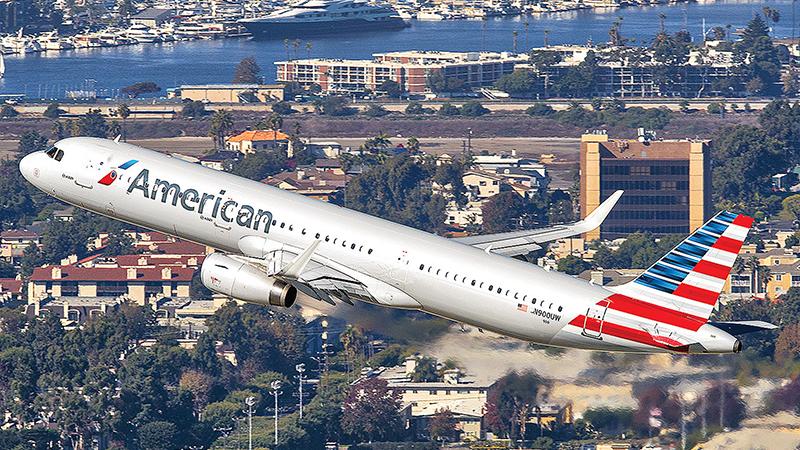
American Airlines has been demonstrating the benefits of ADS-B In with its Airbus A321 fleet.
Upgrading avionics on thousands of commercial aircraft is a daunting proposition. But given the background, a bipartisan push by U.S. lawmakers to mandate Automatic Dependent Surveillance-Broadcast In seems more likely than not to become reality.
The proposed mandate is part of the Rotorcraft Operations Transparency and Oversight Reform (ROTOR) Act. First proposed in July, the move is the U.S. Congress’ most significant response to January’s midair collision between an American Eagle regional jet and a U.S. Army helicopter near Reagan Washington National Airport. That, in addition to the Automatic Dependent Surveillance-Broadcast In (ADS-B In) proposal’s alignment with NTSB recommendations dating back more than a decade, makes formal adoption a very strong possibility.
A slightly tweaked version of the July draft advanced in the Senate in September. It is still some way from becoming law—Congress works at its own pace, which is sometimes no pace at all—and goes beyond ADS-B In. But the proposal’s basics are coming into focus.
The ADS-B In mandate Congress is advancing would apply to all crewed aircraft that operate in airspace where ADS-B Out is currently required under 14 CFR Part 91.225. The FAA considered an ADS-B In mandate while putting together the ADS-B Out rules but ultimately rejected it, citing an unfavorable cost-benefit analysis.
Equipping new and in-service aircraft would likely take 5-7 years. The bill gives the FAA two years to issue mandates for both groups. Each would have three years to comply, although the bill offers an additional two years if needed.
Given the language and the reality of FAA rulemaking, seven years is a reasonable minimum estimate from issuance of the law to the deadline. The requirement would point to the relevant FAA technical standard order (TSO) and related guidance.
Under the agency’s standards, being equipped with ADS-B In means having the ability to receive, process and display nearby traffic. These systems now must meet TSO-C195b or a later version.
The most recent order, TSO-C195c, was issued in mid-2023 and introduced a traffic conflict alerting requirement. The change stemmed from a 2019 midair collision of two aircraft equipped with ADS-B In over Ketchikan, Alaska. One of the aircraft’s systems, approved under a previous version of TSO-C195, did not have collision detection or alerting capabilities.
TSO-C195c is slated to become the stand-alone standard in mid-2026, when applications for TSO-C195b-compliant systems will no longer be accepted. This sets up the most recent order to be the standard for any ADS-B In mandate.
SafeRoute+, supplied by Aviation Communication & Surveillance Systems (ACSS) and used by American Airlines in yearslong ADS-B In trials, meets TSO-C195b. But upgrading to -C195c is “an easy and swift path . . . should it be required,” Robin Glover-Faure, chief customer officer at Acron Aviation, a joint venture partner in ACSS alongside Thales, tells Inside MRO.
American equipped its entire Airbus A321 fleet with ACSS’ ADS-B In retrofit as part of its FAA-sponsored demonstrations. The first batch of retrofits, covering 200 in-service aircraft, took 20 months. Another 102 were upgraded over the next 10 months, based on the carrier’s delivery cadence.
Upgrading the entire commercial fleet would be more challenging but perhaps not as difficult as it sounds. “I think it’s entirely feasible,” Glover-Faure says. “The actual retrofit doesn’t take a lot of time.”
Touch-labor hours vary based on aircraft configuration, he explains. Airbus aircraft equipped with an Acron-supplied, compliant traffic collision avoidance system (TCAS) require about 20 hr. of labor, Glover-Faure says, noting that “it’s basically a software update” that feeds data to existing navigation displays. At the other end of the spectrum, aircraft that require new TCAS, displays and antennas require about 100 hr. of work.
Even at the lower end of Glover-Faure’s estimates, upgrading about 7,000 commercial in-service aircraft would keep maintenance planners busy for a while. But he does not envision operators waiting around as the deadline creeps closer.
American’s trials have demonstrated that while some ADS-B In benefits require new, FAA-established policy and procedures, equipage provides several immediate safety and efficiency gains. Among them are precise separation information from aircraft just ahead, which can help airports maintain capacity safely, even during poor weather. For an airline with a few large hubs, equipage should begin to pay off almost immediately, even if—like American—they are out ahead of their peers.
“Pilots will fly very accurate separations,” Glover-Faure says. “Because they’re flying bang-on 5 mi. of separation, you’re removing lots of what comes today—0.5 mi., 1 mi. of wasted separation. You add that up over the number of aircraft over an hour, you’re suddenly looking at flow rates that go up 10-15%. That’s huge in terms of getting more capacity out of the airspace.”
—Sean Broderick