This article is published in Aviation Week & Space Technology and is free to read until Dec 04, 2025. If you want to read more articles from this publication, please click the link to subscribe.

Coalition Seeks Efficient MRO Shop Drug-Testing Rule Implementation

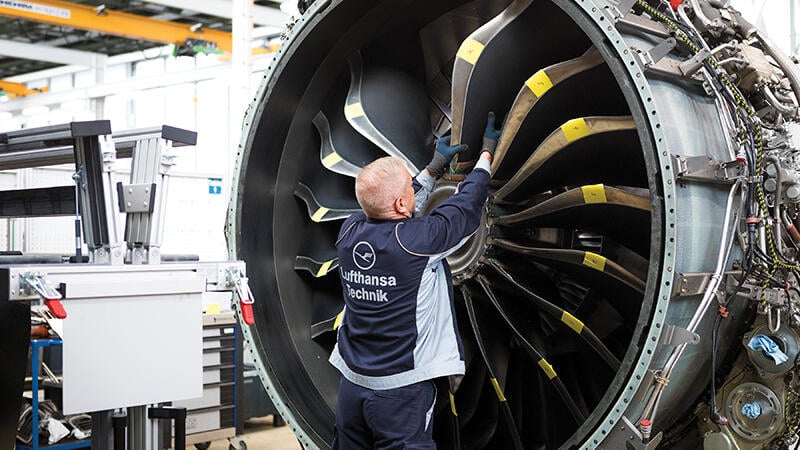
Lufthansa Technik technician

Lufthansa Technik supports a push to simplify new FAA drug and alcohol testing requirements for foreign repair stations.

Credit: Lufthansa Technik

Testing Tweaks

Repair stations outside the U.S. with FAA certification that work on U.S.-registered aircraft face a December 2027 deadline to implement agency-approved drug and alcohol testing plans. An industry coalition is urging the FAA to streamline requirements to ensure they meet a related congressional mandate’s intent while accommodating laws of other nations.

The eight-member association coalition, spearheaded by the Aeronautical Repair Station Association, petitioned the FAA in mid-August seeking 10 changes to the December 2024 rule that was put in place more than a decade after Congress first called for it.

Among the most significant revisions: The group wants the rule’s scope to be limited to heavy maintenance facilities, as opposed to any repair station—on- or off-airport—that does what the regulation terms “safety-sensitive work.”

The U.S. Transportation Security Administration’s repair station security rule followed a similar path. Written as a single regulation covering more than 5,000 repair stations of all sizes, it was changed to match a facility’s perceived risk. The most stringent requirements apply to on-airport facilities that provide access to complete aircraft. Smaller, off-airport component shops—the majority of certified repair stations—still have security programs, but they are less stringent.

“There is nothing in the legislative history to suggest the law was intended to apply to repair stations not rated to work on complete aircraft,” the coalition’s petition states. The 2024 FAA Reautho­rization Act that led to the rule targets facilities that perform “heavy maintenance work,” which the law defines as “a C check, a D check, or equivalent maintenance operation with respect to the airframe of a transport-category aircraft,” the petition adds.

The coalition also urges the FAA to leverage the flexibility in its own rule and the 2024 law. Neither specify that repair stations have to develop new programs. Rather, shops must follow programs that both meet the FAA’s requirements and align with any applicable national laws. Given this caveat, the FAA can proactively determine that substance testing in certain countries complies with the new rule, meaning repair stations in those countries may already comply and should receive waivers.

Such an approach would alleviate one major concern expressed over the new rule: Forcing U.S.-developed programs on other countries could violate local laws, making compliance legally impossible.

“After a thorough review of all requirements specified in [the new rules and related regulations], we have identified several major concerns regarding the wording of the rule, which directly conflicts with the national laws of the countries in which we conduct our operations,” Lufthansa Technik Group said in formal comments on the petition. “Furthermore, we anticipate significant repercussions on the supply chain, potentially leading to severe operational and cost impacts for U.S.-based air carriers,” the German company continued, adding that it “strongly supports this petition.”

The coalition also wants to ensure that countries can request waivers for all shops within their borders, instead of requiring individual waivers for each affected shop. The group asked the FAA to ensure that repair stations can use national resources, including substance abuse professionals and laboratories, and not be required to use U.S.-certified labs—all but two of which are within the U.S.

The FAA has required testing at large U.S.-based repair stations for more than 30 years; subcontractors were added in 2006. Congress, via the 2012 FAA Reauthorization Act, called for expansion of testing to include FAA-approved shops outside the U.S., but several efforts over the last decade have stalled. The 2024 FAA bill revisited the effort, giving the FAA an 18-month deadline.

Arguably the most significant hurdle the FAA faced in developing the rule over the years was how to impose U.S. regulations in foreign countries. It also struggled to justify the requirements from a safety standpoint. While the agency acknowledges in the final rule that it lacks the data to make a safety justification, the mandate’s language should address the flexibility issue. The coalition’s requested changes fill newly identified gaps.

“The government and industry are coming to terms with the associated compliance challenges, many of which could not have been considered during the prior rulemakings, as they have only become apparent since the issuance of the final rule,” the petition states. “The proposed amendments are based on the petitioners’ in-depth analysis [of the affected rules], knowledge of the global aviation maintenance industry and suggestions from members. The proposed changes will ensure the FAA achieves the objective of the congressional mandate in the most efficient manner for the FAA, the [Transportation Department], foreign repair stations and the U.S. operators who rely on them.”

The coalition is urging industry to submit formal comments on how the rule as written will affect them. The petition and instructions on how to comment can be found at: regulations.gov/docket/FAA-2025-2498

—Sean Broderick

Sean Broderick

Senior Air Transport & Safety Editor Sean Broderick covers aviation safety, MRO, and the airline business from Aviation Week Network's Washington, D.C. office.