This article is published in Aviation Week & Space Technology and is free to read until Jul 05, 2026. If you want to read more articles from this publication, please click the link to subscribe.
Opinion: Preparing For The FAA’s Global Substance Testing Requirements
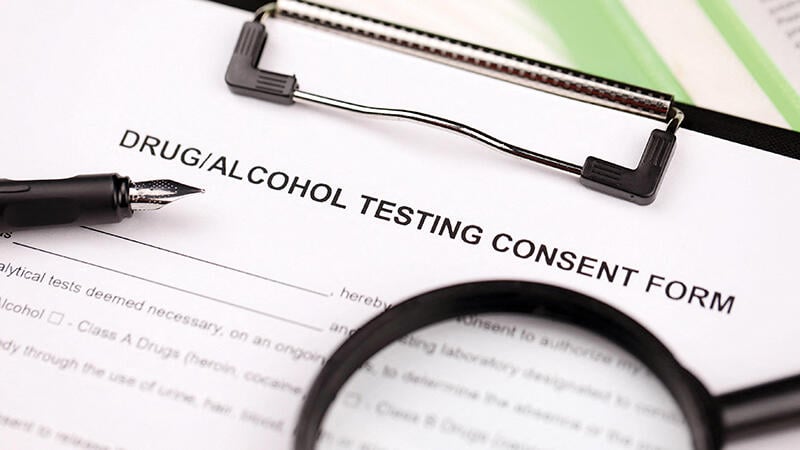
The FAA took over a decade, but it has now published a congressionally mandated final rule, expanding 14 CFR Part 120 drug and alcohol testing requirements outside the U.S. Compliance is required by Dec. 20, 2027.
There is no safety issue; the safety case is so weak that the FAA could not justify extending the same international drug and alcohol (D&A) requirements to airline mechanics. A foreign citizen performing safety-sensitive work for a U.S. air carrier at a foreign repair station (or its contractor) is covered by the rule, but a U.S. airline mechanic performing the same work in the same country is outside the airline’s testing pool. The hypocrisy is not lost on industry or foreign governments.
More troubling is that the new rule requires full compliance with both 14 CFR Part 120 and the U.S. Transportation Department’s 49 CFR Part 40 despite no global testing and compliance infrastructure.
ARSA is sounding alarm bells about the new requirements, developing resources for members and governments seeking waivers/exemptions, and urging the FAA to address problems with the rule.
The association helped ensure the congressional mandate provided flexibility to the FAA—foreign repair station D&A programs must be acceptable to the administrator and consistent with the laws of the country in which the repair station is located. The final rule allows foreign repair stations to obtain waivers from the sections of Part 120 that are inconsistent with local laws (see §120.9). The rule also allows foreign repair stations and foreign governments to obtain a waiver from all the requirements of Part 120 if the company or country has an acceptable D&A regime in place (see §120.10).
Unfortunately, if the country allows some but not all testing, it is unclear if companies must also apply for exemptions from the Transportation Department rules (see 49 CFR §40.7). ARSA says the law provides the FAA with the authority to find allowable D&A testing acceptable, even if the testing protocol is different than what is required by Transportation Department rules. The association’s petition for rulemaking and its subsequent request for reconsideration were submitted to clarify this important aspect as well as other problematic requirements of the final rule.
To inform and support compliance, ARSA:
- Has developed an informational webpage: arsa.org/regulatory/faa/operations/drug-and-alcohol-testing/
- Is drafting a compliance toolkit that can be obtained by member request: arsa.org/about/contact-us/
- Is coordinating with industry and government contacts to “test” waiver/exemption strategies and push the FAA to issue useful guidance sooner rather than later.
The association used its own tools to develop a §120.10 waiver petition for Australia’s Civil Aviation Safety Authority as a model for how an authority should structure a waiver petition when its rules mirror those of the FAA and Transportation Department. Unfortunately, the Australian government has not acted to waive the requirements for current and future maintenance organizations in that country.
ARSA has done a substantial portion of the work, but getting ahead of that December compliance deadline is going to take significant resources from industry. Establishing what testing is or is not allowed will take expertise in the nation’s laws, and whatever testing is allowed, the protocols need to be equivalent to that contained in 49 CFR Part 40. Deciphering compliance is up to the industry, not the FAA; awaiting its guidance may only result in more confusion.
Christian A. Klein is the managing member of Obadal, Filler, MacLeod & Klein, overseeing the policy advocacy practice. He represents trade associations as a registered federal lobbyist and provides strategic communications and legal counsel services to clients. He is executive vice president of the Aeronautical Repair Station Association.
The views expressed are not necessarily those of Aviation Week.