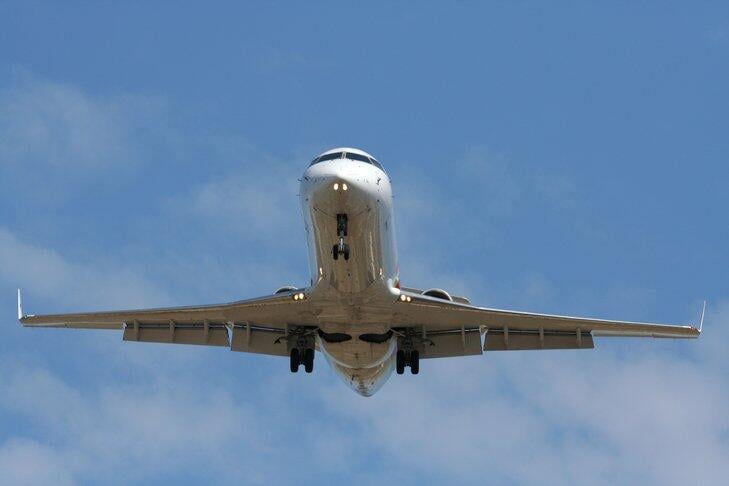
CRJ-200
ORLANDO, Florida—MHIRJ is expanding its aftermarket offerings to support a resilient and growing fleet of Bombardier-manufactured regional jets, including CRJ-200s finding new lives as two-class aircraft in United Airlines’ network.
The supplier has added parts manufacturing to its capabilities, senior VP Ross Mitchell told Aviation Week.
“We’re cutting metal,” Mitchell said in an interview at Aviation Week’s MRO Americas. “It’s fabricated metal parts where the supply chain [has gaps]. We can manufacture those parts ourselves.”
At the part-number level, MHIRJ can produce some 7,000 parts at its component repair and overhaul (CRO) facility in Bridgeport, West Virginia. The focus is on structural parts, Mitchell said.
The work is done in a former back shop that supports a seven-line heavy maintenance facility on the site. MHIRJ split the shop into CRO and the new manufacturing operation.
CRO focuses on largely the same types of parts. “It’s a lot of flaps, doors,” and similar items, he said.
While expanding into capabilities such as hydraulics is possible, Mitchell said the need for structures work keeps the shop busy.
“The demand is such on the structural parts that we can continue to grow it without branching out beyond that,” he said.
MHIRJ is supplementing its internal capabilities with parts sourcing. It now leases landing gear, for instance. It has not gotten into used serviceable material but will seek parts for customers in need.
“We actively participate in finding parts,” Mitchell said. “It’s usually on an as-needed basis but has been growing over the last couple of years.”
Much of the demand stems from the CRJ family’s solid footing in the U.S. airline network. Embraer offers the only new-build regional jets that can meet major airline scope clauses that restrict the flying of smaller-capacity jets. But the Bombardier legacy line has carved out its own unique niche—two-class regional jets that offer comfort akin to the mainline offering.
United in March announced plans to add at least 40 reconfigured CRJ-200s to its network. The 41-seat aircraft, dubbed CRJ-450s, will include seven first-class seats as well as new overhead bins and first-class baggage storage. SkyWest Airlines will operate them under capacity purchase agreements.
While the initial agreement covers 40 aircraft under a CPA, SkyWest President Chip Childs said SkyWest plans to retrofit more, including up to 30 that are in storage.
“We ... anticipate that our total CRJ-450 fleet will reach approximately 100 aircraft,” Childs said on an April 23 earnings call.
The arrangement follows the CRJ-550 program that sees United operate reconfigured and re-certified CRJ-700s to a 50-seat, two-class layout. It also gives new life to a category of aircraft facing a grim future as mainline carriers seek to replicate mainline amenities—and generate premium-level revenue—while expanding their networks into as many markets as possible.
“The CRJ-450 enhances the life of the fleet,” Childs told Aviation Week at the aircraft’s recent unveiling. “We anticipate utilizing these airframes for quite some time.”
Aviation Week Fleet Discovery lists 1,297 Mitsubishi CRJs in the global fleet—about a third of them built as CRJ-200s. This includes 424 of all variants categorized as parked or stored. It is unclear how many of these are undergoing maintenance as part of the CRJ-450 program or other reactivations.
SkyWest said it has 29 of the planned 50 CRJ-550s in service, with the rest slated to join the fleet this year. It has at least 10 other aircraft—likely future CRJ-450s—undergoing heavy maintenance following long-term storage.
CRJ-450 conversions take about two weeks and are being done at SkyWest’s maintenance facility in Tucson, Arizona. SkyWest plans to run two lines to expedite the work. The first CRJ-450s are expected to enter service this fall, SkyWest said.
New life for a seemingly sunsetting 50-seat aircraft variant will necessitate additional support. Between its Bridgeport and Tucson heavy maintenance facilities and the growing ancillary services, MHIRJ believes it is prepared to meet operators’ needs.
“We’re here to support the airplanes,” Mitchell said. “Because we’re here to support the airplanes, the airlines will keep them. There’s no reason to take them out of service from an economic perspective. If you have products like the 550 or the 450 and the passenger really likes them, that’s a key win for operators, and they’ll just continue to operate them.”

Related Content