
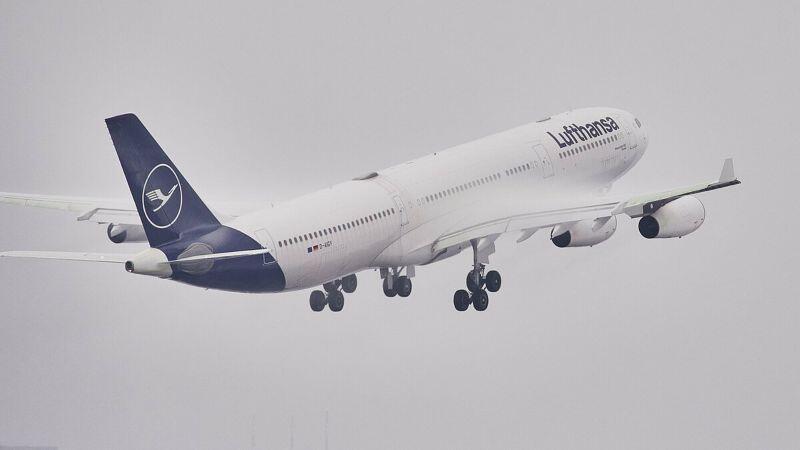
Lufthansa Airbus A340
ORLANDO, Florida—Airlines are making adjustments in response to shifting demand linked to the Middle East conflict, but there is no evidence that a wave of retirements is imminent.
“We don’t necessarily see a huge uptick in retirements as a result of the conflict,” Aviation Week Director, Fleet Data Services Dan Williams said on the opening day of Aviation Week’s MRO Americas event here April 21. “We might, though, see an uptick in stored aircraft.”
Williams said some carriers will respond to higher fuel prices and demand weaknesses by removing aircraft already earmarked for near-term retirement, such as Lufthansa’s four Airbus A340-600s and two Boeing 747-400s. But unlike following the 2020 COVID-19 downturn, formal retirements will hold off until demand patterns are clear.
New aircraft deliveries will continue apace as operators embrace more efficient equipment, he said. If the conflict’s ramifications, led by high oil prices and reduced demand, extend past summer, more older aircraft are likely to slow their activity as airlines play the waiting game. “They might take a little bit out of their schedules. They might use some [older] aircraft a little bit less,” Williams said.
Aviation Week’s latest Fleet and MRO Forecast, which covers aircraft certified for 19 or more seats and was completed before the Middle East conflict began, sees retirements rising from a projected 600 this year to 1,200 in 2030.
Industry input in recent days points to measured reductions, but not major declines in airline capacity or aftermarket demand. GE Aerospace reduced full-year departures guidance to flat-to-low-single digits from mid single digits. This factors in “low double-digit decline in the Middle East” and “modest reductions” in other regions, GE Aerospace President Larry Culp said on an April 21 earnings call.
“Based on our experience during the global financial crisis, the impact to services will likely lag changes in air traffic demand by several quarters, to be followed by a period of above-average growth,” Culp added.
Alaska Air Group will cut 1% of planned capacity this quarter, the carrier said April 21. Its planned 2-3% expansion in 2026 remains on the table.
Such small, near-term changes support the view that carriers are prepared to weather higher fuel prices for a short time in hopes of a strong rebound when fuel costs drop.
“I know it’s early days, but as we sit here in April, both the number of parked aircraft and the retirements are really low,” GE Aerospace CFO Rahul Ghai said on the call. “In fact, the retirements in [the first quarter] for CFM56 were lower than what we experienced in [the fourth quarter of 2025]. We’ve not seen any increase in either of those two trends.”
This story has been updated.

Related Content




Comments
Look at the pandemic. That lasted a couple years and a lot of airlines regretted the aircraft they retired when traffic came roaring back.