Daily Memo: Why High Fuel Prices Vs. MRO Would Be A Long Battle

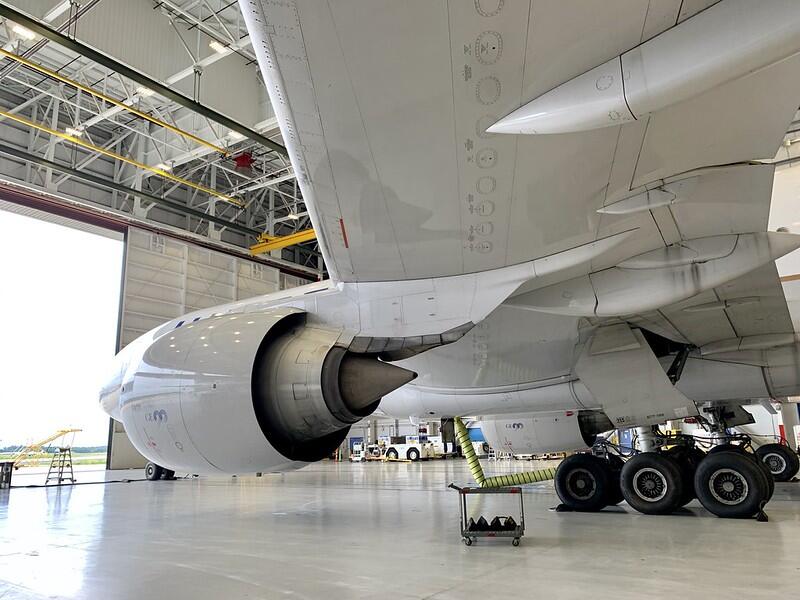
Aircraft in hangar
Credit: Sean Broderick/Aviation Week

High oil prices may undercut what has been a predictable upward march in commercial MRO demand. But a lot has to happen—most of it bad—to see theoretical concerns morph into real-world collapse.

Recent MRO spending has been bolstered by the need to support midlife aircraft: mostly older Airbus A320s and Boeing 737s that are key parts of the critical narrowbody segment. Until airlines start retiring these birds in sizable numbers, engine service providers—many also supporting unexpected durability issue fixes on current-generation aircraft—will be long on turn-times and short on induction slots.

Aviation Week's latest Fleet and MRO Forecast sees global fleet retirements doubling over the next five years, peaking at about 1,200 in 2030. Higher-than-expected fuel prices could accelerate this, but other factors will continue to favor midlife aircraft.

Take the PW1000G geared turbofan (GTF) problem. Pratt & Whitney's original outlook for its contaminated powder metal (PM) fleet management plan projected daily aircraft on ground (AOG) figures averaging about 350 aircraft through 2026. But longer-than-expected engine turnaround times have kept affected aircraft—mostly A320neos—grounded for longer than expected.

Pratt doesn't provide specific grounding numbers, but Aviation Week Fleet Discovery shows about 630 PW1000G-powered A320neo-family aircraft out of service. Not all of them are down due to the PM inspection requirements, but it's a safe bet that plenty more than 350 are. The hard truth is that figure hasn't been below 350 since that number was surpassed as inspections—and groundings—ramped up in early 2024.

“Current generation narrowbody engine durability remains challenged, which has placed greater reliance on the legacy engine fleet,” wrote RBC Capital Markets analyst Ken Herbert in an April 14 note on the MRO market. “We would also highlight the continuously elevated GTF AOGs, which are further pressuring capacity availability.”

Taking away current-generation aircraft availability issues, older aircraft have seen service-life boosts as Airbus and Boeing struggle to meet their new-aircraft delivery targets.

After more than half a decade of seemingly constant struggles, Boeing appears to be on the road to recovery. Its first-quarter delivery total of 143 was its best first three months since 2019 before the 2020 downturn, which not coincidentally was when its most recent string of self-inflicted issues started, with the 737 MAX grounding.

Airbus on the other hand is feeling supply chain-generated pain. It delivered only 114 aircraft last quarter, including just 81 A320neos. This is the same manufacturer that not long ago planned to be producing 75 A320s per month by now; that ambitious target has been moved to late 2027.

For Airbus, engine availability is the main issue, which has not been helped by new PW1100Gs being diverted to the in-service fleet suffering from the higher-than-projected AOG total.

Pratt will eventually dig out of its crater-sized hole. But barring a significant decline in traffic demand, airlines will need plenty of legacy narrowbodies to fill the void in the interim. And that means business for MRO providers.

Fewer passengers buying tickets will eventually hit the aftermarket. RBC is keeping a particularly close eye on businesses with heavy short-cycle reliance, such as consumables vendors and component suppliers. Conversely, “airlines will be reluctant to give up engine or heavy MRO slots,” Herbert wrote.

Carriers may park aircraft quickly to trim capacity. But they aren't likely to formally retire airframes as quickly as they did following the 2020 downturn, when faster-than-expected travel demand rebound caught most airlines off guard.

"We believe the airlines continue to benefit from record load factors, limited confidence in OEM delivery schedules, and fresh memories about aggressive retirements in the pandemic, which proved troublesome as air travel recovered faster than expected," Herbert wrote.

That may change—but it won't happen quickly.

Sean Broderick

Senior Air Transport & Safety Editor Sean Broderick covers aviation safety, MRO, and the airline business from Aviation Week Network's Washington, D.C. office.