This article is published in Aviation Week MRO part of Aviation Week Intelligence Network (AWIN), and is complimentary through Jun 27, 2026. For information on becoming an AWIN Member to access more content like this, click here.
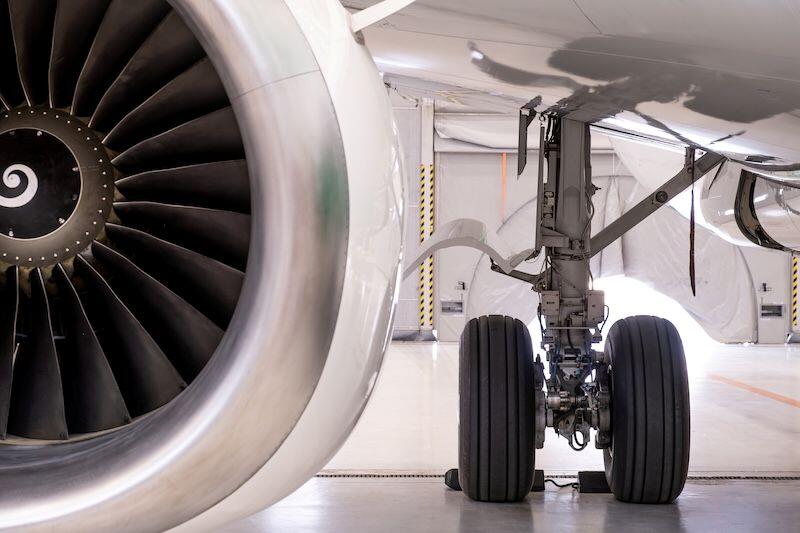
A growing shortage of narrowbody landing gears, especially for newer aircraft, is becoming a serious constraint for the aftermarket, with supply for Airbus A320neo and Boeing 737 MAX aircraft now extremely limited and unlikely to improve any time soon.
Eigirdas Keblikas, vice president of asset trading and leasing at Magnetic Trading, told Aviation Week that the gap between older and newer aircraft markets has widened significantly. “If we compare the availability of A320ceo and 737NG landing gear shipsets with A320neo and 737 MAX, the difference in the secondary market is significant,” he says, highlighting strong availability for older types versus very tight supply for newer aircraft.
For the A320ceo, landing gear availability remains high, supported by years of aircraft retirements and teardowns, with supply “in the three-digit range.” The 737NG market is also relatively stable, with units available in different conditions. But for newer aircraft, the picture is vastly different. “For the A320neo, despite some recent teardown activity, secondary-market supply remains very limited,” Keblikas said, estimating approximately seven to nine shipsets circulating globally.
“For the 737 MAX, the market is practically dry” he said. “At present, we do not see meaningful open secondary-market availability.”
The limited supply is not being eased by teardown activity. While more A320neo aircraft are being parted out, this is largely due to engine issues rather than normal lifecycle trends. Keblikas points to engine-related challenges, especially with Pratt & Whitney GTF-powered aircraft, explaining that the ongoing GTF inspection programs, durability issues, and shop capacity constraints have led to extended ground times for part of the Neo fleet. In some situations, he reckons teardown becomes economically more reasonable than waiting for engine slots.
However, even as more material enters the market, it is unlikely to improve availability. “We can expect some additional AR [As Removed] landing gears to enter the secondary market in the coming years,” Keblikas said. But he adds that this rising demand will likely absorb most of the additional AR supply, meaning overall AR landing gear availability for the Neo platform will remain tight. For the 737 MAX, supply is expected to stay even tighter, as the teardown pipeline remains extremely limited. “MAX landing gear will continue to be mainly controlled within OEM programs or long-term strategic agreements rather than freely circulating in the secondary market,” he added.
Demand differences between aircraft variants are also playing a significant role. The A321neo, for example, is seeing strong demand and almost no teardown activity. “It is [A321neo] currently the most attractive and in-demand narrowbody variants, with strong utilization and very limited teardown activity,” Keblikas said. “AR landing gear availability for A321neo is even more constrained than for A320neo.” Similar trends have been seen before, such as with the 737-800, where high demand supported stronger pricing than smaller variants.
Airlines and lessors are already changing how they manage these challenges. Larger operators are relying more on long-term OEM and MRO agreements, while smaller carriers are planning much earlier. Keblikas notes that many operators now secure assets 12–24 months before major shop visits to avoid AOG risk, showing a shift toward forward planning rather than last-minute sourcing.
Looking ahead, the situation could become even more challenging, considering that aircraft delivered between 2015 and 2019 will soon require major landing gear overhauls, creating a surge in demand between 2027 and 2030. At the same time, maintenance capacity and skilled labor are not growing at the same pace. Keblikas warns that this imbalance between increasing overhaul demand and limited shop availability will put additional pressure on the market.