This article is published in Aviation Week & Space Technology and is free to read until Nov 14, 2026. If you want to read more articles from this publication, please click the link to subscribe.
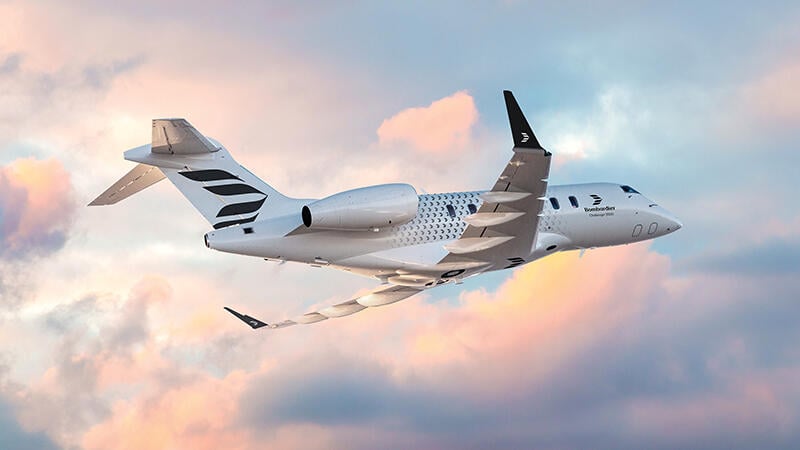
Bizjets such as the Bombardier Challenger 3500 are benefiting from new demand from companies and wealthy individuals alike, both of which are surging in part due to historic stock market activity and artificial intelligence.
The U.S. created more than 1,200 new millionaires every 24 hr. last year, and more than 2,600 millionaires were minted every day around the world in 2025, according to the UBS Global Wealth Report. Sometimes, it feels like they are all trying to fly or even buy business jets.
Traditionally, business and private aviation providers have looked to business activity trends to foretell their coming fortunes. A rising tide of broad economic growth, particularly in the West, would trigger more demand for business jets. Great recessions, such as after the 2008 financial crisis, meant darker days ahead. Stock markets were good proxies for which way things were going, of course.
Increasingly, however, one indicator in particular is becoming worth watching: the initial public offering (IPO). IPOs have picked up in both quantity and value, bringing trillion-dollar companies such as SpaceX. While those IPOs are related to general stock market conditions, they are increasingly manufacturing armies of new millionaires by themselves.
According to analysts at Jefferies, U.S. IPO activity increased 25% year over year in 2025 to 257 IPOs. Total bizjet deliveries rose 14% in 2025. Halfway through this year, IPO proceeds already were almost three times 2025 full-year levels, bearing at least $125.6 billion through June against 2025’s $45.3 billion. To note, Jefferies only counted so-called regular--way U.S. IPOs, not the speculative special-purpose acquisition company share debuts. By event, the IPO count just halfway through this year was 75% of 2025’s total.
The analysts said that, excluding the 2020-21 COVID-19 years, IPO activity and bizjet deliveries were 70% correlated over the past 10 years.
Some of the IPOs are tied to the current super-cycle of infrastructure spending surrounding the artificial intelligence (AI) buildup. But AI also is simply fueling the U.S. economy higher despite inflation, rising bond yields and growing energy costs. Corporate profits reached a record $3.95 trillion in the first quarter of 2026, up 15% compared with the year before.
This is notable for many reasons, the Jefferies analysts said through a series of June reports around their summit. General wealth creation is considered a leading indicator of business jet demand, with 30-40% of deliveries going to corporate customers, 20-30% to HNW individuals, 10% to fractional operators and the remaining 30% to charter operators and other purposes.
The global billionaire and ultra-high-net-worth (UHNW) population—people who command more than $30 million in net worth—has grown at a 5% compound annual growth rate since 2019, culminating in 3,110 billionaires and 713,626 UHNW individuals, the analysts said. Over the period, the global billionaire and UHNW population correlated 83% to business jet departures.
“Business aviation has seen a structural narrative shift since 2019, with departures, aircraft demand and flight activity materially higher as new users appear to have remained in the category,” the analysts said. “The outlook is supported by continued growth in ultra-high-net-worth populations, corporate profits and relatively low bizjet density outside North America, suggesting a long runway for penetration over time.”

Related Content