This article is published in Aviation Week & Space Technology and is free to read until Nov 18, 2026. If you want to read more articles from this publication, please click the link to subscribe.
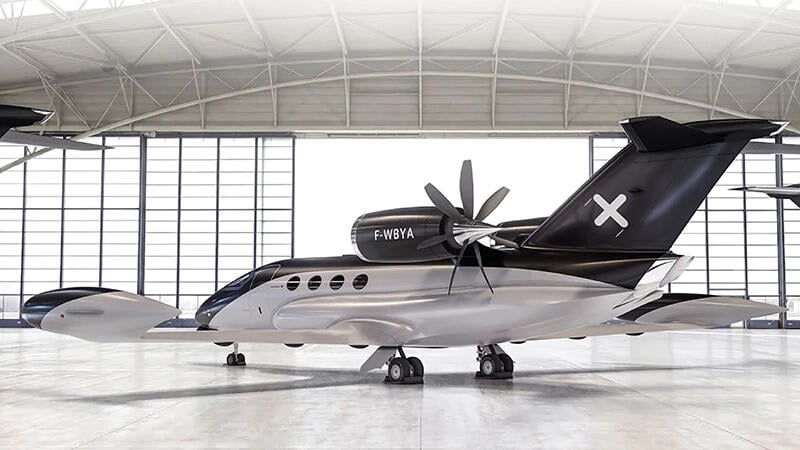
French startup Beyond Aero plans to develop a hydrogen-electric business aircraft.
There is no shortage of choice in business aircraft. The more than 850 jets and 590 turboprops delivered in 2025 were spread across some 45 types and submodels, ranging from turbine singles to ultra-long-range jets, according to the General Aviation Manufacturers Association.
In a crowded market with competing products available in almost every niche, where do manufacturers go next? When jets can fly 8,000 nm and Mach 0.95, do they go farther or faster? With cabin widths ranging from less than 5 ft. to more than 9 ft., do they go bigger? Or will they pursue greater efficiency and lower emissions?
Answers are far from clear. Manufacturers have become more secretive about their plans. Gone are the years of marketing buildup for new models. The gap between unveiling and delivering has come down to months in some cases, with prototypes flying in secret before the formal launch.
At the top of the market, Dassault and Gulfstream have new models in development. Publicly at least, Bombardier does not, having certified its range-topping Global 8000 at the end of 2025. The market still awaits news on a replacement for the company’s long-serving, still-selling Challenger large-cabin jet and on what Embraer’s next business aircraft will be.
Down through the market to the lightest jets and turboprops, there is similar tension between what is known and what is speculated. Suppliers talk cryptically about new engine and avionics applications, but the airframers stay mum. Here is what we know.
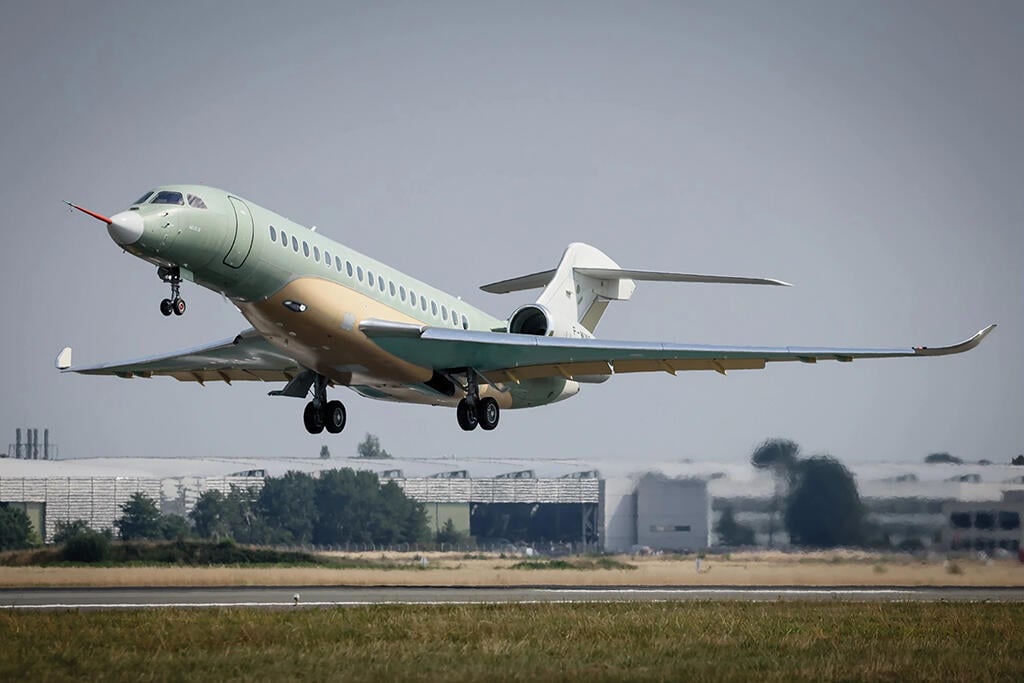
Dassault flew the ultra-long-range Falcon 10X in June but has pushed entry into service to 2029 in anticipation of a longer certification time frame. With a maximum range of 7,500 nm, speed of Mach 0.925 and a 9.1-ft.-wide cabin, the 10X tops out a lineup that includes the large-cabin 2000LX and 6X, as well as the long-range 7X and 8X.
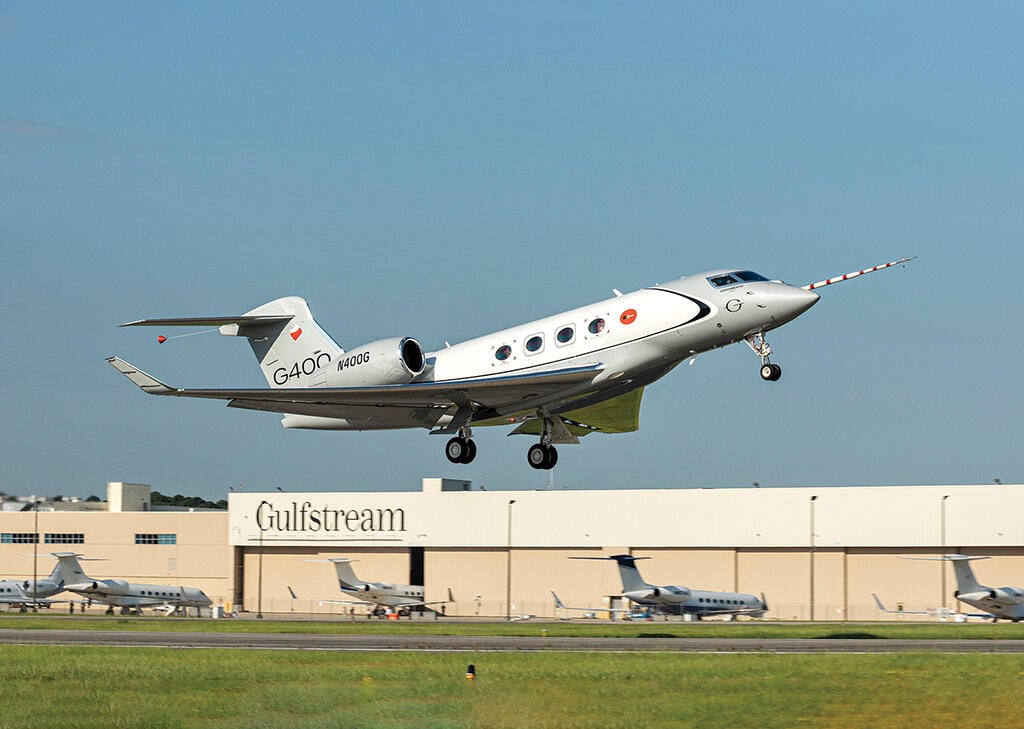
Gulfstream’s 4,100-nm G400 has been flying since August 2024, filling out a large-cabin lineup that includes the G500, G600, G700 and range-topping G800. Deliveries were to begin this year, but after multiyear certification delays to the G700 and G800, Gulfstream has stopped setting a target.
Long-time Gulfstream partner Israel Aerospace Industries flew the 3,600-nm super-midsize G300 in December, with deliveries planned to begin by early 2028. The G300 is a derivative of the G280, the last of which is scheduled for delivery in the second quarter of next year after 15 years of production.
Textron Aviation has now flown all three upgraded variants of its Cessna light jet family, the Garmin G3000-equipped M2 Gen 3 and CJ3 Gen 3 and the CJ4 Gen 3 with Garmin’s G3000 Prime integrated flight deck—all with emergency autoland capability. The Gen 3 CJ4 is planned to enter service this year, followed in 2027 by the Gen 3 M2 and CJ3.
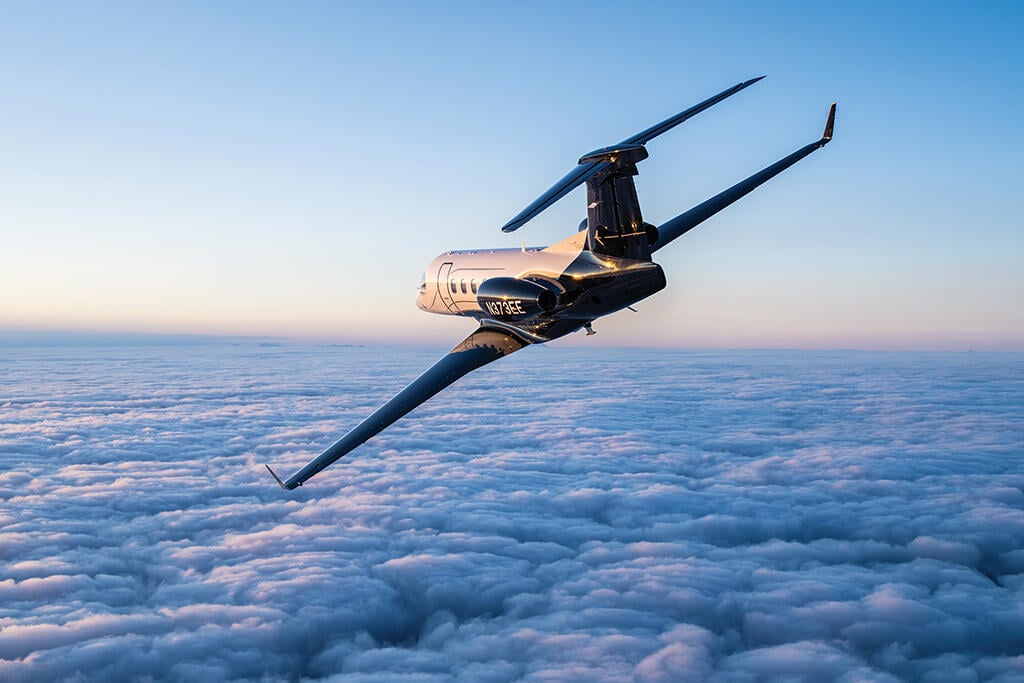
Embraer continues to study its next clean-sheet business jet, but certified the upgraded midmarket Praetor 500E and 600E in February, although deliveries will not begin until 2029 when production switches over. Similarly, the emergency-autoland-equipped Phenom 300EV light jet, announced in July and certified in August, will not enter service until 2028.
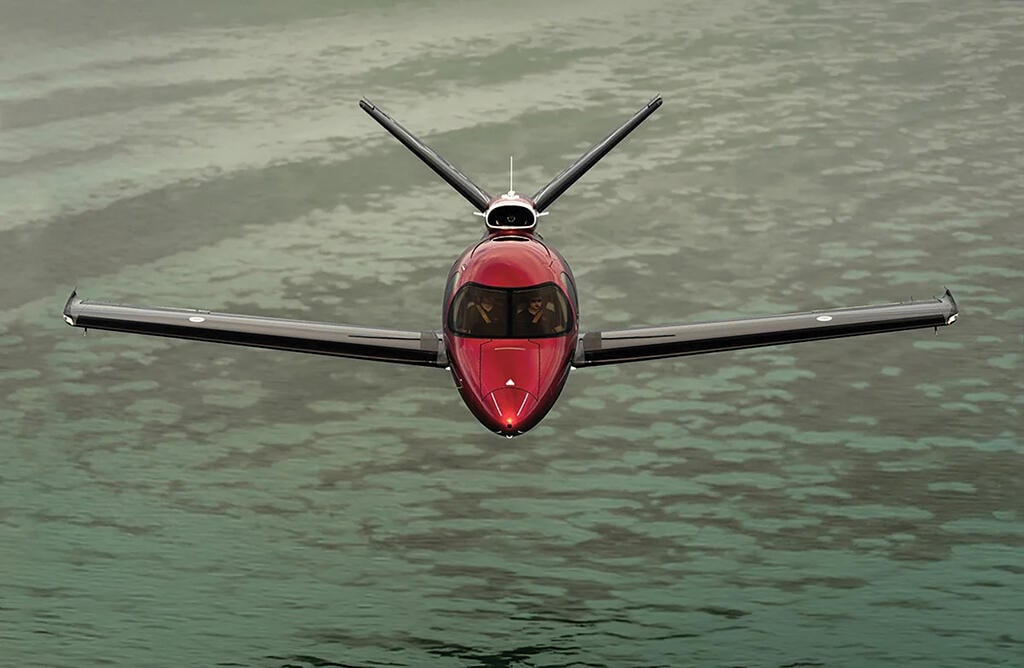
Since its formation in August 2006, Honda Aircraft has produced only one type, the light HondaJet. The company certified its latest iteration, the emergency-autoland-equipped Elite II, in February. Now, in its 20th year, Honda Aircraft is developing a second model, the Echelon transcontinental light jet, but supplier issues have pushed first flight back to 2028 and service entry to 2031. In the turboprop market, certification flight testing of Textron’s clean-sheet Beechcraft Denali is planned to be completed in October, and long-awaited entry into service is now expected in 2027. The delays mean the Denali now joins a lineup of refreshed turboprop competitors: Daher TBM 980, Epic E1000 AX, Pilatus PC-12 PRO and Piper M700 Fury. The field also includes one jet, Cirrus’ updated G3 Vision Jet, which entered service in February.
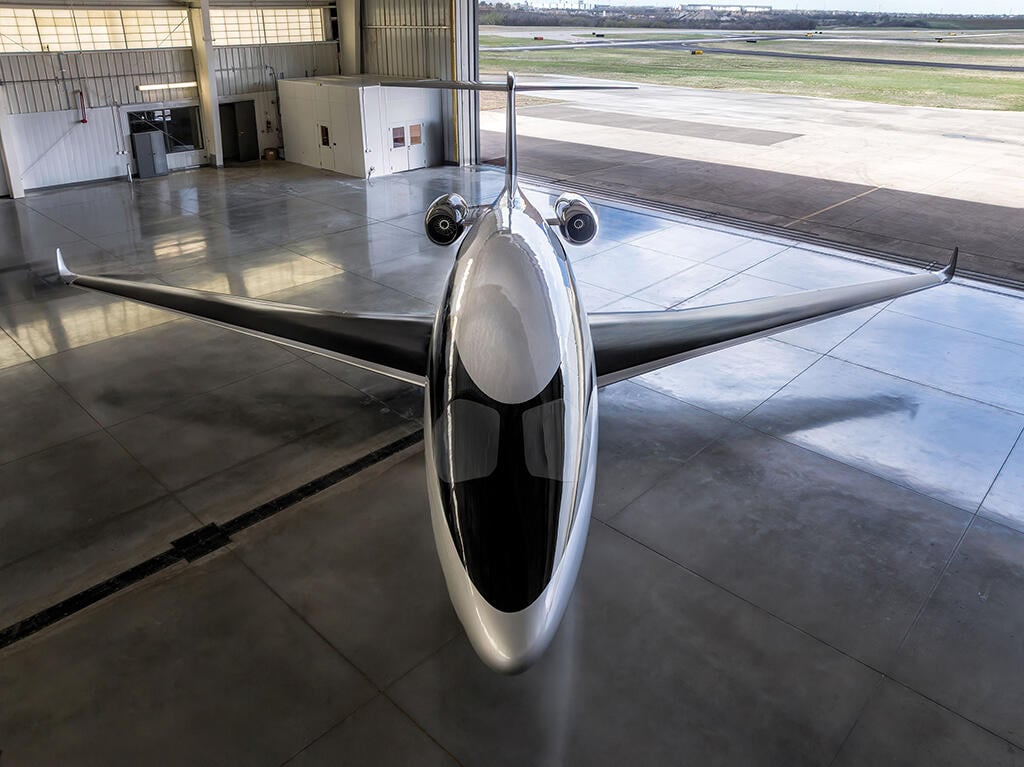
It is tough to break into the business aviation market, where brand loyalty is strong, but that does not discourage everyone. Armed with breakthrough aerodynamic technology and a 300-aircraft launch order from fractional operator FlexJet, U.S. startup Otto Aerospace is developing the Phantom 3500, aiming at the middle of the business aviation market.
Thanks to drag-reducing natural laminar flow and a lightweight all-composite airframe, the Phantom 3500 is super-midsize in cabin volume and performance, but with the purchase price and operating costs of a lighter jet. Projecting 50-60% lower fuel burn than competing aircraft, Otto plans to fly a prototype in late 2027, followed by certification in 2030.
French startup Beyond Aero has an even bolder plan for a zero-emission business aircraft, the BYA-1, powered by hydrogen fuel cells. Targeting a 400-nm range at a 300-kt. cruise on gaseous hydrogen and propfan engines, Beyond Aero is aiming for Part 25 certification and early-2030s delivery.
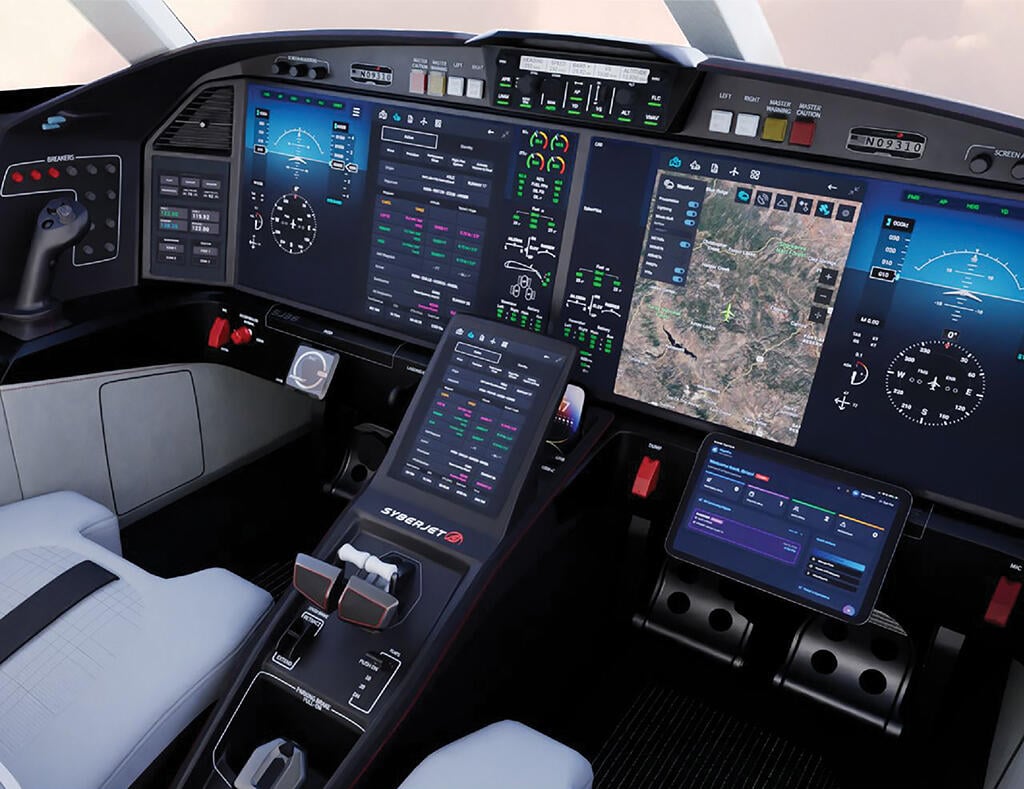
Under new ownership since 2025, SyberJet Aircraft is making another run at getting the former Swearingen SJ30 high-performance light jet back on the market in the revamped form of the SyberJet SJ36. Planned to be unveiled at NBAA in October, and with a 3,000-nm range at Mach 0.88 and 41,000 ft., the single-pilot SJ36 features the company’s proprietary SyberVision integrated flight deck. Flight tests are planned for 2029, and certification for 2032.
Business aviation, inevitably, is also an attractive market for other startups hoping to enter the aircraft industry. These include France’s Aura Aero, which is offering an executive “Lounge” version of its planned ERA hybrid-electric, 19-seat regional aircraft. The 900-nm range, 300-kt. ERA is targeted at certification in 2030.
While it is difficult to predict the plans of the incumbents and progress of the new entrants, business aircraft deliveries are forecast to grow by 2030, by which time the choice of models on offer to buyers could be even wider than today.

Related Content