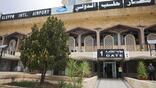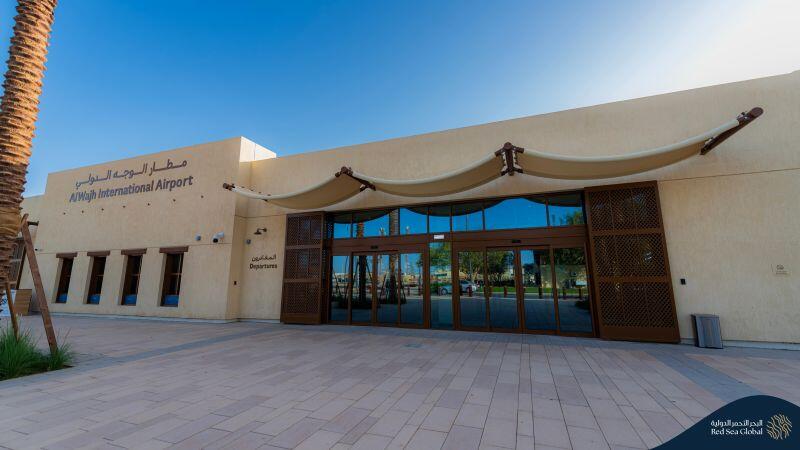
Saudi Public Investment Fund-owned real estate developer Red Sea Global (RSG) has completed a major expansion of AlWajh International Airport (EJH), creating a second aviation gateway for Saudi Arabia’s Red Sea tourism developments.
EJH can now handle up to 500,000 passengers annually, up from 100,000 previously, with a peak capacity of 330 arriving/departing passengers per hour across four gates. The airport can accommodate commercial aircraft including the Airbus A320 and Boeing 737 families.
The site has been rebuilt as a fully certified commercial operation, with airside enhancements, upgraded security screening, premium passenger facilities and modern processing systems installed alongside a new terminal.
“The airport has been upgraded to accommodate larger aircraft and significantly higher passenger volumes, creating the capacity needed to support future growth,” Abdulaziz Al-Abdan, executive director of aviation and airport operations at RSG tells Aviation Week.
The terminal uses a decentralized passenger processing model through five independent pods, allowing capacity to be activated based on demand—an approach Al-Abdan says improves operational flexibility while reducing energy consumption. Digital technology is embedded throughout the passenger journey, from biometric processing and intelligent baggage handling to airport management systems supporting operational resilience.
EJH is currently served by scheduled Saudia flights connecting Riyadh and Jeddah and will act as a gateway to Amaala, the luxury wellness destination set to open in the coming months, located 45 min. away by electric vehicle or 20 min. by seaplane.
“The airport has been designed to integrate commercial aviation with helicopter and seaplane operations to support onward connections to the resort,” Al-Abdan says.
Al-Abdan said RSG is working to expand the airport’s route network. “We are already working with airline partners and regulatory authorities to develop the route network in the future, in line with growth in demand,” he says.
EJH sits alongside RSG’s flagship Red Sea International Airport (RSI), which opened in 2023. “Together, RSI and EJH form part of a broader integrated aviation ecosystem that includes commercial aviation, executive aviation, helicopters, seaplanes and future advanced air mobility opportunities,” Al-Abdan says. “Few destinations globally have had the opportunity to develop such an integrated ecosystem from the ground up.”
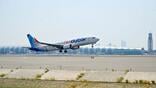
According to OAG Schedules Analyser data, RSI capacity has grown 56.4% year over year to around 81,000 departure seats for summer 2026, with domestic routes accounting for roughly 74% of capacity. Riyadh is the largest route with 43,765 seats, followed by Jeddah, Dubai and Doha. Saudia holds about 61% of capacity, ahead of FlyDubai (13%) and Qatar Airways (9%). Beond offered Milan Malpensa and Male service until April 2026. Milan is scheduled to resume in October, according to the latest schedules.
EJH remains smaller and entirely domestic, with around 16,300 departing seats for summer 2026 split between Riyadh and Jeddah, served exclusively by Saudia.
Saudi Arabia remains on track to meet its Vision 2030 aviation targets, Al-Abdan says, citing sustained investment, regulatory leadership and collaboration between government, airports and airlines.
However, he acknowledges that growth brings challenges around building sustainable airline connectivity. “Infrastructure alone does not create connectivity; it must be supported by market demand, commercial viability and long-term partnership,” he says. “We have experienced that journey at Red Sea International Airport and are now applying the same approach at AlWajh International Airport.”

Related Content