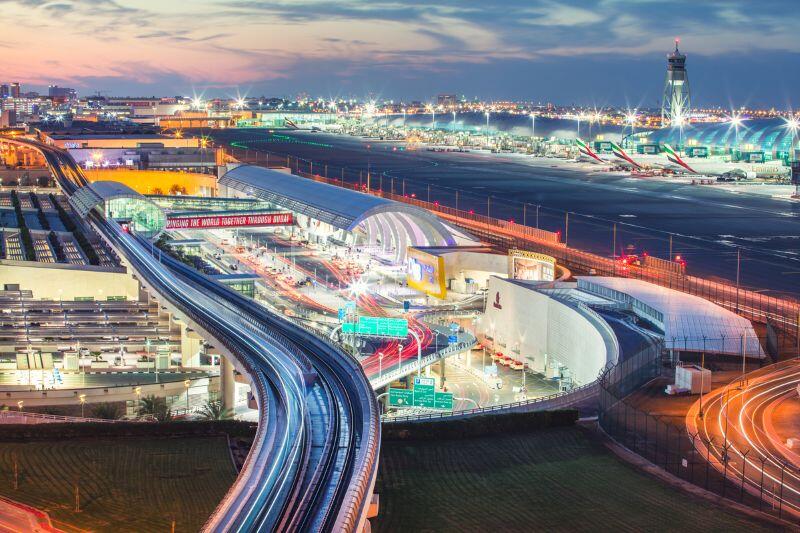
Dubai International Airport
Dubai International Airport (DXB) has received its first direct passenger flight from Tehran’s Imam Khomeini International Airport since the Iran-Israel-U.S. conflict disrupted regional air travel, marking a significant step toward restoring connectivity with Iran.
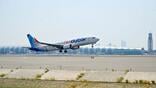
A FlySepehran aircraft landed at DXB’s Terminal 2 on June 29, according to flight tracking data from Flightradar24.com, becoming the first scheduled direct service from the Iranian capital since operations were suspended during the regional crisis.
The route’s suspension followed regional airspace closure after Feb. 28 military strikes on Iran. A ceasefire has held since April, with U.S.-Iran peace talks continuing under a 60-day framework. Commercial flights between Tehran and Dubai had remained grounded until now.
The disruption has taken a toll on capacity in the market. Prior to the conflict, OAG data shows that some 86,526 two-way seats were scheduled between Iran and the UAE for February 2026, a 24.5% drop from the same month a year earlier.
Seven airlines serve the route network, with FlyDubai holding the largest share at 47%, followed by Mahan Air at 23.8%, Air Arabia at 13.3% and Emirates at 12%. Combined, FlyDubai, Emirates and Air Arabia account for roughly 72% of total seat capacity between the two countries.
Dubai-Tehran remains the busiest link, with 46,815 scheduled seats, ahead of Dubai’s connections to Iranian cities Shiraz, Mashhad, Bandar Abbas and Lar.
Separately, Sabre Market Intelligence data shows that origin-and-destination traffic between Iran and the UAE reached 1.39 million passengers in 2025, down 3.9% from the prior year, with the Tehran–Dubai city pair making up 59% of that total.
Jared Harckham, Global Aviation and Tourism Managing Director at ICF, told Aviation Week the return of direct flights between Tehran and Dubai signals growing confidence in regional stability.
“Airlines wouldn’t put their aircraft, crews or passengers at risk unless they had confidence in the operating environment,” he said. “The resumption of these flights highlights the essential connections across the region. Despite the recent tensions, countries still need to work together, and air travel remains a vital link. That’s an encouraging sign. It suggests that commercial, religious and other essential needs will ultimately outweigh the conflict, much of which has been driven by factors outside the region.”
FlySepehran operates a fleet of 12 Boeing 737 aircraft serving domestic routes within Iran as well as international destinations including Baghdad, Istanbul, Kuwait, Oman capital Muscat, Georgia capital Tbilisi and Armenia’s capital Yerevan.

Related Content