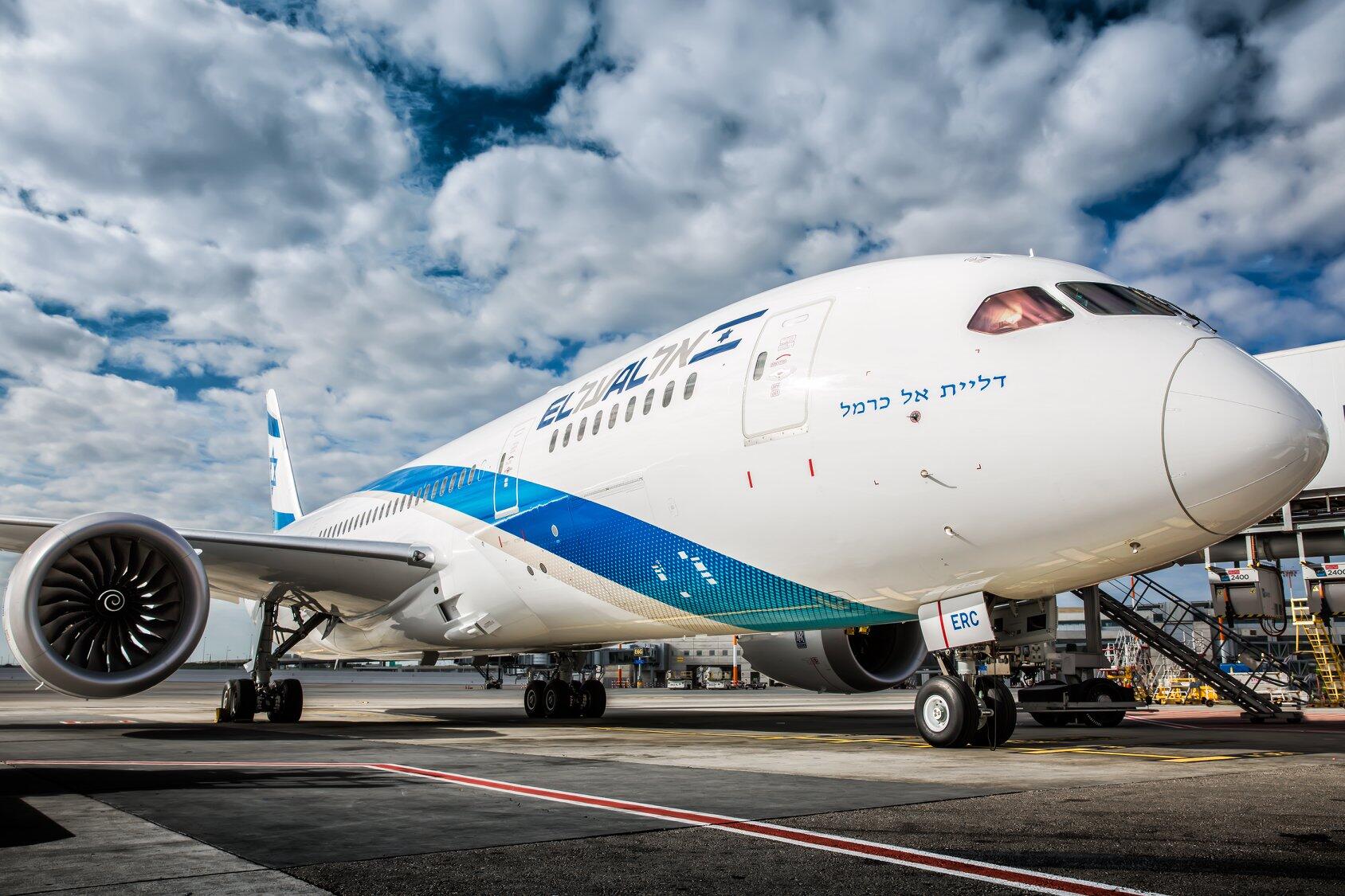
El Al Boeing 787
Middle East airlines had restored much of the capacity lost following U.S. and Israeli strikes on Iran earlier this year, but renewed military tensions have raised fresh uncertainty over the recovery.
Analysis of OAG Schedules Analyser data shows airlines are scheduled to operate about 22.9 million departing seats from and within the Middle East in July, equivalent to about 741,000 seats per day. That represents a sharp rebound from March, when carriers cut services, rerouted flights and avoided large parts of the region’s airspace.
However, July scheduled capacity remains 7.5% below the average daily level recorded before the Feb. 28 strikes and 6.9% below July 2025. Scheduled flights are also down 7.3% year over year, indicating the region has yet to fully recover despite the strong rebound in recent months.
The disruption followed U.S. and Israeli attacks on Iran and Tehran’s subsequent retaliation, which led to widespread airspace closures across the Middle East. Iran, Iraq, Israel, Jordan, Qatar and other states either closed their airspace or imposed restrictions, forcing airlines to suspend services and reroute long-haul flights around conflict zones.
Although many restrictions have since eased, the latest military exchanges involving the U.S. and Iran underscore how fragile that recovery remains.
The European Union Aviation Safety Agency on July 8 replaced its broad Middle East conflict-zone bulletin with a revised advisory framework, maintaining high-risk warnings against operations in the airspace over Iran, Iraq and Lebanon while introducing a separate information note highlighting continuing medium-level risks across Bahrain, Israel, Jordan, Kuwait, Oman, Qatar, Saudi Arabia and the United Arab Emirates (UAE).
The UAE experienced the largest absolute reduction in capacity. Average daily departing seats fell to roughly 133,100 in April from about 262,500 before the conflict. July schedules show capacity recovering to approximately 222,200 daily seats—although that remains about 15% below pre-strike levels and nearly 13% lower than July 2025.
OAG data shows the largest Gulf carriers have restored much of their networks, but July schedules remain below last year’s levels. Emirates is scheduled to operate about 2.98 million departure seats from and within the region this month, down 10.2% year over year, while Flydubai is down 17.5% and Qatar Airways is 4.5% lower. Etihad Airways is an exception, with July capacity up 11.6% compared with July 2025.
On a country level, Israel is among the strongest performers, with scheduled capacity set to reach about 1.39 million departure seats in July, up 31.2% year over year and 34.4% above the pre-strike February baseline. Tel Aviv’s Ben Gurion Airport is scheduled to offer about 42,600 daily seats, up 28.6% from July 2025.
Israeli carriers are driving much of that rebound. El Al Israel Airlines’ July capacity is scheduled to rise 10% year over year, while Arkia is up 78.4% and Israir is up 16.1%, as the country’s airlines fill gaps left by the slower return of international operators.
Saudi Arabia has also proven resilient. Scheduled July capacity is about 7.42 million departing seats, 0.7% higher than July 2025, supported by domestic growth, the launch of Riyadh Air and expansion by LCCs. Flynas’ capacity is up 3.3% year over year, while Flyadeal is up 11%.
However, the weakest recoveries remain in markets closest to the conflict. Iraq’s July scheduled capacity is almost 34% below July 2025, while Iran remains 29.5% lower and Kuwait is down 27.3%. Tehran Imam Khomeini International Airport is scheduled to offer about 102,000 departing seats in July, down 52% from a year earlier.

Related Content