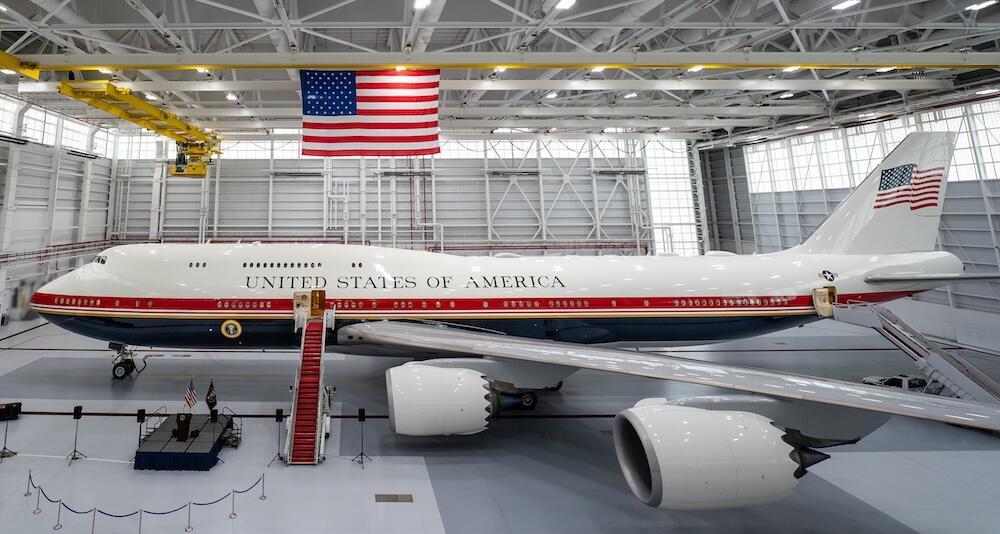
The United States Air Force (USAF) has officially taken delivery of a Qatari-donated Boeing 747-8 to use as a “stop-gap” Air Force One.
This week’s Flight Friday takes a look at aggregated 747 flight cycles from January through May for the last few years and examines the generation of aircraft that flew them.
Post-COVID, the passenger version of the aircraft almost dried up. Back in May 2019, there were, combined, more than 160 passenger 747s, predominantly the 747-400.
Fast forward to now, and there are fewer than 50 passenger aircraft remaining in service. In the interim, over 100 passenger 747-400s were removed from service, with most becoming great sources of used serviceable material to help keep the remainder of the fleet flying.
With the retirement of these passenger 747-400s, utilization has seen a corresponding drop. The 747-400 is down over a third from 2019 levels, which is almost all due to the passenger version retirements, while the freighter variations of the 747-400 remain in high demand. Their in-service fleet remains at around 200 aircraft, which is very similar to 2019 levels.
The 747 classics (747-100 to -300 and SP) were already in short supply in 2019 and remain even rarer in today’s climate. With less than 20 remaining in-service, including the current Air Force One pair, the time of seeing these at airports is coming to an end.
The 747-8’s utilization profile, with first deliveries starting 15 years ago with a freighter aircraft to Cargolux, has remained reasonably consistent over the last few years.
However, with the USAF buying five former Korean Air 747s to convert to E-4 “Doomsday” aircraft, plus the sale of an additional two former Lufthansa examples to use for crew training, the opportunity to ride on a 747 as a passenger is becoming increasingly more difficult.
This data was put together using Aviation Week’s Tracked Aircraft Utilization database.

Related Content