
This article is published in Aviation Week & Space Technology and is free to read until Dec 18, 2026. If you want to read more articles from this publication, please click the link to subscribe.
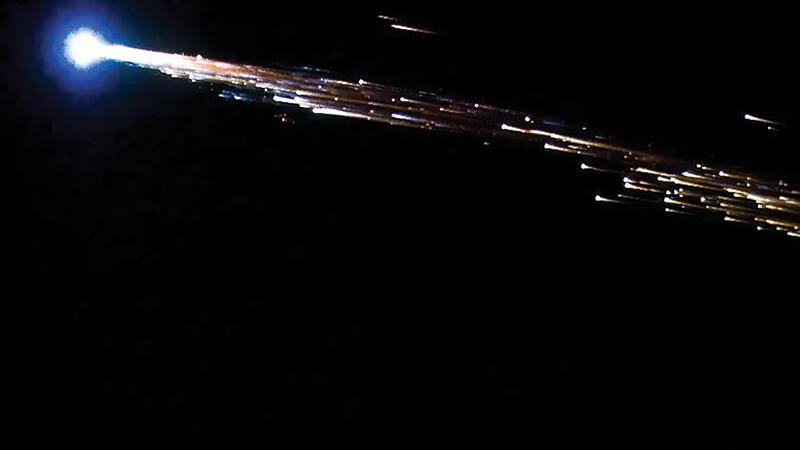
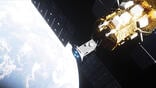
Particles from reentering spacecraft can settle, reach the ozone layer and interact with ozone molecules.
The space industry’s rapid growth could create another pollution issue—this time in the atmosphere—adding to the existing hazard of space debris. Researchers are finding that rocket launches and spacecraft reentry generate particles and chemical reactions that could harm the ozone layer and worsen global warming.
Unlike for space debris in orbit, the atmospheric complications of launch and reentry have yet to be understood. The space sector might have to start documenting sources of contamination as a basis for future regulation.
- Metal particles and soot can contribute to depletion
- Researchers seek data from industry to understand the extent of the problem
The ozone layer designates the higher concentration of ozone at 15-35 km (9-22 mi.) altitude in the stratosphere, which itself extends 12-50 km above Earth. The ozone absorbs the Sun’s most harmful ultraviolet radiation, protecting life on Earth. The 1987 Montreal Protocol bans substances that contribute to depleting the ozone layer.
Launchers and deorbiting satellites travel through this region. Their emissions at those altitudes and higher can interact with ozone as their particles settle. Researchers expect an ensuing adverse impact on the ozone layer.
Researchers have studied the metal particles that spacecraft generate in the stratosphere during atmospheric reentry. Daniel Murphy at the U.S. National Oceanic and Atmospheric Administration’s (NOAA) Earth System Research Laboratory in Boulder, Colorado, published a study in 2023 which notes that most of the recently launched spacecraft settle in low Earth orbit, meaning they have a limited life expectancy before they reenter the atmosphere, where they burn up.
Satellite reentry creates an issue, particularly with the expanding number passing back through the atmosphere due to the advent of mega-constellations. At their end of life, satellites are designed to generate zero debris in orbit and minimize risk on the ground. But this approach treats the atmosphere like a trash can, says Connor Barker, a research fellow at University College London (UCL).
The products of that combustion tend to persist in the atmosphere, where researchers have found metal particles that cannot originate from natural phenomena. “We have known for a long time that about half the particles in the stratosphere are essentially made of iron from meteors that burn up,” NOAA’s Murphy says. “We found in 2023 that a lot of these same particles also contained metals in amounts that could not have come from meteors.” Aluminum, copper and lithium have been the most striking examples for researchers.
About 10% of the particles in the stratosphere are estimated to contain aluminum from spacecraft—satellites and launcher upper stages—burning up. “That is a remarkable number,” Murphy says, noting that it is just part of an upward trend.
The number of satellites burning up in the stratosphere annually has grown since 2023 and is expected to continue to increase. At that time, satellites that were launched in 2022 were still in orbit. Those might be deorbiting now, as they typically spend about five years in orbit. It takes about six months for the metal particles to fall from the altitudes where spacecraft burn up into the stratosphere, where they spend a few years. “They then come down into the lower atmosphere and either reach the ground or get removed in rainfall, for instance,” Murphy says.
Researchers understand the accumulation process in the stratosphere and expect it to snowball at an uncharted rate. The real unknown lies in chemistry. “We are not so worried about the particles when they come down to the ground,” Murphy says. “We are worried about them when they are in the stratosphere and what the impact might be on the ozone layer.” For example, the chemistry of niobium, one of the metals his team measured, is poorly understood in stratospheric conditions.
A similar unknown involves aluminum particles, which disintegrate and create metal oxide particles, or alumina. “We do not know their size or chemistry,” UCL’s Barker says. “If we knew, we could characterize their persistence in the atmosphere and the amount of ozone depletion they contribute.”
In addition, whether metal particles can act as ice nuclei and therefore generate clouds has yet to be determined. “Stratospheric clouds are rare, but when they form, they play a role in the destruction of ozone molecules,” Murphy says.
Launchers are beginning to move away from using the solid propellant that has fueled strap-on boosters. That evolution is favorable, as using solid propellant emits chlorine and alumina, which both contribute to ozone depletion, Barker says.
However, SpaceX’s Falcon 9s launch most mega-constellations—and the kerosene for the Falcon 9 emits soot, or black carbon, into the atmosphere. Most of it is deposited into the stratosphere, or even higher, in the mesosphere, Barker says. Black carbon contributes to ozone depletion, too.
The most recent and future launcher designs, such as SpaceX’s Starship and MaiaSpace’s Maia mini-launcher, are switching to methane. Compared with kerosene, methane produces 80% less black carbon per kilogram of propellant burned. Moreover, those engines do not emit alumina, which has the strongest impact at high altitudes, says Agwilh Collet, coordinator of environmental activities at French space agency CNES’ space transportation department. However, the size of the Starship propulsion system and the planned launch cadence mean total black carbon emissions may grow, Barker says.
As black carbon also contributes to radiative forcing, the emissions issue may be broader than ozone depletion. Climate change may come as well. However, those phenomena are impossible to quantify or have unacceptable uncertainty at this stage because of a lack of measurements, Collet points out.
Despite the evaluation challenge, researchers can make comparisons. Spacecraft-generated emissions are smaller than aviation’s, but in some parts of the atmosphere, they have a stronger effect per unit of mass. These are the only human-made emissions at such high altitudes, so the soot that rockets release has hundreds of times more impact than soot from flights, Barker says.
A warming effect on the stratosphere does not mean a warming effect on the troposphere, however. The thermodynamic balance is complex and has yet to be fully understood, Collet notes.
Before governments and space agencies create regulations, researchers need data to understand the effect of the myriad emissions and the extent of the issue. The emissions problem is not only underregulated but has also been underreported, Barker says. Over the last 25 years, the number of launches has grown fourfold, while the number of satellites in orbit has increased by a factor of 30, Collet says, and the sector expects to expand more.
“We try to characterize emissions and how best to integrate that [description] into a global model so as to simulate the impact on the atmosphere,” Barker says. “We need information from satellite manufacturers and launch service operators. We need the chemical composition of their spacecraft—not in detail, but at least information such as ‘aluminum accounts for 80% of the weight of the spacecraft’ and propellant mass in a rocket.” Trajectory information is decisive, too, as the chemical reactions from propellant change with altitude.
Gathering this data has been challenging. In the U.S., mega-constellation filings are exempt from environmental review. The U.S. government has not yet corrected that longstanding procedure, Barker says. “When researchers request access to launch sites to measure emissions, they often face reluctance,” he adds.
Some countries and agencies are already moving to create rules and frameworks. France’s consultation space committee, Cospace, which gathers representatives of the government and the space industry, published a road map in 2025 on decarbonizing the country’s space industry and curbing its broader environmental impact. The road map calls for a 38% cut in emissions by 2040, despite the industry’s growth, and prioritizes the effects on the upper atmosphere. Cospace’s suggestions include reducing use of solid propellants, which emit more particles during combustion, and ablative materials that have strong radiative forcing and ozone depletion effects.
“We hope to have emissions estimates by 2027 for the next edition of the road map,” Collet says.
France’s law on space operations already includes requirements to identify and quantify expected emissions in the atmosphere’s higher layers as well as the emissions’ altitude. The European Space Agency, the European Union and CNES stipulate that the life-cycle analysis of a spacecraft include emissions.

Related Content

Comments