This article is published in Aerospace Daily & Defense Report part of Aviation Week Intelligence Network (AWIN), and is complimentary through Jul 12, 2026. For information on becoming an AWIN Member to access more content like this, click here.

Europe's Launcher Demand Has Yet To Translate Into Orders, Panel Says

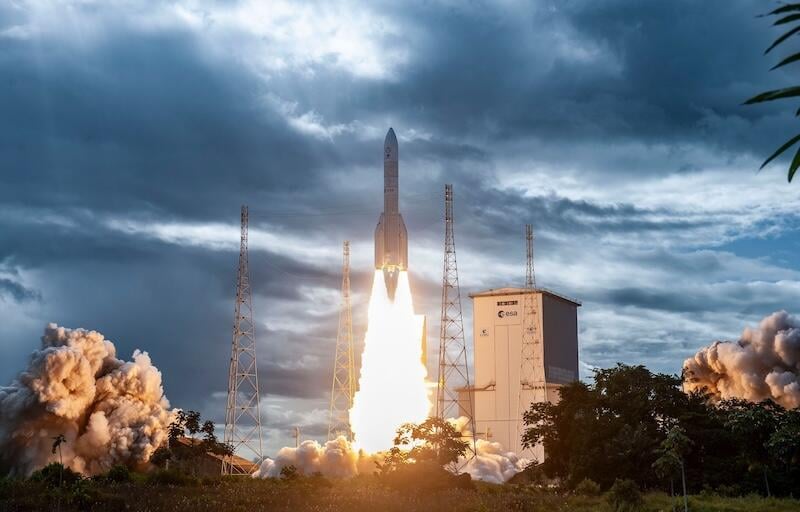
ariane 6 launch

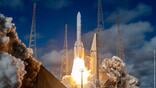
Ariane 6 will provide 200 metric tons of launch capacity from next year, ArianeGroup CEO Christophe Bruneau says.

Credit: Arianespace/ArianeGroup

BERLIN—While the space sector is in agreement that launch demand will surge in the coming years, launcher manufacturers still need orders to secure a production ramp-up, according to a panel discussion at the ILA Berlin air show.

The situation illustrates how slowly European institutions and nations move when asked to put their money where their mouths are. Typically, although they have funded the development of new European launchers, they have not formally established a European preference for launch services—or, they take a long time to order a launch after they determined their needs in terms of satellites.

A sharp increase in demand appears imminent. “In 2029-31, we will see a huge demand for European launch services,” Géraldine Naja, the European Space Agency's (ESA) director of space transportation, said during the June 11 panel. “Ariane 6 and Vega-C will not suffice.” ESA has plans for 10 Ariane 6s—with ArianeGroup as the prime contractor—and six Vega-Cs, with Avio, per year in the short term.

With the increased launch cadence, Ariane 6 will provide 200 metric tons of launch capacity from next year, ArianeGroup CEO Christophe Bruneau said, emphasizing that will cover Europe's institutional needs. But commercial demand will come on top of institutional demand.

ESA devised the European Launcher Challenge (ELC) to encourage privately developed launchers, promising the agency will be their anchor customer. Startups—such as Isar Aerospace—are beginning with small rockets. Their first flights are planned for late 2027, meaning European companies can meet the expected demand, Naja said.

“ESA stands ready to order launches,” she added on the sidelines of the discussion. “That is what we have promoted via the ELC, even though our member states are conservative. ESA knows what satellites it needs to launch.”

Those startups are getting impatient. Even though customers know about a likely bottleneck, they are procrastinating, said Stella Guillen, Isar's CCO. Yet, receiving orders is crucial to raise capital, which in turn enables the building of factories and production of rockets. “Some customers from Asia and the U.S. book flights for 2032,” she said. “We still do not see such bookings from German customers.”

Despite the larger size of ArianeGroup, an established player, Bruneau concurred. “Stability is of the essence for production costs,” he said.

Thierry Dubois

Thierry Dubois has specialized in aerospace journalism since 1997. An engineer in fluid dynamics from Toulouse-based Enseeiht, he covers the French commercial aviation, defense and space industries. His expertise extends to all things technology in Europe.