This article is published in Aerospace Daily & Defense Report part of Aviation Week Intelligence Network (AWIN), and is complimentary through Jul 12, 2026. For information on becoming an AWIN Member to access more content like this, click here.

ESA Eyes Ariane 6 For Human Spaceflight

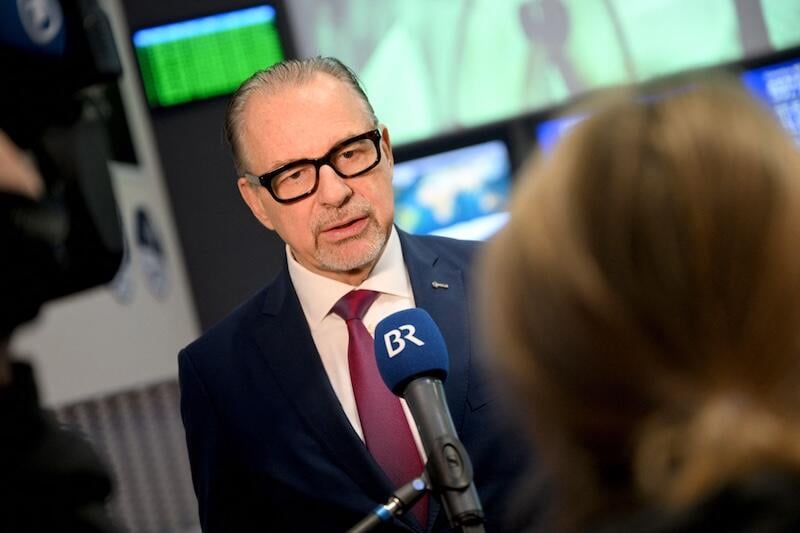
Josef Aschbacher

Josef Aschbacher.

Credit: dpa picture alliance/Alamy Stock Photo

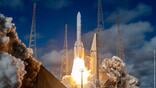
BERLIN—As Europe pursues its goal of becoming more autonomous in space, the European Space Agency (ESA) is exploring whether its Ariane 6 rocket could take astronauts to orbit.

Ariane 6 is Europe’s flagship heavy-lift rocket that has been used to deploy spacecraft for two years. While it is not currently human-rated, “this is something that we're investigating right now,” ESA Director General Josef Aschbacher said.

A final assessment has not been made, but Aschbacher was upbeat about the prospects. “The chances are pretty high, or pretty good, that this can be materialized,” he told reporters at the ILA Berlin air show. It would require some adaptation of the rocket, he acknowledged.

The issue of transporting astronauts is climbing up the European political agenda as France in September looks to host a space summit and ESA plans an inter-ministerial meeting in December on human space exploration.

ESA also is working on another element that could give Europe greater independence from the U.S. and Russia, which comprise its primary partners to take crew to the International Space Station (ISS).

The agency is working with Thales Alenia Space and The Exploration Company on cargo return capsules that could evolve into human carrying vehicles. Aschbacher noted that SpaceX’s crew carrying Dragon capsule also began as a cargo hauling vehicle and took several years to reach the point it was allowed to transport astronauts.

ESA is looking to demonstrate at least one of those systems with operations to low Earth orbit in the near future. It is not yet clear whether the trials would involve trips to the ISS.

There would be other elements Europe would have to put in place to attain proper autonomy. The European spaceport at Kourou, French Guiana, would require some updates, for instance.

“All of this is certainly a long-term investment,” Aschbacher said. Even if a decision to pursue human spaceflight ambitions is [made] at a political level this year, it would take time to get ready.

“I think now is a good moment to reflect on this and make a decision of where Europe wants to go,” Aschbacher said.

Robert Wall

Robert Wall is Executive Editor for Defense and Space. Based in London, he directs a team of military and space journalists across the U.S., Europe and Asia-Pacific.