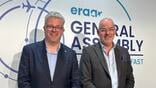
In 2029, Scottish regional carrier Loganair is set to be one of the world’s first commercial airlines flying electric aircraft. Loganair CEO Luke Farajallah talks about his first-mover decision and what it will take to make electric aircraft work in real-world airline operations.
Subscribe Now
Don't miss a single episode. Subscribe to Aviation Week's Window Seat Podcast in Apple Podcasts, Spotify or wherever you get podcasts.
Discover all of our podcasts at aviationweek.com/podcasts
AI-Generated Transcript
Victoria Moores (00:10): Hello everyone, and thank you for joining us for Window Seat, our Aviation Week Air Transport podcast. I'm Air Transport World Europe and Africa bureau chief, Victoria Moores, and I'm delighted to welcome you on board. I'm joined this week by Loganair chief executive Luke Farajallah. So, for our listeners who might not be familiar with Loganair, it's a regional airline that connects the highlands and islands of Scotland using ATRs, Embraer ERJ 145s, Twin Otters, and Britten-Norman Islanders. With that fleet, Loganair operates a network of around 70 routes and also holds the world record for the shortest commercial scheduled flight between the Scottish islands of Westray and Papa Westray in the Orkney Islands. Now, that route is just 90 sec. or 53 sec. if there's a really good tailwind, which brings us to the topic of today's podcast: operating short routes with electric aircraft. So, at this year's Farnborough Airshow, Loganair announced an order for five BETA Technologies ALIA CX-300 aircraft for delivery from 2029.
(01:14): Now, these aircraft can carry up to six passengers over around about 215 nm, but it seems as though Loganair will initially be using it for cargo and mail flights. So welcome to the show, Luke.
Luke Farajallah (01:28): Lovely to be here, Victoria. Thank you for inviting me.
Victoria Moores (01:30): Now, it seems as though Loganair is doing some cutting edge stuff here by being one of the first commercial airlines to introduce electric aircraft. And I'm wondering what it was that brought you to this decision? You've been doing a trial. What is the compelling case for you introducing electric aircraft as an early adopter?
Luke Farajallah (01:50): So, I think there are many arguments to support our decision, but I think the most compelling is that Loganair's route network, which is over relatively short distances, featuring quite important, highly emission critical flights, feeding lifeline communities and services, that's the sort of overriding compelling case. But the other side of that coin is that we're not just a passenger service airline. We also carry freight. We also have a number of different lines of flying. We serve the energy sector, and we recognize the importance of making sure that short distances are served with reliable, dependable, and if possible, greener technology because our mission, as stated, has always been to make sure the UK and particularly Scotland can remain connected. And therefore, the case to continue doing things the way we've always done them is definitely weaker now than it has ever been given the emerging technologies. The case to remain connected is as strong as ever.
(02:46): So, the case to find a greener way of doing it is the compelling piece that makes us move forward at this stage.
Victoria Moores (02:51): And you do have a very specialized network in terms of the kind of remote places and relatively extreme weather that you face in your operations. Now, I know that you did a trial with BETA Technologies aircraft that was supported by one of your cargo clients, Royal Mail. What did you learn during that trial that you didn't already know from what BETA Technologies had told you?
Luke Farajallah (03:15): So, there are lots of competing technologies to BETA in the world today, and that's great. They're all moving forward at pace, which again is fantastic. The difference is that when you look at a concept aircraft on paper, when you look at any vehicle that you're going to think about adding to your fleet, you do so with one eye on the marketing that comes with it, and then you also look at the realities of operating in your own network. So, what BETA Technologies did was actually bring their aircraft over to Scotland. It was real, it was material. We were able to test it in the real environment. We flew it around a number of the destinations that we serve. We flew it with Royal Mail on board and we were in real time, not just on a computer modeling or in theory, a hypothesis. This was all proven technology in our network, and therefore it gave us that nudge of confidence that perhaps we needed to move further forward with BETA faster than with any other technology at this point in time.
Victoria Moores (04:17): And you mentioned about obviously you were supported by Royal Mail in this trial. How do you imagine that you will deploy the aircraft initially? Will we see you starting out with cargo ops and then moving into passenger, because it can carry up to six passengers? How do you see that balance progressing between pax and cargo?
Luke Farajallah (04:35): I think even now we're starting to get interest from various parts of the country looking at our decision to move into this technology. And the early adoption of this aircraft and this vehicle is likely to be in the cargo or freight environment. The case for the passengers is obviously to be discussed further with BETA at this point in time, but we see a definite case to move on short distances, highly sensitive, highly important cargo loads, particularly potentially medical supplies. You could even move that and extend that to blood transportation to organ transportation. And in a different configuration, you could argue it could be used in a medevac type situation as well. So, I think Royal Mail and potentially and/or medical services will form the basis for the first couple of plans that we put together, and that's certainly where we're starting to see some interest.
(05:29): We've already had interest from the Royal Mail and the trial that we did with them and we undertook with them, which is a great success as I said, but there are other organizations now starting to speak to us voluntarily to see if their needs can be met by this aircraft and our plans for it.
Victoria Moores (05:45): And obviously one of the key things for you looking at this going forward is going to be the certification program from BETA. What's the latest guidance that you've had from them in terms of when they're expecting to certify the cargo variant, the passenger variant, and when you might get European approval for that?
Luke Farajallah (06:06): So, we understand the track that they're on in the US should be completed certification-wise within 12 months. We hope earlier than that. The timescales are not entirely within their control. It's very much about the regulator. So that will ebb and flow according to their own plans, resources and commitments. But we're expecting that within 12 months and therefore the rollover then can potentially happen quite quickly to EASA and the CAA, the UK regulator as well. So, we suspect if we think about a timeline somewhere between 12 and 24 months to have full certification in the States and in Europe and in the UK, that's a reasonable timeframe, I think.
Victoria Moores (06:50): And are you expecting to be the worldwide commercial airline launch customer for this technology or is that unclear right now?
Luke Farajallah (06:58): I'm not driven by that particularly, so I haven't looked to see which other airlines. I think Air New Zealand have made a commitment. There are one or two other airlines that have made commitments as well. I don't think there's another existing commercial airline that provides passenger and cargo operations who've made the commitments as we have. So, we definitely are, if not the first mover, one of the very first movers. But from a European perspective, we're certainly the first passenger and cargo airline to make a decision to do this. Yes.
Victoria Moores (07:25): And with being that early adopter, obviously there's quite a lot of logistical challenges around introducing a new technology. So, I'm wondering about the infrastructure that you need to really get this moving and how that's progressing, what your outlook is for that.
Luke Farajallah (07:45): So, I think the first thing to say is we're not driven by a hard deadline or by pace. The new technology is by definition going to be unusual and it's going to need its own consideration. So, we have a small team working within our airline now and starting to discuss the ground infrastructure requirements with airports and look at our first-use case opportunities to see where it's going to fly to and from. And again, we are starting now to hear from airports who want to be on the list of airports that we first go to in 2029, 2030. And therefore, of course, this is going to need some changes to ground infrastructure, also going to be quite a lot of new technology flying around in different airports and different types of elements are going to need to be adapted. So, we are going to be taking our time to make sure we get this absolutely right.
(08:34): As I say, there's no rush to the finish line. We're aiming for 2029, 2030, but that will only be driven by doing things in the right order at the right time and making sure everything is in place. So, no one is making any hasty decisions to hit a deadline before we hit the case and to deal with everything correctly and in sequence to make sure it flies safely and appropriately.
Victoria Moores (08:56): Obviously when you are rolling out a new technology, there's a certain expense that comes with that. I mean, in terms of creating all of the infrastructure that you just described, how are you risk sharing with BETA Technologies on that initial infrastructure? Are they shouldering much of the cost?
Luke Farajallah (09:12): I'm not, let's say, overly concerned about the cost elements at this point in time. We've already agreed a headline price for the unit and a number of other sundry and associated benefits that come with that. So, at this point in time, until everything is fleshed out, I would say we are approaching everything pragmatically as a partnership, and I've seen nothing but total pragmatism from the team at BETA so far.
Victoria Moores (09:35): Yeah. Seeing you with the chief executive of BETA and their founder at the Farnborough Airshow, I can see that there's clearly an incredible rapport between you and the BETA team and also with your team that you've had as a longstanding set of colleagues that you've worked with in several different airlines. So, we touched there on the kind of changes to the infrastructure that are needed. I'm wondering about scheduling and operations. So obviously with an electric aircraft you need to have charging time, and I've seen some reports that's 20 to 40 min. How are you planning on managing that in terms of crew scheduling, fitting it in with your existing operations? What needs to change as a result of introducing this different technology into your fleet?
Luke Farajallah (10:21): So, this is one area that Loganair specializes in. We operate multiple fleets and multiple varieties of aircraft within those fleets. So, we're quite used to having several complex issues to deal with at any one time. Of the four headline fleets we fly at the moment, they all perform very different functions within our network. So, we look at everything quite differently within our business, and this will be an additional fleet. We've always said, and I've always said, if there is always a case for another fleet, we would look at it on its own merit and then it would join our fleet program and our fleet picture in its own right. So, the fleet in its own right, having a complex fleet isn't a problem. Adding another fleet type is not a problem, and we'll approach the introduction of the BETA aircraft in exactly the same way as we have all our other types to make sure that when it flies and where it flies and how it flies will be singularly perfect for that particular type of aircraft.
(11:17): And that's the niche type of business that we've grown and why over 65 years next year, Loganair has been the most successful UK regional airline in history.
Victoria Moores (11:27): Yep. You've got all of that experience behind you of operating a complex fleet already, which brings me onto the next question, which is how will this fit with your future fleets? So, what do you see your fleet looking like say 10 years from now?
Luke Farajallah (11:42): So, I think 10 years from now, I think the headline aircraft that we will be operating will be the ATR regional turboprop. It's very likely we will still have Twin Otters that serve, again, a particular route network in our business. And it's also very likely we will have Britten-Norman Islanders as well. I think 10 years from now, less likely we will have the Embraer jets in operation. They are approaching their sort of 25th anniversary and that in airline terms doesn't mean they become obsolescent. It just means 10 years from now there'll be 35 years down the line and probably at that point there'll be an alternative available to us. But right now, I think that the fleet structure is something I can see moving forward broadly as it is today. And within that time, we will incorporate the electric aircraft on a small scale to start with, but we will definitely be adopting them toward the end of this decade.
Victoria Moores (12:36): You mentioned that the ATR is going to stay part of the fleet. I know you've also been looking at other sustainable technologies like ZeroAvia. What are your plans on that front? How do you see that evolving?
Luke Farajallah (12:49): So, we're very interested in hydrogen technology. I think that comes with a different set of challenges from electric. And I think the adoption of electric, I think people are coming at it from an airline and a people perspective, people are quite familiar with electric technology anyway. So, in terms of the compelling case to convince people to use this, the arguments are quite well already litigated in public. The arguments around electric car technology, electric bus and coach technology, and now electric train and electric aircraft technology, these are well publicized, well discussed, and have been harmonized to some degree in the public consciousness. So, I don't see us having to convince people of the technology as such. What I do think we'll need to do is to demonstrate that the case is compelling to use them in our network, which is the work we're doing at the moment.
(13:40): We've already established a base case and there's a strong base case to do that. But when you suddenly, when you leap from concept to actual operations, that transition has to be done in a way which is in accordance with the public sort of discourse to make sure that people understand what we're doing, why we're doing it, and also to reassure people of the safety merits of this type of technology. But we're certainly interested in hydrogen. We're still adopting the blended SAF fuel that we need to as per the SAF mandate. I think that's more of a medium- to long-haul technology in terms of bringing costs and greener technology to larger aircraft on longer distances. But for us as an airline that travels in short distances with relatively small cabin size and freight requirements, the adoption of the BETA ALIA is something that really does make sense to us almost iteratively.
(14:31): So, it would be quite unusual not to see Loganair not adopting this technology, I think.
Victoria Moores (14:39): How many of these aircraft do you see in service in that 10-year fleet? I'm sure the chief exec of BETA Technologies would appreciate me asking that question.
Luke Farajallah (14:48): Yeah, so the initial order is for five plus five. That's our commitment at this point in time. So, until we have worked through those cases and we've started to really understand what those can bring and the benefits and merits of all of that, the first decision we will make of course is when and how to adopt the first five, when and how to adopt the options that we have, and then we can look further. I think one thing that's become very clear with working with BETA is they're a business that's absolutely not standing still. They're moving really quickly, and I wouldn't be at all surprised if they have different models based around the same technology for us to consider in the medium term. And they really are a company for whom the word innovation sits very, very squarely on them. They're an amazingly innovative company, so let's see what they can come up with.
Victoria Moores (15:32): What are your remaining concerns about the introduction? Is there anything that's still not fully resolved in your mind as far as you can at this point in time?
Luke Farajallah (15:42): Yeah, so as far as we can, I mean we've clearly given BETA Technologies a very clear list of the specifications that we need the aircraft to have before it can be adopted. These aircraft are going to need to fly in pretty inclement weather sometimes. They're going to need icing protection. They're going to need maximum amounts of safety protection as any aircraft would. And we want the battery power to be, the technology to be as strong as it possibly can, as quick as it can, and for the batteries to be as light as they possibly can be as well. So, we want a lot of things in this short timeframe, but things are moving very quickly and evolving in this space. And I'm confident that if we can't have everything that we desire, we'll get very close.
Victoria Moores (16:24): Final question before we wrap up, and that's if other airline CEOs are thinking about the idea of electric technologies, maybe engaging with BETA or a different manufacturer, what would be the advice that you would give them based on your experience so far?
Luke Farajallah (16:41): So, if anyone else was considering this, first thing I would suggest is they establish in their own business a use case for it and really understand as we did where this could potentially be put to use. Then perform a trial if you can, because then you become familiar with the company, the culture of the company and the type of people who work there, which is really important and the technology. Prove the case for yourselves potentially, particularly in the environment that you're wanting to fly in. And then I would suggest they give me a call, and I'll tell them behind the scenes all of the things that we discussed because this isn't about not trying to steal anyone's thunder or limelight. We're all in this together. We all want to move to a greener future and I'm happy to share my learnings and the learnings of Loganair, and there are extensive learnings already.
(17:28): And if I can help in any way, I will very happily do that.
Victoria Moores (17:32): That's a very generous offer to your colleagues and in terms of the industry coming together for sustainability. I remember one of the standout comments that I remember from you at Farnborough is that the maintenance performance had been breathtaking, that you really had had very few glitches with this and sharing that kind of know-how with your colleagues in the industry could be very useful. Unfortunately, that's all we've got time for today, so we are going to sign off. Luke, first of all, I'd like to thank you so much for your time together. I really appreciate you sharing all of your learning from the trial and from your experiences with BETA so far. And thank you also to our producers, Guy Ferneyhough, Cory Hitt, and Natalia Pelayo. And of course, a huge thank you to our listeners for following Window Seat. Make sure you don't miss us each week by subscribing to the Window Seat podcast on Apple Podcasts or wherever you listen.
(18:22): This is Victoria Moores disembarking from Window Seat.

Related Content