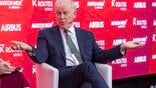
Roberto Alvo, CEO of LATAM Airlines Group, the ATW Airline of the Year, talks with Karen Walker about what drives success and wider industry issues.
Subscribe Now
Don't miss a single episode. Subscribe to Aviation Week's Window Seat Podcast in Apple Podcasts, Spotify or wherever you get podcasts.
Discover all of our podcasts at aviationweek.com/podcasts
AI-Generated Transcript
Karen Walker (00:10):
Hello everyone, and welcome to Window Seat, our Aviation Week Air Transport podcast. I'm ATW and Aviation Week Air Transport editor-in-chief Karen Walker. Welcome on board. My very special guest this week is Roberto Alvo, the group CEO of one of the world's most exciting and successful airlines: LATAM Airlines. Roberto, welcome and thank you so much for joining us.
Roberto Alvo (00:34):
Thank you, Karen. It's a pleasure being here today.
Karen Walker (00:37):
Now, LATAM is based in Chile, and under Roberto's leadership, this airline group has grown to serve domestic markets in Brazil, Chile, Colombia, Ecuador, Peru, as well as international operations within Latin America and to Europe, the United States, Oceania, Africa, and the Caribbean. It also has a highly successful freighter operation, LATAM Cargo, which has expanded its network and modernized. And LATAM has a fleet that includes more than 300 aircraft, including A320s and neos, narrowbodies, as well as 777s, 767s, and 787s, and more to come. Now, the really big news is that LATAM is the recipient of the ATW 2027 Airline of the Year Award, and it's the first airline in South America to win ATW's top award. So, this is very special indeed. Roberto, congratulations.
Roberto Alvo (01:33):
Thank you. We're very proud. Thank you very much.
Karen Walker (01:36):
So, let's just talk first and foremost, we actually were talking very recently at the ALTA, the Latin American Airlines Association's AGM. And of course, as chair of the board of that association, you were chairing that. Lots of positive talk there, but let's talk about LATAM first and foremost and that growth and success that I just talked about. What do you see as the key milestones and drivers behind that success for LATAM?
Roberto Alvo (02:08):
Yeah, thanks. I mean, it is very easy for us. It is based on people. What we understand is that first of all, we are a service business, so what we need to do well is to serve. And to serve our customers well, we have to have people that are engaged in what they do. And that means that we try to focus on making sure that the people who wake up in the morning and work for LATAM, they say, "I want to come here because it makes professional sense to me, but most importantly, because it makes personal sense to me." When you create a level of attachment between the person and what they do, then focusing on execution is much easier. So, what we're trying to do is basically influence the inputs: the things that we need to do right.
(02:48):
And we talk about three priorities: people, customers, and environment. If we do these three things right, if we do well with our people, which will take care of our customers, if we have a strategy that means that LATAM is serving the societies where we operate, then the results, which is the last priority, will be a result of doing these first three things right. So, it all starts with our 44,000 strong team.
Karen Walker (03:13):
It's still a very tough environment right now. We all know, and there's been a lot of discussion, there was a discussion at the Alta AGM, of course, very tough environment to run an airline with the high fuel costs in particular. And in Latin America, in South America, a lot of taxes and fees and infrastructure issues. You're absolutely right. It starts through people. If they're motivated, they're going to do the best job for you. But as the leader of this group, how are you thinking about this current environment? Do you see it as, okay, we just have to get through it, or do you see it as for the long term you've got to be dealing with this?
Roberto Alvo (03:56):
No, I mean, first let me divide the environment in two. One is probably the context of fuel prices now that will be there I think for some time. And then another one is probably more structural things that happen in the region that probably hamper a little bit of the growth that we have. So let me tackle the second first, which is more probably consistent over time. This is still a relatively immature industry. Our flights per inhabitant here are a fourth or a fifth of what you see in the developed countries. And the growth potential is huge. The geographies are complicated, distances are long, and air travel is even more important and more necessary in many, many, many aspects than other means of transportation, which we don't have. But unfortunately, we have either lack of infrastructure, high taxation, high fees, and public policy that in my mind hampered the growth.
(04:44):
This industry grew at close to 10% per year in the first decade of this century, and I think it was exploiting its growth potential. Today, we're growing at half of that speed, which is still good. It's two times GDP, but in my mind it could grow bigger. So, we have to tackle these challenges, if I can call them in a way, but the potential for developing the industry in the long term is still huge because it's 500 million people. They need this service and we can provide that as LATAM and together with our competitors grow this industry in our part of the world. In the shorter term or in probably the next months or quarters, on top of this, we have the challenge of high fuel. And I think that during 2026, many people hoped that this was going to be something that was going to go away.
(05:34):
I think that everybody and I realize that we're going to live through this for a longer period of time, even if there's probably a resolution to the conflict in the Middle East. I think that everybody will demand stability in that resolution and that'll take time. And then you have the stocks that have gone down over the year. So, I think that the right thing is to prepare for 2027 that will be volatile on the one side, but we'll include higher fuel prices on the other side. And this is a challenge for all of us. LATAM has focused itself on service, on making sure that the people who experience LATAM have a great experience, and that has allowed us to grow our premium revenue faster than our revenue. And that encapsulates us a little bit within the industry and shields us from this. It's still a challenging environment, but in our context, in our case, we have been dealing relatively well with it so far.
Karen Walker (06:22):
So, you still see yourself growing through everything that's going on. It's just you have to be really careful about your operating costs versus the revenue, yes?
Roberto Alvo (06:34):
And not only the operating cost. I mean, yes, we're growing this year as per our guidance, we're going to grow 9% approximately in capacity, which is one of the highest in the world despite the environment. It has slowed down from what probably could have been potential with a different fuel price. But what I think we will see over the next months and quarters is probably a more subdued growth pattern for us and for the industry because nobody is fully covering the higher fuel price and yields have gone up. But since the equation is probably still not closed for many operators, now capacity will have to adjust so that we can find a more stable equilibrium to the economic equation in the industry as a whole. So, I think that it is fair to think that probably we'll see a capacity slowdown worldwide and as well in the region in the next few quarters.
Karen Walker (07:28):
Okay, you're right. Having said that, everywhere when I'm talking around the industry, everybody's very excited inside or outside of Latin America about the growth potential for South America. We're seeing, I mean the whole thing about the bid for TAP, Portugal, for example, it was mostly focused on the fact of the access that TAP has to that part of the world. So you are in a growing area, a fast-growing area, yes, which is good. Let's just talk about that a little bit from the cargo side. LATAM has also a very successful LATAM cargo operation. How is that going right now?
Roberto Alvo (08:10):
It's going pretty well. I mean, first our cargo operation is very important to our passenger operation. And I think that even though we think about this as two different businesses, our cargo operation that has of course the belly of the passenger aircraft plus freighters, the model we call it freighter supporting belly. So, our freighters are there to support the belly capacity of our passenger aircraft. So, the network of cargo is kind of consistent and synchronized with the passenger network as well. The trends are very different. The demand is most guided by import of high value goods to the region, so spare parts, cellphones and so on. The export side is more raw materials or fruit or flour or salmon, but we have seen a strong demand environment despite the slowdown that we have seen in most countries in the region. But still it is in a very good place, and we don't see specific warnings today regarding demand.
(09:10):
And it's a good compliment, as I said, to our passenger business. So far, we're happy.
Karen Walker (09:15):
Excellent. And again, one of the things that's been noticeable under your leadership of course is the growth. You've got all the different airlines that I mentioned to begin with that are now part of the group, but you've also grown your partnerships, in particular with Delta. The partnership with Delta Airlines is very strong. What does that bring to you?
Roberto Alvo (09:39):
Well, actually, it's interesting. It's already been four years since we started our JV with Delta, so I can say that probably has matured. The nice thing about this is that the networks end up being very complimentary. There's very little overlap in our flights. Actually, only one route has an overlap. And this allows us to open for the people that live in North America, our 150 or so destinations in South America, and for our customers in this part of the world, the 300 or so destinations that Delta has. So, this allows for our customers to really choose how they want to fly, when they want to fly, with what product they want to fly. And this has implied a significant growth in capacity. We have both growth in terms of close to 40% since we started the JV, a much-improved market share position regarding that and a good combination of the product, which I think is more or less comparable to the product of Delta.
(10:32):
Of course, the standards are different in terms of the procedures and the protocols, but in terms of the quality of the service, I think they're similar. So, our customers can really enjoy end-to-end what we can offer to them together. We have, for example, today, high top tier recognition. So, if you are Black Signature, which is our top tier member of our frequent flyer, you will be treated as Delta's top tier when you fly on the Delta metal. So very good, so far very happy. And in particular, I really, really like this relationship because Delta, being the largest airline in the world, is willing to work with you side by side in creating opportunities and their sense of partnership, I really like it because it allows us to grow the pipe together.
Karen Walker (11:16):
Sounds like you sync very well. You're thinking literally at the leadership level about new ideas and where you want to go, so that works well. Can I just also go back to what you said earlier about the people side? There's a particular program, and that was one of the things among many that struck us when we were selecting Airline of the Year. And I'm going to say Solidarity Plane, sorry, Solidarity Plane Program. You can pronounce it in Spanish much better than I. So, tell me a little bit about that because I think this is fascinating.
Roberto Alvo (11:52):
Yeah, it is. We call it Avión Solidario in Spanish, but it's Solidarity Plane in English. But this goes a little bit beyond that. So basically, when I told you our priorities are our people, our customers, our environment, the way we think about LATAM is that we are relevant to the societies where we operate and we transport and connect, that's our job. And what we task ourselves as doing is how can we develop our business and at the same time contribute to those societies? We feel that LATAM is not only a company, an entity, it's also a citizen. And in that respect, we have obligations and rights. And one of the things that I think we are obligated to do is to give back, give back by using our capabilities. And this is how Solidarity Plane was grown. So basically, this is our fleet that has put us at the disposal of the places where we operate in many, many different ways, whether it's help in the case of natural disasters like the earthquake we have in Colombia or in Venezuela early in the year, or things that happen on a day-to-day basis like transporting organs or transporting people that need urgent requirement.
(12:55):
We have, at the end of the day, a network of deals with NGOs, with foundations all across South America. And we put at our disposal of these assets, whether it's one bin, one seat or the whole plane to contribute to those societies. And you know what the beauty of this is, is that this makes people understand that the purpose that we have as LATAM is not only making money and growing and buying planes, but it's also being there when it's needed and contributing sometimes on a very anonymous base, sometimes on a more visible base to what makes sense to the citizens that are in our societies.
Karen Walker (13:35):
I love that idea of airplane being a citizen, an airline being a citizen. You are very much of the community, but to do work like that is great. It must also be very motivating for your people too, that they can take part in that sort of work.
Roberto Alvo (13:52):
Think about it just a second. Customers before being customers are citizens. They get to choose you as citizens if you are their provider. So, when we think about what do we have to do, we think about not only our customers, it's how do we make sure that the people in the environment say, "I want LATAM to be here. I like what these guys are doing." So, this is the basis of the idea.
Karen Walker (14:13):
It doesn't get better branding than that really. Going back to some of the wider issues, we've talked about oil prices and the other factors that are going on, fees, et cetera. Let's also talk about the supply chain because that's also been an issue across everybody, including for LATAM. Where do things stand at the moment? Are things getting better for you on the engine and aircraft delivery and reliability side at LATAM?
Roberto Alvo (14:43):
As compared to the last couple of years, I would say that the situation has improved. Clearly the delivery delays have decreased. We're not still receiving the aircraft, all of them in time, but I think that the situation is more stable. I have a little bit of a concern that what's going on in the Middle East is not only disrupting the energy industry, but other industries as well and disrupting to certain cases, certain supply chains may increase the possibility of seeing further delays and more disruption going forward. So, I don't think we're out of the woods. And if you follow the latest announcements of Boeing and Airbus as well in terms of them feeling that they're not through this, I think this is still something that needs to be top of mind of all of us. And in the side of reliability, clearly the engine manufacturers still have work to do.
(15:38):
We have a number of AOGs, particularly on the A320neo side with the Pratt engines, improving slower than we expected, but there's still a lot of work to be done. And if you ask me one wish, my wish would be that everybody here, engine manufacturers or airframers, refrain from dreaming the next generation of technology and focus on making sure that this one works because it's been 10 years since the neo was launched. It's been 16 years since the 787 was launched and the 330neo because that also has problems and we're still dealing with situations that are complex and lack of reliability and lack of time on wing. So, let's focus on making sure that what we have bought works and then we can dream about the next step.
Karen Walker (16:26):
Yeah, I'm hearing that quite a lot lately now. I think there's been a big realization shock that reliability and deliveries trump new technology at the moment and innovation as you say. Can I just quickly ask you also on the aircraft side, I think you've got some Embraer E2s and Airbus A321 XLRs in the order, but can you just summarize when roughly you expect to have those and your plan for those?
Roberto Alvo (16:56):
Yes. So E2s, we contracted 24 of them plus 50 options. We have received already two aircraft and next week we'll receive the third. We'll end up receiving 12 in 2026 and an additional 12 in 2027. And then we have the options that we can exercise for deliveries 2028 onwards. We're really happy with the plane. It looks great. We will have our first flight on the 30th of November, first commercial flight, and it will add a polarity to our network. It'll allow us to fly many cities where actually the economics of older fleets don't make it work or simply the infrastructure doesn't allow flying bigger planes. So that's the E2, a great compliment to our 320neo fleet. And as well, we're receiving, as you mentioned, A321XLRs, the first coming in the second quarter of next year. We have in total 13, and those will arrive between 2027 and early 2029.
(17:55):
And that would allow us to fly a number of routes where we see a lot of demand, not necessarily we see cargo, and some of these routes probably will need development over the years. So as [inaudible] plane with the range makes total sense to us. So, by the end of 2029, we will have a relatively large fleet of A321XLRs flying in our network.
Karen Walker (18:20):
So, the XLR, it sounds to me like it gives LATAM the ability to try out the new routes and grow the network further to new destinations, yes? Yep. One last question for you, if I may. What do you most enjoy about running an airline? I mean, it's a difficult job more so than ever, and you've been doing this for quite a while, very successfully, but what do you most enjoy about it?
Roberto Alvo (18:48):
I'm not going to say that I'm a masochist because that won't sound right here. Listen, I mean, I was a numbers person for so many years, and now I am a people's person. And what I enjoy the most is that I can sit down or stand in front of people and tell them what our purpose is, why we can be good to ourselves, to our customers, to our societies, that we can contribute. And if I can inspire them to feel that it makes sense being here, I feel that my job is well done. Of course, I enjoy all the challenges and the operational aspects of it and opening routes and transporting people. That's great. But at the end of the day, we're a social organization and what I care about the most is that the social part of it, the people are happy. If I can make that happen, then I think that my job is well done.
Karen Walker (19:41):
That's a fantastic thing to end each day with that thought. Roberto, thank you so much for joining us. And again, sincere congratulations on being the ATW Airline of the Year. It is very richly deserved. And I greatly look forward to personally presenting the trophy to you on December 10th in Milan. So, we'll be having a lot of fun there at the gala dinner. Listeners, if you want to know any more about the awards gala, there's 12 winners this year, so shoot me an email at [email protected]. That's I-N-F-O-R-M-A.com. It's going to be a wonderful evening, and it will be held in conjunction with the leadership summits of our partner companies, CAPA and GAD. Thank you for listening, and remember you can subscribe to Window Seat via Apple Podcasts or wherever you like to listen. Thank you also to our producer, Natalia Pelayo. This is Karen Walker disembarking from Window Seat.

Related Content