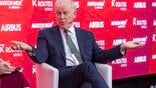
Listen in as Air Serbia CEO Jiří Marek discusses the strategy, successes and resilience that led to his airline being selected as ATW’s Airline Market Leader winner for 2027.
Subscribe Now
Don't miss a single episode. Subscribe to Aviation Week's Window Seat Podcast in Apple Podcasts, Spotify or wherever you get podcasts.
Discover all of our podcasts at aviationweek.com/podcasts
AI-Generated Transcript
Victoria Moores (00:10):
Hello everyone, and thank you for joining us for Window Seat, our Aviation Week air transport podcast. I'm Air Transport World, Europe and Africa bureau chief Victoria Moores, and I'm delighted to welcome you on board. This week I'm joined by Air Serbia CEO, Jiří Marek, who has over two decades of industry experience with a range of European airlines, including Malev, Lot, Alitalia, and CSA. For our listeners who are not familiar with Air Serbia, the airline used to be called Jat Airways until Etihad came in as a shareholder in 2013. Ten years on in 2023, Etihad exited and Air Serbia returned to state ownership. Today, Air Serbia is a network carrier with regional, mid, and long-haul operations and a fleet covering ATRs, e-jets, and Airbus narrow and widebodies. Now, before we begin, I'd like to congratulate Jiří and the whole of the Air Serbia team for winning the 2027 ATW Airline Market Leader Award.
(01:10):
So, to win that award, a carrier really has to stand out within its own market sector. And what we've seen with Air Serbia is impressive growth from Belgrade, creating a really strong connecting hub, including new long-haul routes. Last year, Air Serbia carried a record 4.6 million passengers, and the network spanned over a hundred schedule and charter destinations. And in May, Air Serbia launched direct flights between Belgrade and Toronto, restoring air links after more than three decades. This makes Toronto your third North American destination alongside New York and Chicago, and you also serve multiple destinations in China. So, it's been a really busy time for you and the team, Jiří. Congratulations on winning ATW's Market Leader Award. And on that note, I'm wondering, casting your mind back to the last year or so, what are the achievements that really stand out and are important to you yourself?
Jiří Marek (02:05):
Well, first of all, thank you for inviting me on the podcast and also for recognizing what we actually achieved. And when you sum it up in your introduction speech, it's actually something we normally are missing to step aside and look back at what actually we did because for example, Southeast Europe growing over 80% from pre-COVID levels and opening more than 60 destinations in the last three years. And when you tell it from that side, yes, I should say that we should be proud of our team and what they achieved.
Victoria Moores (02:43):
I think it is about taking that time to step back and reflect, and obviously that's why we are going to be celebrating your achievement in Milan this December. We've talked there a lot about your growth, and obviously there has been a lot of growth in all areas of markets that you serve. Also, we're in an era of very high fuel prices, geopolitical unrest. I'm wondering how that's impacting your growth plans going into 2027?
Jiří Marek (03:11):
Look, definitely it's impacting, but I think the main question is how long these prices will stay because you have different inputs from different leaders of the industry. On the other hand, there is very strong demand. So partly you can offset via the stronger demand and stronger yields, but at the same time you are working on several plans, for how this will go forward. One thing we did, I would say unique, we decided not to cut capacity. So for, say, the summer season, we opened more than 12 new destinations, and it turned out very well. So that definitely was a good decision. At the moment, we are entering the winter with capacity growth because we see at the moment that the demand continues to be strong in the double-digits versus the previous year.
(04:02):
And next year, despite whether the fuel prices are high or low, it doesn't really matter, and those airlines that end hedging will need to react as well. And because we are entering a year where we will have not only our one-hundred-year anniversary, but there will be the Expo 27 in Belgrade, there will be the GITEX. So, the demand will be multiplied even more. So, we strongly believe that even if fuel prices stay high, there is no reason to assume it will be for a short-term period, or even a midterm period. But in the long run, aviation is resilient and I'm more than sure that we will get through.
Victoria Moores (04:47):
And thinking about what I shared at the beginning about the fact that you've been in the industry for 20 years, I'm sure you've already seen plenty of these cycles. And I'm wondering with that growth theme, how much capacity did you add this summer and how much are you looking to add going into this winter and next summer?
Jiří Marek (05:07):
We were growing this summer between 5% and 6% depending on the period. And what is positive is that the demand was basically twice as much as the added capacity. So, we also saw a positive impact on yields. And I think shows that the market is very healthy in terms of demand. In a way, it's a bit similar to the COVID crisis because it's a very strong and deep crisis, but this time it’s happening because fuel is a fundamental element of our cost base. However, the difference between now and COVID is that during COVID everybody had the same rules of the game, which meant that you could fly or you could not fly. What is different now is that everybody is hedging at different levels by ending the hedge in a different period, but the demand is there. So, people outside of the industry, were told to just transfer the price to the end user.
(06:06):
But at the same time, if your competitor is hedging, you cannot price yourself out of the market because then you will have no passengers. So that's why the crisis, I would say in terms of consequences, is very similar to COVID. And we will see in periods to come that I think there will be some changes and some airlines will be in very severe difficulties. On the other hand, everybody now has different rules of the game. So, I think it depends on flexibility, how you can adjust your strategy to these kind of things and how you can, let's say, get through it maybe over the next six months, next one year. We will see.
Victoria Moores (06:48):
I can really see the parallel that you're drawing there because it's kind of confusing in terms of the fact that it's tough operating conditions, but also strong demand. And how do you navigate your way through that? Obviously, you mentioned there are fuel hedges. What's your hedging position going forward into next year?
Jiří Marek (07:07):
We are one of the few airlines that were not hedged. So, we saw a very strong impact, I would say at the end of Q1 and Q2. Q3 was very strong in terms of demand and yield. So, despite there was a strong impact, we've been able to offset that with the revenue, and we will see how it will go toward the winter season. At the moment, the demand indication is very strong, but the problem is nobody really knows how the fuel situation will evolve. There was a period when the fuel price was going down; it's again back and it's kind of fluctuating, so difficult to forecast.
Victoria Moores (07:43):
Yeah. And like you say, if you're managing to hold those yields, what really matters is whether or not those increased costs you're able to pass them through in any way. While we're on the subject of the challenging environment, obviously one of the aircraft types that you don't operate yourself, but you bring in is Airbus A220s. They come from airBaltic, which has been going through its own challenges because of the financial conditions. Have you been impacted at all with airBaltic going into Chapter 11?
Jiří Marek (08:15):
Look, except for some let's say external PR activities and questions from the public, we haven’t seen any operational impact so far. We've been also reassured by the airBaltic management that our wet lease arrangement will not be impacted. We have ongoing cooperation for the next year. From a passenger point of view, the aircraft is very appreciated. On many of those aircraft, there is internet available. So, we have very good positive NPS impact from this operation. And from our perspective, it's a good cooperation on which to decide on our future fleet strategy development because including the wet lease, our fleet is close to 40 aircraft. Next year, we will be over 40 aircraft and sooner or later we will need to take a decision on the next fleet development. And the best way to test the product is in real life and have the real operational data of what that aircraft can achieve and deliver.
Victoria Moores (09:19):
And it sounds as though the A220 is being very well received by your passengers. You brought me on nicely there into fleet strategy. You mentioned that you've got 40 aircraft at the moment. You really do operate a very wide spectrum of aircraft right the way from regional turboprops all the way up to A330s. Which areas of the fleet are you looking to renew and when might you take decisions on those?
Jiří Marek (09:46):
Look, because as you said at the beginning, we are basically a hub-and-spoke carrier, which means also having the long-haul destinations where we are expanding. So obviously we need to feed the network as well. We have more than 100 destinations. So that's answers why we have such a mixed fleet. So, for us, I would say the ATR is the core feeder within what we call the wider Balkan region. We currently have 10 units. We are also looking at how we can potentially still grow. For some period of time, we saw that 10 was sufficient, but now with the fuel prices are increasing, we are looking at the option to expand that fleet. Then our core fleet for many years was basically the Airbus A320 family, which consists of the A319, A320 and A319s, which is an aging fleet, so we are replacing that with the A320 partly with the Embraer E1 generation aircraft.
(10:41):
And then we are looking at the long-haul fleet, which is A330-200 and we have four of them. So, at the moment the ATR fleet is more or less stable. If we find some interesting options on the market, we will add one or two or three units. Our main activity around the fleet is now happening about phasing out those A319s, bringing in A320s and growing the fleet of Embraer E195s.
Victoria Moores (11:10):
I'm wondering whether from what you said just before about Air Baltic and the A220, how would you see that fitting with the E-jets that you've already got and the A319s? Could that potentially consolidate that part of the fleet for you?
Jiří Marek (11:25):
There is no secret that with the A320 with 180 seats and the ATR with 72 means we need something in between, which, at the moment, is the A319. In the future, it will be either the A220 or Embraer E1s, E195s or E2s. At the moment, we are testing the A220 via the wet-lease and we also have Embraer E190s on wet lease.
Victoria Moores (12:06):
And how many do you see yourself needing under the strategy for that particular segment?
Jiří Marek (12:12):
Look, we strongly believe that if we talk only about replacements, we are talking about between 10 to 15, but we are in a market that is growing much faster than the rest of Europe. GDP in this region is also very strong. Demand is usually double the GDP. So, we are definitely forecasting conservative levels that this market will continue to grow 5% minimum over the next, let's say five to 10 years. It will be closer to 8%, which means that it's a very easy calculation from the current fleet of 40 how many aircraft we will need to add every year just to keep growing along with demand.
Victoria Moores (12:49):
And talking about that demand, that really pulls us through onto the idea of network development where you're going to put this additional capacity. Under your strategy, which I believe that you've been working on your long-term strategy recently, where do you see your growth and development lying geographically? Would that be more on the long-haul side, more on the regional, or more on the short-haul routes that you do?
Jiří Marek (13:13):
Look, with having the number of destinations at over 100, our portfolio is basically covered. So, the main pillar of our strategy is continuing to densify the network. So, adding frequencies, improving the connectivity of the hub and growing transfer traffic. And we will add some destinations, but the percentage of those new destinations will be lower than densifying the network. We said that already over the last two years when we had, with a jump in growth behind us, yet this year we opened one destination. So sometimes whenever there is opportunity in the market, even we will deviate a bit from our strategy. But at the moment for next year, we are assuming that we will mostly add frequencies.
(14:08):
We will have around six new destinations and definitely I think that will be more or less the pattern for the years to come.
Victoria Moores (14:19):
So really strengthening the existing core network you've got for that hub and spoke network. Will we see any new long-haul cities? Are you able to give us a sneak preview on any?
Jiří Marek (14:30):
I don't want to be specific but yes, there will be one new long-haul destination next year.
Victoria Moores (14:44):
Okay. Thank you for sharing that quick sneak preview with us. And sticking with that theme of the long-haul destinations, are you working at the moment on partnerships? I saw some suggestion that you might be looking at Chinese partnerships.
Jiří Marek (15:00):
We recently learned about the culture at China Southern and basically, we cooperate with everybody. But the Middle East is has slowed down a bit because of geopolitics. We are expanding our partnerships with the Chinese carriers, but definitely we have something unique in the Balkan region. We have more than 18 points within the former Yugoslavia. So, that’s our leverage: we can distribute to the wider region, and we are looking for any kind of win-win partnership. At the moment, I'm a bit skeptic of being the smaller airline within an alliance.
(15:53):
But as long as we are treated equally and it’s a win-win, we are definitely open to any partnership. We are not open to a partnership where the partner is dictating and taking more than what they contribute.
Victoria Moores (16:07):
And obviously from your airline experience, you've worked within several airlines that have been part of all three alliances, so therefore you've got that alliance history. I'm wondering whether with consolidation within Europe and beyond, whether you see yourselves as a state-owned carrier potentially being a consolidation target from a larger airline, particularly given what you said that you don't want to be controlled or dictated to.
Jiří Marek (16:32):
Unfortunately, consolidation in Europe is not really the same as in the US, where you merge the airlines, you change the brand, you change everything and you continue as one airline. In Europe, if you look at some of the big airline groups, how many AOC and consequently complexities they have within the groups, you have to consider how to deliver the same customer experience. Europe definitely is not doing it same way like in the US, which in my view is a pity because I believe that the true benefits from consolidation can be only unlocked if you integrate fully.
(17:29):
We believe we have something too unique to offer and we are open to a partnership. It doesn't matter if it's just informal or whether it’s interlines, culture, joint ventures; equities, whatever makes sense for both parties, we are always open to talk.
Victoria Moores (17:44):
And taking that forward looking perspective, obviously we hosted you here on Window Seat as our guest speaker back in 2024 as well. Back then we asked you what you thought Air Serbia would look like in five years’ time. You said a fleet of 40 aircraft, that would've put that around 2029. What's your forward-looking five-year perspective now?
Jiří Marek (18:05):
Look, there are two things. A couple of years ago when we had our 95-year anniversary, I said that by our 100-year anniversary, we would have a hundred destinations. Our 100years is next year. We already have 100 destinations from 2024. I told you about the 40 aircraft. We already have 40 aircraft, including those that are wet-leased. So, on one hand, I'm always saying to our team, we need to aim high if we want to achieve high. On the other hand, when we talk about growth in which we are targeting 5%, that is conservative – it may be might be closer to 8%. So even we believe that we are quite ambitious. At the end, the reality is proving that all these assumptions are also conservative. It’s the market that dictates and the market is very healthy and very strong.
(18:51):
And we are definitely thankful to all our customers that give us their trust. Without them, we would not be able to continue to develop at the speed we are. So, I'm very positive about the future.
Victoria Moores (19:06):
Well, certainly the strength of that ambition and development and growth has caught our attention as a team on ATW, and I really do look forward to seeing you in person at the ATW Gala Awards and trophy presentations in Milan on Thursday the 10th of December. So, thank you so much for joining us today, Jiří.
Jiří Marek (19:29):
Thank you for the invitation and looking forward to December.
Victoria Moores (19:33):
And for our listeners, if you want to learn more information about the ATW Airline of the Year Awards, you can find that at the CAPA events site or by emailing karen.walker, that's W-A-L-K-E-R, @informa.com, I-N-F-O-R-M-A.com. Before I sign off, I'd like to also say thank you to our producers, Natalia Pelayo and Cory Hitt. And of course, a huge thank you to you, our listeners, for following Window Seat. Make sure you don't miss us each week by subscribing to the Window Seat Podcast on Apple Podcasts or wherever you listen. This is Victoria Moore's disembarking from Window Seat.

Related Content