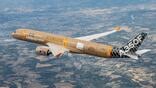
Podcast: What's Behind The Latest Boeing 777X Certification Delay?
After Boeing CEO Kelly Ortberg warned that certification of the 777-9 will take longer still, editors break down the certification process and explain why its taking so long.
Thank you to our sponsor GE Aerospace. Learn how the company and its partners are defining flight for today and the future here
Subscribe Now
Don't miss a single episode of the award-winning Check 6. Follow us in Apple Podcasts, Spotify or wherever you listen to podcasts.
Discover all of our podcasts at aviationweek.com/podcasts
AI-Generated Transcript
Jens Flottau: Hello and welcome to this week's episode of Check 6. This time we are going to take a close look at the flight test campaign of the Boeing 777-9 and with some of the recent issues that have come up may mean for the aircraft its certification, timeline and potentially other Boeing programs. The 777-9 is roughly six years late. The list of reasons is too long to go through here, but one of the main ones is that the level of regulatory scrutiny has changed after the two Max crashes. Earlier this month, Boeing CEO Kelly Ortberg admitted that Boeing is clearly behind its plan again in getting certification done. What that means in terms of a potential further delay is not clear yet, but Boeing promised Lufthansa to get the first aircraft next June. So roughly in nine months. With me here to discuss this: Two senior editors who are covering Boeing on a day-to-day basis. Guy Norris and Sean Broderick. My name is Jens Flottau and I'm the executive editor for Commercial Aviation at Aviation Week Network. Guy, you've been following the test campaign very closely. There are four aircraft involved. What are they doing right now?
Guy Norris: Yeah, thanks Jens. Well, the first aircraft, which let's get used to calling them by their Boeing flight test designations, WH001 as we speak, it's busy mostly at Edwards Air Force Base where it's been doing a lot of takeoff performance testing. It's based out of Victorville in California. It's been there for I guess nearly two weeks now doing that, maybe more. The second aircraft, WH002 as we speak, is back in Seattle where it's doing some systems, ground testing. Interesting that aircraft recently flew with artificial ice shapes, which was part of this phase of certification. The third aircraft 003 that's been used heavily for propulsion testing of the GE Aerospace, GE9X engines at the moment, or most recently it's been going through these load and failure conditions, high load and failure conditions, and it's been just doing a whole matrix of lights over different SPS and altitudes. The fourth aircraft 004 is out at Glasgow, Montana as we speak, where it's going through community noise testing. And just to remind folks, of course the 777-9 being the latest must meet the new FAA stage five noise standards, which is the equivalent of ICAO chapter 14 by the way. That means it has to be seven cumulative decibels below before the previous stage four limit.
Jens Flottau: And wasn't there a fifth aircraft involved in this campaign?
Guy Norris: Yes, yes, yes, yes, you're right. That actually was added quite late on. They basically want an airframe that's going to be able to show what a conforming production airframe is in terms of cabin environment and basically high intensity radiated field environment, which means they call it HIRF testing, which means sort of is it compatible with the electromagnetic spectrum? It does the zap it with sort of simulated lightning and just make sure that it doesn't really interfere with any of the onboard systems. And that aircraft was down in, they flew that down to Marana in Arizona, Marana, Arizona in the end of August. And it basically, it's been working down there. That aircraft is now back in Seattle and we think Sean and I are not too sure. We try to keep as much of a view on this as we can. We think this airplane might be used for the next phase of function and reliability testing, but we're not sure yet because we don't have that much visibility into it. But anyway, we can discuss that in a little while.
Jens Flottau: So the aircraft are flying, there is testing of various kinds. What's this holdup about, Sean, what's going on?
Sean Broderick: Well, to put it bluntly, we don't know if, we don't know specifically why the certification program is extending. What we do know is that like the 787, the 777-9 is in what's called a phase type inspection authorization program. And the type inspection authorization is the FAA's go ahead to begin flight tests and airworthiness inspections to qualify for official FAA certification. You don't get TIA authorization until the FAA is confident that the aircraft are component being examined. This is right from the TIA form will meet the applicable regulations. That means FAA thinks it's safe enough to put their people on it. The phase TIA is a more conservative approach. It was done on the 787. I think more because of the uniqueness of that design on the 777-9. I think it reflects the more careful handling of Boeing that the FAA is now doing.
And some of the new requirements that you mentioned at the beginning that have come into play since 2020 and the certification processes were Boeing does not talk about the specifics of the certification program outside of what the flight test aircraft are doing. One thing Kelly Ortberg did emphasize, there's no technical issues that they found, like the thrust link issue that we covered extensively that was wrapped up earlier this year. There's no new issues. And he seemed to indicate his comments. He made some comments about the overall lack of pace in FAA certification programs in general being unacceptable. I dunno if he used that word. He may have used that word, but that's basically what he's saying. So it tells me that it's a lot of paperwork and validation because of, as you said, what happened after the 737 Max crashes and the more diligence the FAA is putting into this program.
Jens Flottau: So can you just explain the TIA process, there are several steps involved, several phases, how many steps, how many phases, how does that work in detail?
Sean Broderick: So the phasing, it's up to the FAA, I mean a phase TIA is agreed upon by the applicant, but I think Boeing requested it for the 787 on this airplane. I'm not sure if it was requested, but I think the FAA said this is how we're going to do it. And basically it allows the FAA and Boeing to test certain aspects of the airplane if other parts are still not up to where the FAA says they need to be in order to be tested. So in a way it saves time in theory because you can make progress while there's still work being done. But what it also reflects I think is that Boeing, the FAA is asking for more validation. We know for example, that there was an issue paper done for the 777-9 program on system safety assessments. Basically a lot of it revolved around human factors before.
If Boeing said the pilot, this is going to happen and then a pilot's going to do this and everything is going to be okay. In the old days you could say a pilot had three seconds to react, but now all that was thrown out with the 737 Max situation and some NTSB recommendations to the FAA that said, Hey, you and industry got to go back and you got to redo this. So a lot of those things are being developed and immediately applied to the 777-9. So the process didn't exist six years ago when this airplane was launched. And not only is it being applied, but it has to be developed sometimes in conjunction with Boeing to say, look, how are we going to do this? Let's get together on the system safety assessment validations. They actually work with Boeing to come up with a process.
What do you think we should ask? And then Boeing says, well how about this? And then the FAA says, okay. And then the FAA hands it back to 'em and says, look, you got to go do more data on this. You got to show me more. You telling me this and showing me this is enough. You got to basically go back and do more homework. So the phasing follows that process and the FAA says, okay, we're good enough here. So here's the next phase where we're going to be good to go. I don't know how many phases this has. I think each phase has a broken into even more sections. So we don't know. It's not something the FAA will talk about and Boeing is not keen to talk about anything that involves the FAA. So more questions than answers in terms of where we are in the process other than to say that Boeing has not yet changed the prognostication that they're going to have airplanes ready to deliver in 2026. We'll see what happens on the third quarter earnings call in about a month though.
Guy Norris: We remember the shock that went around the industry I think really, but particularly at Boeing in May of 21. Remember that far back when you remember Boeing had applied for the beginning of TIA for certifications testing to begin and they got this letter back from the acting manager of the aviation safety group, the FAA to the organization designation authorization lead administrator at Boeing saying, well, we don't think you're even ready for phase TIA, let alone any part of TIA. And that was because of the incomplete design assurance review. I mean there was a laundry list, I Sean remembers it very well, lack of data to support the airplane level assessment for safety. There was the FAA wanted to retain development assurance compliance for the common core system. Remember the common core, which is the heart of the 777X avionics and really beyond the avionics.
They were talking about a significant supplier finding for inadequate peer review of safety analysis. There was just all sorts and that didn't even include the concerns that the EASA, the European Aviation Safety Agency had also expressed. So anyway, kind of going on from there. It's interesting also to reflect on what happened with the 787 in terms of timeline. And just to remind people initial TIA, which is the first time I'd heard of it was issued to Boeing for the 787 in February of 2010. And then they granted an expanded TIA in April just a few months later, but it still took until August the following year to get full certification. Now Sean says obviously a big driver of that was the fact that it was all new avionics construction, the whole works. It was more electric airplane and so forth. Whereas this is still an amended STC, right? So it's kind of interesting and who'd have believed it. But anyway, the upshot is from February, 2010 to August, 2011, so about a year and a half. So if you go back to when 777-9 was issued, its initial TIA that sets the clock ticking and that was what, about 15 months ago, already 16 months. So I think we are looking at an overshoot here. It's probably going to go beyond what happened to the 787.
Jens Flottau: And speaking of ticking clocks, just to put this into perspective from the customer side. So the first curve was supposed to be delivered in 2020, so almost six years ago now. The latest schedule says that Lufthansa is supposed to get its first aircraft in June next year. And our own forecast Fleet Discovery says that Qatar and Singapore Airlines will also scheduled to get their first aircraft, actually their first three aircraft respectively in 2026. And then from 2027 onwards, the real ramp up happens a lot of airlines getting their lead aircraft and many more. So Boeing is really facing this big production jump in a very, very short period of time and is under a lot of pressure to deliver to obviously customers that are not happy at all to put it mildly. But I want you talk about something else here. This is not a specific 777 issue. This whole process, as you said, 787 was the first word was used. Is it a problem on the 737-7 and the -10 as well with the certification campaigns going on as well at this time?
Sean Broderick: Well, is it a problem? I think it has influenced the length of the certification programs, yes. I don't think there's any question that it has. In fact, it hit those airplanes before it hit the 777-9 because the issue paper I talked about on the system safety assessments, it was developed for the 777-9. But principles that went into it or the philosophies that went into it have been applied to the -7 to the -10. So the system safety assessments have been a big part of the driver in lengthening both of those certification programs. Now of course,
Jens Flottau: Sorry, when Ortberg says today that this is slower than we thought it would be on the 777, does that indicate too that on the -7 and the -10 they are currently having the same issues that things are progressing slower Guy?
Guy Norris: Well, I mean just to follow on from what Sean was saying, obviously we are looking at an extended event because of all of the issues that we've just discussed. But particularly they've got to the point where the 737-7 and particularly -10 where it is paced by the IMT deicing inlet redesign. And I think breaking news on that, well maybe breaking news or not, I dunno for sure. But we've heard that the -7, the 737-10 initial test aircraft is about to restart flight testing and we think it's got what they think is going to be the conforming redesign inlet on there. So that's something we've still got to dig into. But
Jens Flottau: In a way it's different cases you're saying.
Guy Norris: So it's a different case. Yeah,
Sean Broderick: Technical, I think you can say on the Max we're dealing with a known technical issue that they're working through on the 777-9. That does not appear to be the case.
Guy Norris: Exactly. And just one thing I should mention, we've also heard that it's really driven by personalities. There's a lot of talk about the fact that there is a person or a group of people within the FAA who are absolutely driven to this very definitive path and Boeing is having to deal very specifically with these individuals on every step of the way with the 777.
Jens Flottau: Now Sean, you just said that Boeing doesn't like to talk about the FAA, but that has just changed. Ortberg remarkably said that if the system, the TIA system or the certification system does not change, then he does not see a way forward for Boeing to do a new aircraft. And I think that has been a pretty strong statement given that, as you said, previous CEOs have refused to even comment on the timelines when all these delays piled up. So what's your take? Does the system need to change?
Sean Broderick: I think it needs to become more efficient. I think the processes need to be codified so the applicants understand what they face. And back in 2021, I asked some of the certification experts that I know, how long do you think it'll take before we get back to normal on certification programs? And I was told it's going to take one full cycle of certification programs for the FAA run through at the applicants to understand it and for them to get to a point to say, okay, it's a five year process, it's a six year process. But what they were talking about was from the beginning of a new certification program, so not counting the -7, the -10 and 777-9, I think what we may be seeing is that so much is being applied to these current programs that this may be that cycle that we go through.
I think Ortberg is expressing, he's posturing. He's saying, listen, we understand we have to the regulations and we take conformity seriously, but at some point the FAA has to say, okay, that's enough and you meet the regulations and we can move to the next phase or that's acceptable. And clearly there is some frustration in there because it meant the end of the day, the only way to make this industry as safe as it can possibly be is to keep all the airplanes on the ground. Whenever an airplane leaves the ground, there's risk and agreeing how much risk you're willing to accept. I think that's the balance here. And that has clearly changed since the 737 Max accidents. The FAA is being a little bit more conservative, some of it justified, and I think at Ortberg's statements, some of it maybe needs to be loosened up a little bit.
Jens Flottau: Guy, your take, does the system need to change?
Guy Norris: Well, I think if you look at the fact there's been relatively little new aircraft development activity since the end of the last, the 20 teens as it were. And so what we're seeing is a really unusual period of stagnation really in that, particularly with the large airplanes. We're seeing now the evolution of this FAA approach to certification through maybe a lot of these eVTOL programs which are pushing the envelope in terms of new propulsion technology and flight configurations, system configurations. So I think at the same time as we're seeing the FAA double down on safety, feeling like the focus is really back on them to do that, we're also seeing the expansion of their coverage into whole new areas. So bottom line is I think when we get through this difficult period, there's going to be a whole new blueprint that everybody will understand and be able to follow. And I think what we're seeing at the moment is just people trying to figure all that out. So I'm being optimistic here, but I'm hoping that when it does come to the new cycle and new products that things could go a bit smoother. I don't think it's going to be shrunk down to anything like what we used to see though in terms of time. Those days are gone.
Jens Flottau: I was speaking of the news cycle. There was a rumor the other day that Boeing may be looking again at the NMA, the new mid-market aircraft that they've been, they've stopped a while ago and I've seriously looked at, what was it, eight, nine years ago by now. So any truth to that?
Guy Norris: Well, yeah, and of course I have to credit Sean here for really picking this rumor up to start with, so kudos to Sean for that. But yeah, I mean, just to remind people, this was a product which really was interesting. It was gathering a lot of market interest, a small twin aisle, roughly 220 to 270 passengers with a range of between 4,500, 5,000 nautical miles kind of really set to fit perfectly in that obvious gap that we all see between sort of a 321, 737 and the 787-8. So yeah, there's a couple of rumors here. One is that first of all, it doesn't want to talk about new airplanes at all because it's so aware of, and it just is desperate for none of this discussion to be made public for obvious reason because it's got so many frustrated customers with delays.
But beyond that, it knows that it has to begin the process. These airplane development programs, as we've just said, it's a decade long process really. So you've got to start somewhere. They know where Airbus is in all of this process and they've seen Airbus gradually shifting its timeline back, but nonetheless, they know that Airbus is working on a new successor, the 320 family and so forth. So the recent feeling has been that Boeing has shifted its focus really to the 737 replacement, again for a decades long study future single aisle or whatever FSA or whatever program they want to call it. And the rumor that Sean picked up was that not only are they looking to revise that strategy and go back to maybe looking at bringing the NMA back into the frame, but they may be thinking about even doing NMA either before or in parallel with a 737 replacement.
So we just asked the question, okay, clearly they're not in a position to do it yet as Kelly Ortberg has said, he wants three things that they're going to be, is the market ready? No, not really. They want things but not quite. They're too busy taking what they've already got on order. Two, is the technology ready? Not really, not for a mass production of composite airframes, which it almost certainly will. And secondly, the engine side of it, they need new engines, they're still in the infancy. And thirdly, is Boeing ready? Financially? Clearly it isn't and not likely to be until maybe next year the earliest in terms of its cash input. So we just sort of said, okay, well okay, if all of those factors are correct, does it even make sense for Boeing to be looking at this strategy? And we thought there was actually some merit to it.
The technology aspect, the production side of it, if you're looking at getting mass production of new composites and you need that technology, where better to start than planning out a production process that you could easily morph between either NMA or the next gen single aisle and then look at the competition disregarding what Airbus is up to. Jet Zero. People like that are showing that there is a healthy appetite for something in that sector. So if the market's talking, then they need to be listening. And Jet Zero's said there's an addressable market of up to 12,000 aircraft out there, so somebody's got to build them,
Jens Flottau: Somebody's got to build them, somebody's got to certify them. So we'll see. Guy, Sean, as always, thanks a lot for joining me and of course, thanks to our listeners. Thanks for your interest in this podcast. If you haven't already, be sure to follow Check 6 on Apple Podcast, Spotify, or wherever you listen, so you never miss an episode. And if you found today's discussion helpful, please consider leaving us a star rating or a review. Better yet, share this episode with a friend or a colleague. Stay safe and always happy landings.



Related Content