Podcast: Big Widebodies Back On The Agenda At Dubai Airshow
Boeing and Airbus are both now looking at the feasibility of upsizing their largest twin-aisles at the behest of Emirates, which led the way for orders at Dubai Airshow. Listen in as editors discuss that and other commercial highlights in this special episode recorded at the event.
Thank you to our sponsor GE Aerospace. Learn how the company and its partners are defining flight for today and the future here
Subscribe Now
Don't miss a single episode of the award-winning Check 6. Follow us in Apple Podcasts, Spotify or wherever you listen to podcasts.
Discover all of our podcasts at aviationweek.com/podcasts
AI-Generated Transcript
Christine Boynton (00:31): Hello and welcome to Aviation Week's Check 6 podcast. I'm Christine Boynton, Aviation Week's senior editor for Air Transport and I'm here with our commercial team after day two of the Dubai Airshow. Joining me to talk about highlights from the show so far are Jens Flottau, Aviation Week's executive editor for Commercial Aviation, senior editor Guy Norris and Graham Dunn reporting for show business. Jens, let's kick it off with you. What are your main impressions so far?
Jens Flottau (00:57): So the first impression was a WhatsApp that I received yesterday on day one of the show, which told me that eight minutes later I should be in one of the main press office press rooms for an announcement by Emirates. And the announcement was obviously another huge order. I should say that I was here in 2013 when Emirates bought the first batch of its 777s. I can't remember the number back then. It was huge already. And now 12 years later we were here back here for another 65. So obviously huge order set the tone for the show. We'll probably talk about that a little later about the level of orders that we saw here. That surprised me. But it was not only about the size of that order, it was also about what's been said at the event by Sheikh Ahmed, which referred to another version of the 777 that Guy can talk to.
Guy Norris (02:01): Yeah, that's right. Jens and I got the same message. I got a message from Jens saying, quick, come to the press room, there's something big happening. It sort of came out of the blue and I actually followed Sheikh Ahmed and Sir Tim Clark into the room thinking, well I've obviously got the right room. So I was there with Jens and he's right, we were in exactly the same room 12 years ago when the 777X was launched, that sort of historic record breaking order. But this time it was hilarious actually because
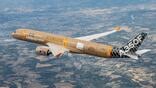
(02:36): Sheikh Ahmed said this contract includes options to convert some of these orders into the 777-10, which of course doesn't exist yet. And at that point we actually saw the Boeing people look at each other in consternation as if to say what. So the drama was intense, but what actually happened was of course when Jens has been following this as our high for the past couple of weeks. So Tim Clark basically gave the game away at a conference in Spain recently that they wanted more capacity, they wanted to stretch the 777-9 already the longest airplane on the planet to an even greater length. And so is this even possible? So what we've been doing in the last couple of days is finding out if this is a myth, is it reality? And the project's name incidentally is not the 777-10, it's the 777-Tim because we think that Tim Clark is literally the driving force behind this. So it has been fascinating. But anyway, that's really the top line story from our perspective.
Christine Boynton (03:47): And Graham, what orders stick out to you so far this week? Are there any big ones that you've been covering that really just stick out in your mind?
Graham Dunn (03:54): Well, as I say, I mean it's brilliant Emirates' classic sort of trademark deal, which really brings things, I just love their sense of theater for this, which is brilliant is it is what you want and you think they can't keep delivering these shocks or things and it turns out they can. It's brilliant and it's great journalism. It's really exciting actually getting that buzz in the room. Obviously we have flydubai. It's an absolutely massive order. Well MOU on this one for A321neos, which is obviously quite dramatic shift there, which we saw coming. I found the Etihad orders really interesting. They were quite difficult to follow. It wasn't the most straightforward of things, but bringing in the A330neos was really interesting and I thought a lot of the words that, or the reasoning behind it, it became really apparent that timing is everything. So they are bringing these aircraft. I think Neves said almost at one point saying the most important thing for us is that these were there in '27. And you can see I think why I mean that feels like that's one of the
Jens Flottau (05:05): Yeah, and I talked to Antonoaldo Neves, the CEO of Etihad later and he said basically if we had had A350s in '27 or '28, I wouldn't have bought the A330neo, but there weren't any available in the market. So we went with the A330neo, which he happened to know well from his time as the CEO of TAP Portugal, he was the launch customer and he introduced it already once, now he can do it another time. And apparently the experience back then wasn't bad enough for him to prevent that from happening. Yeah, but one big issue we should talk about too is we're talking about this 777 stretch. There's also an Airbus A350 stretch project. It's probably not yet a project, but I talked to Christian Scherer, the CEO of the commercial aircraft business at Airbus and he confirmed that he's there talking to several airlines who want a larger aircraft in the white space. And I asked him about when would he do it. He said anytime we're ready, we have an engine, we have the engineering resources to do it. So it seems that the market will see sooner rather than later in the Airbus case, I would guess a larger aircraft. And then we'll see how soon Boeing will get to the 777 because they even have their hands full with other stuff for the time being, right?
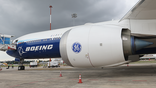
Guy Norris (06:24): Yeah, they absolutely do. I mean the 777-9 is as we all know, being delayed into first deliveries into '27, but Boeing still has its hands full completing the last, at least the next three stages of certification. So there's that, there's the -8 of course, the shorter version and the -8 freighter, all of which are running in parallel really almost. So you're right, there's no doubt they've got their hands full. But it's interesting because the -10 or the -10, it's certainly got these technical challenges all of its own and that's going to be part of this feasibility study. And from what we've gleaned, it looks like they're looking for at least a 50 seat maybe sort of extension. So how do you do that? It means stretching the airplane to almost, we've done the sort of back of the envelope calculations and so far we think it's about 270 feet long perhaps. Maybe that's what we're looking at. The engine, the good news from their perspective is the GE9X, the GE Aerospace propulsion system for that is probably more than adequate. It's well up to the job. It's only rated at 105,000 pound thrust for the GE9X and it's run at 134,000 pounds on tests. So they know it's got margins. So that's the good news. It's all the rest of it that could be up in the air.
Jens Flottau (07:51): On the other side, it's the other way around. They have a certified aircraft, they have the engine, but the engine doesn't really have that much growth potential. They argue it's enough for A350-2000 for the stretched version, even though it will probably have less range. Tim Clark says they will probably need a new engine for the A350-2000. And I have a hard time seeing that developing a new engine for not a tiny niche but a niche of the wide body market. I think that's unlikely.
Guy Norris (08:24): Yeah, that's right. And I mean I couldn't agree more actually. And I think the problem is that they've pushed themselves up to a corner there. I mean it was already a bit of a stretch, but Rolls-Royce did a great job in getting there with the Trent XWB-97 and they've done very well in the market with it. But here of course in the Middle East where the atmosphere is dusty and they're dealing with premature durability issues, this is where the real biting edge literally happens. And Rolls has dedicated this massive upgrade program to meet this challenge and at the same time they're trying to do the same thing for the 787 engine. Try and get some market share back on that. But it's going to be fascinating to watch. I think that's going to keep us all on our toes the next time.
Christine Boynton (09:13): And just going back to the 777-9 Guy, we had a chance to go on developmental aircraft WH001 and talk to the chief test pilots. So what's ahead for phase three of the certification process?
Guy Norris (09:23): Yeah, thanks for reminding me. I've forgotten about that it seems so long ago. I need to three days. Yeah, basically launching into phase three of type inspection authorization, the FAA's next phase for certification testing. And they haven't really given as much detail yet of what's going to happen. But stability and control is what WH001 is going to be doing. Of course they've got to reactivate the other three aircraft. And I was talking to Boeing today actually and they're saying that for the next, beyond that is the ETOPS testing that they have to do extended twin operations and then function and reliability testing, which is where they get to play an airline and just run an airplane around the network in simulated airline operations. And for that they're saying that they may bring in another breaking news, they may bring in another airplane like they did with a recent HIRF testing, which will be an off the production line, latest production standard with a customer interior. But we don't know whose it is. But anyway, that's the next phase.
Graham Dunn (10:31): Just one other order that happened to catch my eye and goes a bit under the radar because you've got these giants absolutely at the high end of it where it's all going on. But Air Senegal's first order commitment for Boeing for 21 years, it was sort of great. See it says a lot for some of the stuff going on there. I wish I could tell you more about it. It was the press conference is all in French so I'm sure there was, I mean they could have announced anything else as well.
Guy Norris (11:03): What did they order again, Graham? They gone
Graham Dunn (11:06): For 737 MAX. Oh alright. It is great. And actually you've seen quite a lot of business from African Airlines. Ethiopian have been busy as well and we've had FlySafair as well ordering. So there's been quite a lot in that area.
Jens Flottau (11:25): And one theme that I see is people aren't paying too much attention or aren't weighing simplified fleets as highly as they have in the past, right? So for example, as we said, they're going for A330neos just to get the aircraft capacity as quickly as possible. And had they waited another three, they could have gone for a unified fleet, they decided against that. Same for flydubai. Flydubai has 116 737 MAXs yet to be delivered. They also have 30, interestingly 787-9s coming, but then they went for A321neos 150. So they will have a 737 MAX fleet and an Airbus fleet. Do you have a view on this?
Graham Dunn (12:17): I think it is about getting their hands on the equipment as soon as they can. I think they are having to be pragmatic though once where they can't stick to those sort of ideologies. You are having to wait so long to get those aircraft that you have to and it throws the rule book out. You are right. You have, I mean Etihad, as you said, it's not a huge big 200 aircraft thing but out in by 2030, but the days of trying to do cover it with one or two wide bodies and maybe one narrow body and that seems to be over for now.
Guy Norris (12:54): And of course there was more wide, well sorry, narrow body news wasn't there Christine, but in not the conventional way want to talk about airframes and it's the fact that here at the show for the very first time, China brought the very first business jet version of the C919 which, and we went down to film it,
Christine Boynton (13:15): Right? We got a chance to go onboard the business jet and so we've got a really nice video online, go check it out. And it came right after I visited Airbus ACJ and they were talking about sort of their forecast and of course ACJ had a record year for sales in 2024. They're still seeing strong momentum globally, but especially in this region. And what's driving that in part is operators going to renew older generation aircraft. So they're expecting that to really drive kind of a surge in orders going forward, particularly in this region for business jets. So it's just an interesting time for that part of the business. I veered off course from commercial for a second, but
Guy Norris (13:53): Yeah, well it's sort of commercial isn't it? And the A220 of course powered by the Pratt & Whitney PW1500G GTF Geared Turbofan and of course it's been a headline story for years now about how the issues of that have dogged it. But you talked to Embraer, didn't you Jens about the sister engine to that, the PW1900G and the fact that between the two fleets, they now seem to be seeing light on the horizon as far as getting over those issues.
Jens Flottau (14:27): And I mean Pratt was here at the show and said there will be near zero AOGs by the end of 2026. And I was kind of surprised to hear them say that that seemed to be a very aggressive target talk to Embraer, do you really believe Pratt and Embraer says yes we do actually because we've seen the numbers of number of AOGs come down. I think the E2 number was 32 at its peak, it's now at 20 few months later. So they have another 15 or 14 months to go to zero. And yeah, Embraer thinks it's entirely possible,
Guy Norris (15:09): But the mountain is steeper to climb, obviously, unfortunately for the PW1100G GTF operators from the A320neo fleet. But again, Pratt is saying there's good news on the way, they've got the hot section upgrade in flight test, that's the upgrade for the core and the GTF Advantage engine is right there alongside. So it's just a waiting game now. And I'm sure the operators can't wait anymore, but they are going to get some relief it seems.
Jens Flottau (15:40): I want to talk about the Trent XWB-97 for a moment again because you have two airlines in the UAE Etihad has ordered the engine and Emirates refuses to order it and it says Emirates basically says, yeah, it's not reliable, it's not durable enough. I won't do it until it's up to the standards we expect. Now Etihad has been flying it for a while and says, I don't see what their problem is because we have power by the hour agreements, maintenance agreements with Rolls-Royce when the engine needs to be replaced, they'll replace it. There's input spare engines, they'll do that. We don't pay for it. I mean we pay through the long-term contract anyway, but it's not an issue for us and we're fine. So we have two conflicting philosophies in the same country among the two big airlines here. And I'm looking at this and I'm thinking that's really interesting in very, very divergent approaches.
Graham Dunn (16:48): Very much. And as you say, Antonoaldo Neves, I mean he was really pretty enthusiastic about it. It wasn't just Oh no, no, I mean really pretty enthusiastic.
Guy Norris (16:56): They
Jens Flottau (16:57): Loved
Guy Norris (16:57): The aircraft. I think what you're mentioning there about the focus on the operators here and the environment and the way that every engine maker is throwing their utmost into pretesting dust ingestion and that sort of thing is exemplified by one story which we've picked up, which is that GE is not secretly, it's not secretly planning it, but it's hoping we understand anyway going to fly their 747 flying test bed with a GE9X under the wing and fly it around based here in somewhere in the region, probably here in Dubai, and basically pretend it's a single engine 777X for however many weeks it takes. And nobody has ever done anything like that before. I mean talk about taking every single precaution you can to try and emulate what's coming. And that's going to be probably almost a full year before the aircraft finally enters service at least. So I just extraordinary the lengths that the engine makers are going to now to put it off,
Jens Flottau (18:06): And again, the different views are interesting. Tim Clark says the 777X is the most tested aircraft in the history of aviation and including the engine. So he doesn't expect any major problems after entering into service. And Antonoaldo Neves at Etihad says, well, we talked about the A350-1000 and the Trent XWB-97. He says, when the 777X arrives, of course there will be teething issues. Of course there will stuff, stuff will happen. So it's like I know what's going on there, what
Guy Norris (18:42): Is going on?
Christine Boynton (18:44): Well, we still have Wednesday ahead of us, so are there any particular things people will be watching for? What are we thinking for the last day of the show?
Guy Norris (18:51): Yeah, no, very good point, Christine. I think you're right. Tomorrow is probably the eVTOL day. We're thinking it's on the verge of commercial now, but the eVTOL community is huge here. And this again is another center of the universe when it comes to proving out the future as far as the eVTOL makers are concerned. I mean, our newsroom is right tucked away at the back of this massive hall which is filled to the brim with them. So anyway, we're expecting tomorrow will be the day of that sort of AAM stories and they're probably going to be a late breaking massive order from.
Graham Dunn (19:29): Yeah, it does still feel like there's another order or two in the air and I would expect that Wednesday to be a busy day, frankly.
Guy Norris (19:38): Yeah.
Christine Boynton (19:40): Great. Well on that note, thanks everyone for joining after a busy couple of days and with a bit still more to go to our listeners, that is a wrap for this episode of Check 6. A special thanks to our podcast editor here with us in Dubai, Guy Ferneyhough. Thanks for listening and stay tuned for a Dubai episode from our defense team. Also, stay tuned for an episode from our MRO team. Until then, check out aviationweek.com to read all our coverage of the show. Bye for now and have a good week.




Related Content