LISBON—Engine MRO providers must adapt to continuing parts shortages rather than wait for supply conditions to normalize, TAP Air Portugal’s newly appointed chief operating officer (COO) José Eduardo Moreira has told AeroEngines Europe.
Speaking Sept. 1 on his first day as COO after previously leading TAP’s maintenance and engineering activities, Moreira said material availability is still volatile despite considerable improvements in some areas of the supply chain.
“It’s not stable yet,” he said at the event in Lisbon. “To me, it is the new normal, and we have to deal with this like a new normal.”
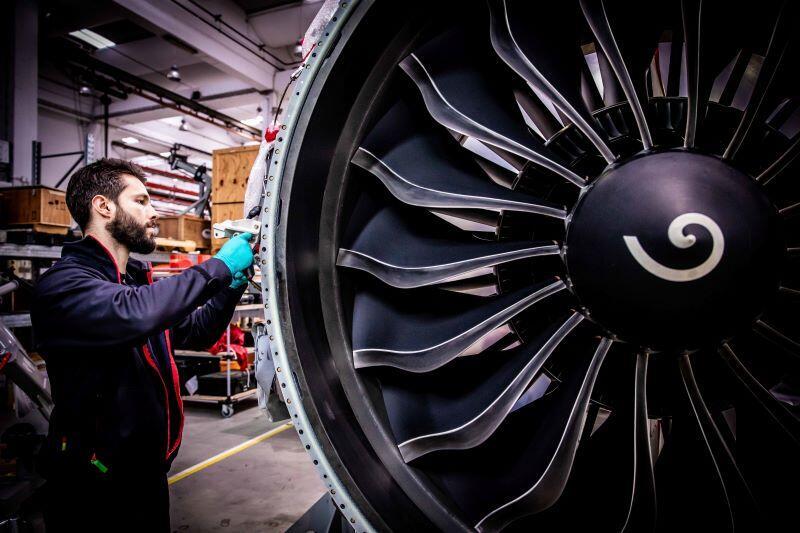
According to Moreira, the continuing instability is complicating TAP Maintenance & Engineering’s (TAP M&E) ramp-up of CFM International Leap-1A services. The company achieved regulatory certification to provide full maintenance, piece-part repairs, overhaul and testing for the Airbus A320neo engine in 2024.
Given the comparatively limited number of available repairs for the newer-generation engine, Moreira said this scenario makes advanced material planning essential. “We have to plan well in advance to have all the parts to start the assembly of the engine,” he said. Moreira said he believes successful MRO providers will need to forecast shop flows and material requirements six, 12 or even 24 months ahead, allowing them to identify component bottlenecks before shortages emerge.
By contrast, he said TAP’s deeper repair capabilities on legacy engines have historically given it greater control over shop processes. On more mature programs, TAP M&E’s portfolio is comprised of CFM56-3, -5A, -5B, -5C and -7B and CF6-80C2/A/B and -80E1 engines.
Around a third of TAP M&E’s maintenance work is for the fleet of its TAP Portugal airline affiliate, with the remaining majority being third-party MRO services.
Moreira identified broadening OEM-approved repairs as an important step engine manufacturers could take to support repair shops. He added that wider repair coverage would lessen reliance on scarce new parts, lower costs and improve turnaround times.
New-generation engine time on wing also remains some way behind established platforms. “We were used to having engines for five years on wing, and now we have to deal with engines which have five months on wing,” Moreira said.
Alongside supply chain constraints, he identified workforce availability as a limiting factor on future MRO growth. Shops must become “talent creators, not just talent consumers” by strengthening partnerships with technical schools and universities and developing personnel internally. Moreira also warned of an impending knowledge gap as experienced technicians and engineers retire.
AI and predictive analytics could support technicians while improving engine-removal forecasting, material planning and inventory management, Moreira said. “Technology will not replace technicians,” he added. “It will enable technicians to focus on higher-value work.”

Related Content