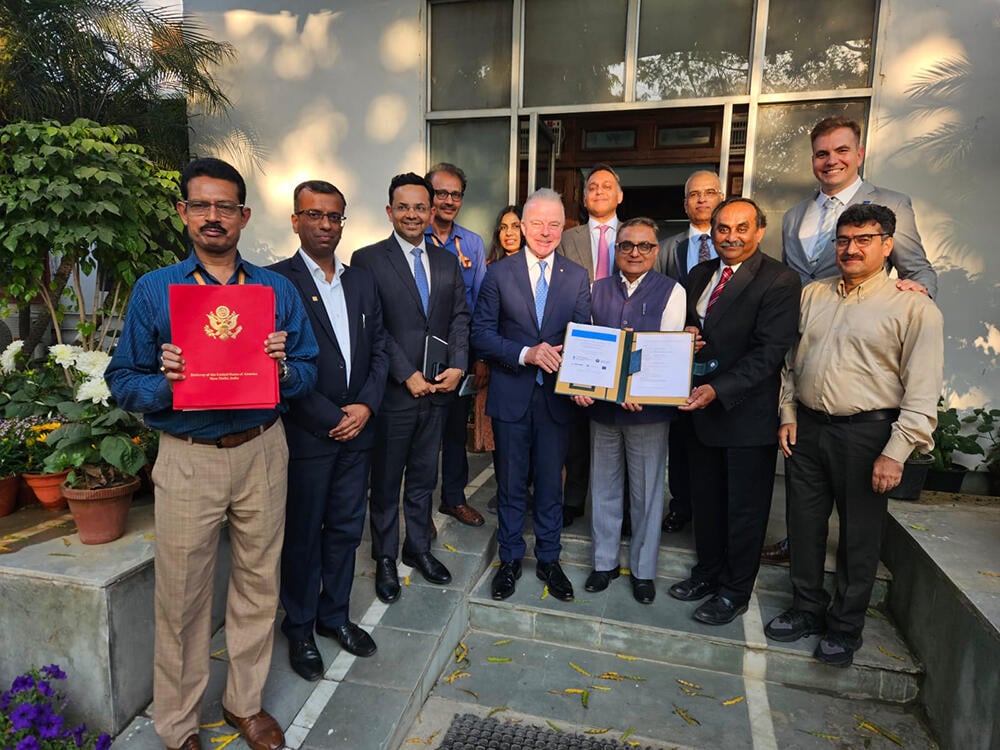
India’s Directorate General of Civil Aviation has announced a new working arrangement with the FAA aimed at improving coordination on aircraft and engine certification and reinforcing safety oversight as the country’s aviation sector continues its rapid expansion.
The arrangement, announced March 5, has been established under the regulators’ Bilateral Aviation Safety Agreement and complements the existing Implementation Procedures for Airworthiness already in place between the two agencies. The new cooperation is designed to streamline certification processes and enhance transparency in the management of aircraft and engine approvals between India and the U.S.
A notable feature of the new framework is the inclusion of major aerospace manufacturers such as Boeing, GE Aerospace and Pratt & Whitney. Their participation brings key industry stakeholders into a structured collaboration with regulators, allowing for more coordinated engagement on aircraft and engine type certification and validation activities.
Under the working arrangement, the Directorate General of Civil Aviation (DGCA) and the FAA will establish clearer mechanisms to facilitate aircraft and engine type validation as well as recognition and acceptance procedures between the two authorities.
For aviation stakeholders such as airlines and maintenance providers, such regulatory cooperation can play an important role in reducing administrative bottlenecks and improving operational efficiency. When certification and validation processes are aligned between authorities, aircraft deliveries, engine approvals and modification programs can move forward with greater clarity and fewer delays.
The collaboration also reflects the deepening aviation relationship between India and the U.S. at a time when Indian carriers are rapidly expanding their fleets. Several airlines in the country have placed large orders for U.S.-manufactured aircraft and engines, making regulatory coordination between the two countries increasingly important.
From an MRO perspective, the agreement could also have wider implications. Streamlined certification and validation processes can help accelerate the approval of repairs, modifications, upgrades and service bulletins involving U.S.-designed aircraft and engines operating in India. This is particularly relevant as India’s MRO ecosystem continues to scale up to support a growing fleet.
According to the DGCA, the working arrangement is expected to strengthen overall aviation safety while improving regulatory efficiency and cooperation between the two authorities. By creating a more structured engagement framework that includes both regulators and major manufacturers, the initiative is intended to support the long-term growth and reliability of India’s aviation sector.

Related Content