The FAA plans to mandate recently developed updates to the CFM56-7B fan blade inspection program that introduce improved procedures and expand the inspection area.
A draft airworthiness directive (AD) set for publication July 31 says the proposed changes are based on CFM’s latest iteration of an inspection program that began in 2018. CFM issued an engine shop manual revision on July 15 and a related service bulletin update on July 28. The FAA’s mandate is based on these instructions.
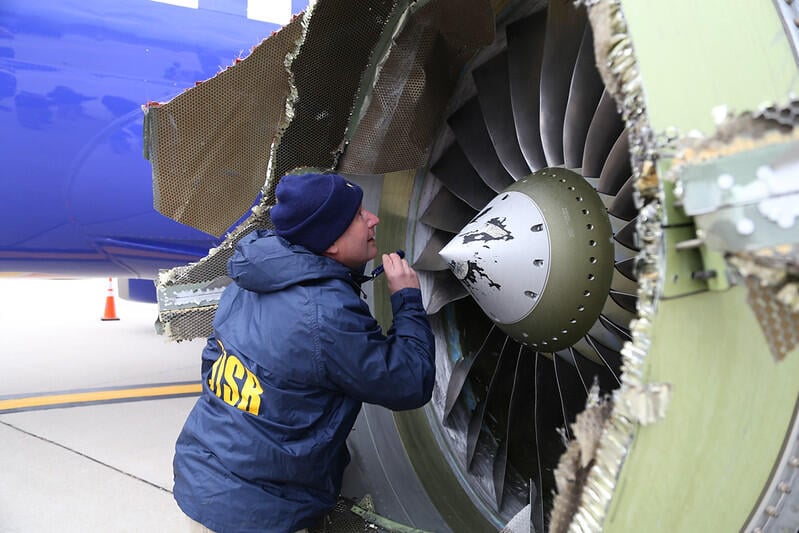
The inspection program, which introduced new, more frequent inspections of fan blade roots, came in response to the April 2018 inflight engine failure of a Southwest Airlines Boeing 737-700. The accident, which caused a passenger fatality, started when a fan blade failed along a fatigue crack.
CFM developed its program and introduced it with an April 2018 service bulletin. The bulletin has been updated several times based on lessons learned from the checks. The most recent update is the bulletin’s fifth revision.
“The FAA notice of proposed rulemaking is consistent with existing CFM recommendations to operators and reflects our proactive approach to safety management,” CFM said.
CFM’s latest inspection revisions came out days after the July 10 inflight failure of a CFM56-7B on a Malta Air 737-800. Investigators have released few details about the accident sequence, which included a broken passenger window. Unverified images shared online show the aircraft’s right engine suffered a broken fan blade.
While the Air Malta probe may ultimately link that accident to the 2018 Southwest fan-blade event and a similar one in 2016, no such connection has been made. The FAA said in the draft directive that it “has received no factual information that indicates that the [Air Malta] incident is related to the unsafe condition addressed by this proposed AD.”
CFM’s latest inspection updates were in the works before the Air Malta accident with a planned third-quarter 2026 release date, sources with knowledge of the events tell Aviation Week.
Greek officials designated the NTSB to lead the Malta Air investigation. The U.S. agency has not released any technical details about the probe.

Related Content