Fast 5: Joramco Targets Efficiency Gains As Capacity Expansion Comes Online
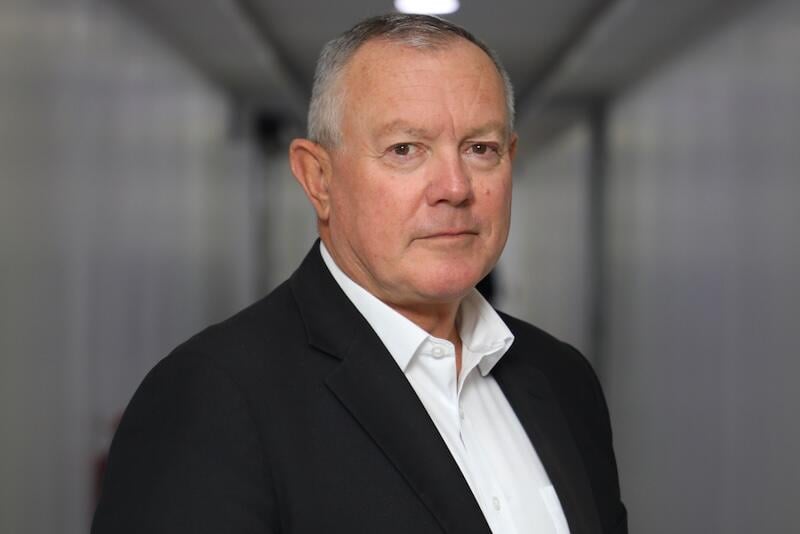
Joramco CEO Adam Voss.
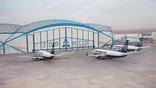
Joramco is in its first full year of expanded operations following the addition of Hangar 7 late last year. Adam Voss, CEO of the Jordanian MRO provider, discusses how it is looking to maximize capacity utilization, scaling widebody work and unlocking efficiency gains through digital transformation.
How is Joramco aligning capacity expansion with aftermarket demand dynamics?
The priority this year is to maximize the utilization of our expanded footprint. We are operating at a baseline of 22 maintenance lines, but with the right narrowbody mix we can get that to around 25 lines. The focus is very much on sweating the asset. Seasonality continues to also shape demand. The first and fourth quarters of the year are strong for MRO work, while Q2 and Q3 present the usual challenges, so we are placing greater emphasis on widebody aircraft and long-haul freighters during the summer months. That is important given the fixed-cost base associated with workforce growth and the addition of Hangar 7, which has increased capacity by around 30% since opening last year. Alongside this, we are driving a full transition to a paperless hangar environment. The objective is to complete that by the end of Q2 2026, and then stabilize operations in Q3 and begin fully capturing the efficiency benefits in Q4 and beyond.
What does the first full year post-expansion indicate about Joramco’s growth trajectory?
We are forecasting around two million man-hours this year, which equates to approximately 10% year-on-year growth. However, that figure reflects the fact that Hangar 7 was only partially operational last year. On a like-for-like basis, the underlying growth rate is closer to 30%. This is effectively the first year in which we can fully leverage the expanded infrastructure. We have also built a modest efficiency uplift into the fourth quarter as the digital transition beds in. Importantly, while workload may soften during the summer period, the overall effort will not. A significant amount of focus will be directed toward embedding new processes, improving productivity and ensuring the organization is positioned to scale efficiently.
How are strategic customer relationships evolving, particularly with high-volume operators?
Our partnership with Ryanair has developed significantly over the past year. Their presence increased from around May, and during the winter season we have been operating five nose-to-tail lines. We are supporting some of their heaviest maintenance requirements on the Boeing 737 NG fleet, including 20-year and 17-year checks, as well as structural modifications such as pickle fork work. That activity will continue through to May before the usual seasonal slowdown, with a shared expectation of a stronger return in the winter 2026/27 season. Beyond that, we are continuing to broaden our customer base. We have recently announced work with Condor and are engaging with several Tier 1 operators. We have also recently supported a Boeing 777 wing repair for British Airways, with further opportunities under discussion.
How is Joramco positioning itself in the global widebody and end-of-lease markets?
With increased widebody capacity, we are actively targeting demand beyond our traditional catchment area, particularly in the Latin America, Asia-Pacific and North America regions. That is essential to maintaining utilization during off-peak periods. From a capability perspective, we are expanding our aircraft portfolio. Airbus A330neo maintenance capability will be introduced shortly, followed by the A350, both within our Part 145 scope for base maintenance. We are also evaluating further infrastructure expansion, including the potential development of another hangar similar to Hangar 7. One concept under consideration is a hybrid maintenance and paint facility. Paint capability is strategically important, particularly in the context of end-of-lease transitions. As new-generation aircraft enter service and availability improves, we expect an acceleration in lease returns, which will drive demand for integrated maintenance and repainting solutions.
What challenges and competitive advantages are shaping Joramco’s outlook?
A key challenge remains the external perception of geopolitical risk in the region. While operationally we are stable, that perception can influence customer decision-making. At the same time, one of our core advantages is workforce sustainability. Around 95–98% of our shop floor workforce is Jordanian, supported by a well-developed training pipeline that spans technicians, licensed engineers and professional engineers. This allows us to avoid the acute labor shortages seen in other MRO markets. On the technology front, we are investing in areas such as drone-based inspection for external aircraft surfaces and leveraging artificial intelligence (AI) within our ERP systems. The primary value of AI lies in improving decision-making and factors such as optimizing manpower allocation, refining task execution and increasing overall productivity. The transition to a paperless environment is central to that strategy. While often viewed as a straightforward digital shift, we expect it to deliver more than 10–15% efficiency gains in labor productivity, with additional benefits emerging over time. Ultimately, the focus is on delivering growth with stability and predictability and maximizing output while reducing inefficiencies across a 2 million man-hour operation.

Related Content