This article is published in Aviation Week MRO part of Aviation Week Intelligence Network (AWIN), and is complimentary through Jun 27, 2026. For information on becoming an AWIN Member to access more content like this, click here.
Eurowings’ participation in the International Airline Technical Pool (IATP) is shaping up as a targeted extension of its maintenance setup, rather than a major change in its core support strategy, as airlines continue to seek faster outstation recovery options amid ongoing supply chain challenges.
Eurowings joined IATP in October 2025 and has started contributing selected components. The move is less about changing its core support setup and more about extending existing maintenance capabilities where needed, particularly as it grows beyond its traditional European network while still leaning heavily on group systems beyond its maintenance support structures.
Manuel Sbaschus, team lead for contract management at Eurowings, says the decision was driven by network exposure beyond established maintenance support structures. “We have been mainly operating in Europe, our core area. As we started extending our network into the Middle East, we realized we had very limited existing operational connections there from our previous setup,” he said.
The airline has since clarified that its Middle East flying is now seasonal and under review in parts of the network, with winter operations into destinations including Dubai, Abu Dhabi, Jeddah, Erbil and Amman, reinforcing a broader need for flexible rather than fixed maintenance support solutions. However, due to the volatile situation in the Middle East and the resulting severe restrictions on air travel, Eurowings—like many other airlines—has currently suspended its flights to the region.
Within IATP, Eurowings has initially focused on contributing wheels from its Düsseldorf station, with plans to potentially expand participation to other bases such as Hamburg and Berlin. The approach reflects a selective pooling strategy aimed at high-impact components that can quickly ground aircraft if unavailable.
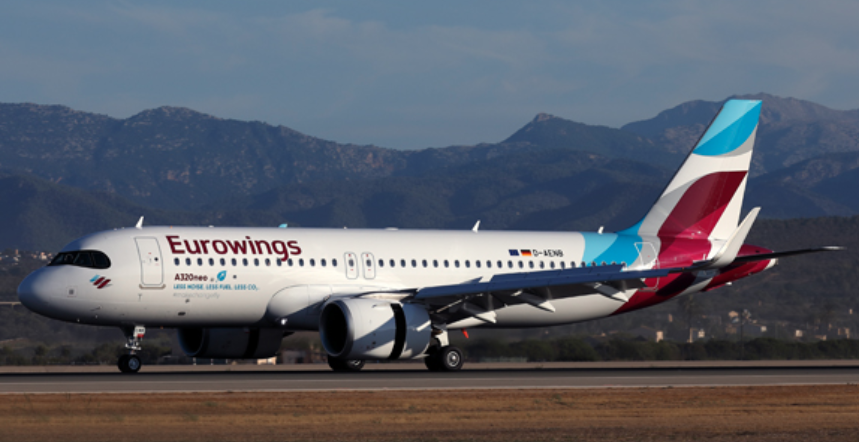
André Fiedler, team lead material strategist at Eurowings, adds that pooling is being used alongside existing procurement structures rather than replacing them. Eurowings continues to rely on PBH-style agreements for most component categories, particularly given the efficiencies achieved through operating a largely A320 family fleet. However, pooling is being used in situations where having quick access to spare parts away from the airline’s main bases can significantly lower the chances of delays or disruptions.
Fiedler reports that Eurowings is already seeing early benefits from IATP participation, particularly in knowledge sharing across operators. “There are operators with similar fleets where we could exchange experiences in depth. Others had experience at stations where we don’t share the same fleet—they couldn’t directly support us, but they knew the right contacts. So, it becomes a kind of give-and-take,” he said.
Looking ahead, Fiedler said the priority will be components that can ground an aircraft if they fail. These vary by aircraft type, but examples include items such as oxygen bottles and engine starters, these are traditionally more common on widebodies, but increasingly relevant for narrowbodies as well. He adds that the focus should remain on AOG-critical parts that directly prevent an aircraft from returning to service.
IATP leadership has also highlighted the broader industry context in which the platform is operating. Chief Executive Giorgio Pietra and Chairperson Essam Hanafy have noted the geopolitical instability and shifting operational environments that continue to disrupt aviation flows, while global traffic has now exceeded pre-pandemic levels. Against this backdrop, the association has emphasized that collaborative technical networks are becoming increasingly important in maintaining fleet reliability.