
This article is published in Aviation Week & Space Technology and is free to read until Nov 22, 2026. If you want to read more articles from this publication, please click the link to subscribe.
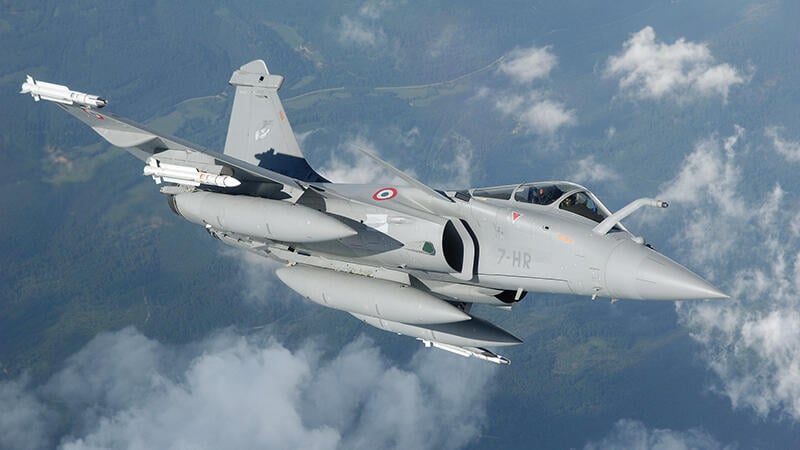
France wants its ACF combat aircraft to lean on technologies developed for the Rafale and the failed FCAS initiative.
The three countries behind Europe’s fractured Future Combat Air System are beginning to chart different paths toward their next-generation combat aircraft, reshaping the continent’s fighter development landscape.
- France is drafting plans to develop solo combat aircraft
- The UK is open to Germany joining GCAP, but Italy and Japan would need to approve the move, too
France is laying the groundwork for a national fighter program, echoing its decision four decades ago to leave the Eurofighter project and develop the Dassault Rafale independently. Germany is mulling joining Italy, Japan and the UK in the Global Combat Air Program (GCAP). Spain, having aligned itself closely with Berlin, could face a different set of choices following elections scheduled for late November.
The Spanish Air and Space Force has launched its Astra initiative to explore a future combat aircraft with national industry (AW&ST Aug. 10-30, p. 33). But a change of government in Madrid could prompt a rethink. Current plans foresee reliance solely on the Eurofighter until a replacement emerges, but the air force does not want to be dependent on a single platform.
One option could be to reexamine a potential Lockheed Martin F-35 buy—dismissed by the current administration—to replace Spain’s McDonnell Douglas F/A-18 Hornets. That would buy the country time to weigh its longer-term options.
Development of the next-generation fighter pillar of the Future Combat Air System (FCAS) ceased in June after France and Germany failed to resolve longstanding industrial disagreements between Dassault and Airbus over leadership and control of the aircraft’s development.
Paris has not ruled out international partnerships for its new effort, but after eight years of cooperation failed to produce a path forward for the fighter, the country is unwilling to make the success of its next aircraft dependent on foreign partners.
France’s proposed Future Combat Aircraft—referred to in French as the ACF—would build on technologies being developed for the Rafale F5 upgrade, French Air and Space Force Chief of Staff Gen. Jérôme Bellanger said on Oct. 14. Speaking before the National Assembly’s Defense and Armed Forces Committee, he stated that the aircraft would need to perform conventional missions in the 2040s before taking over the airborne component of France’s nuclear deterrent in 2050.
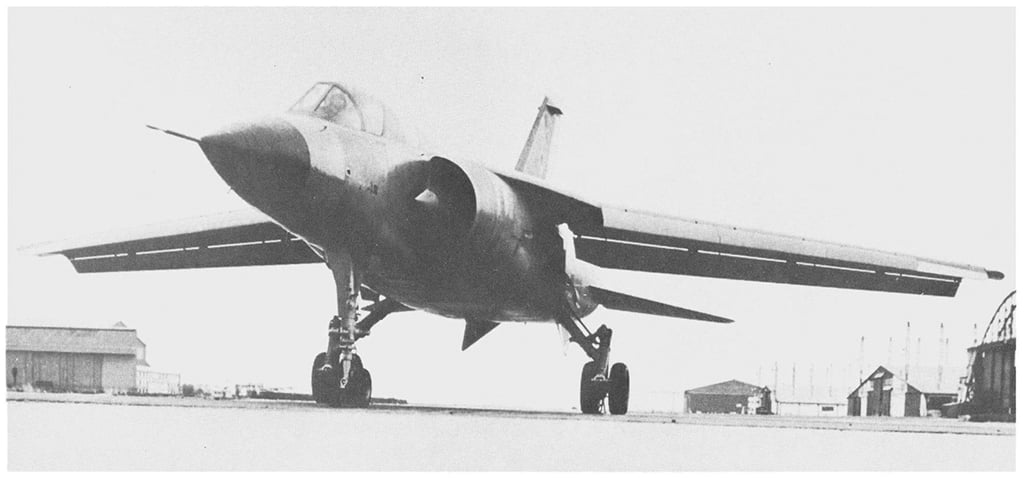
The Rafale F5 would provide the “initial building blocks of this future aircraft,” Bellanger said, with advances in propulsion, sensors and onboard systems potentially carrying forward into the new design.
Bellanger did not say whether the ACF would need to operate from aircraft carriers, although that had been envisaged for the FCAS Next-Generation Fighter.
He emphasized that eight years of cooperation with Germany and Spain had not been wasted. Industry had made “real progress” across the FCAS’ other development pillars, including on uncrewed aircraft and low-observable technologies, he said.
Bellanger also advocated for continued cooperation with Germany on combat-cloud networks to connect crewed combat aircraft with supporting platforms, uncrewed systems and effectors. Such cooperation would be essential for interoperability, he said, allowing allied air forces to fight “together” rather than “merely side by side.”
The ACF has yet to receive formal development funding. However, French Armed Forces Minister Catherine Vautrin told lawmakers on Oct. 8 that work had been commissioned to establish the “critical path” toward developing a national combat aircraft.
Dassault Aviation CEO Éric Trappier said in July that his company had begun discussions with the French government on a post-FCAS fighter program and was planning a demonstrator for the early 2030s.
The national approach would leave France reliant on the Rafale well into the 2040s. By then, many European air forces will be operating fifth-generation fighters, and some might be preparing to introduce sixth-generation aircraft.
France hopes to bridge that gap through the Rafale F5 upgrade and uncrewed adjuncts, including a combat air vehicle for deep-strike missions and autonomous collaborative combat aircraft (CCA). Paris has announced plans to test a CCA alongside a Rafale or Mirage fighter in 2028 under its HypAIRion initiative.
While France is still defining its path forward, GCAP is moving through the early stages of aircraft development, which could complicate entry of new partners such as Germany. Although UK Prime Minister Andy Burnham has expressed openness to Berlin joining the program, that would also require agreement from Italy and Japan.
Marco Zoff, CEO of GCAP industrial prime contractor Edgewing, has warned that the existing partners might need to make “trade-offs” if additional nations join the program. Officials from the GCAP Agency, which represents the three founding governments, have also suggested that new partners should not expect the same influence on the program’s direction as the original members.
GCAP is developing a next-generation fighter to replace the Eurofighter Typhoons operated by Italy and the UK as well as the Mitsubishi F-2s flown by Japan.
Edgewing, the industrial joint venture of BAE Systems, Leonardo and Japan Aircraft Industrial Enhancement Co., opened the first of three planned international engineering sites in Turin, Italy, on Oct. 9. Engineers from Italy, Japan and the UK will work there on systems and subsystems for the new aircraft.
The company’s UK headquarters has been operating in Reading, England, since last year. A second engineering site is expected to open in Nagoya, Japan, in early 2027, followed by a third in Warton, England, later that year.
All three locations have long-standing associations with national combat aircraft development and production. They could eventually play roles in manufacturing, although decisions on aircraft final assembly and flight testing have yet to be made.
Edgewing is working to finalize the aircraft’s conceptual design, including its external configuration. The upcoming system requirements review will assess whether the proposed design and system requirements meet the three nations’ needs before moving toward detailed design. Current plans call for the GCAP aircraft to make its first flight in the early 2030s, Zoff said.
Despite the potential complications of expanding the partnership, Edgewing and the GCAP Agency remain confident that the program’s demanding timetable can be maintained.
The GCAP Agency said it has begun a “dialog” with Canada, which became an observer to the program this summer. Observer status allows Canadian officials to gain a closer understanding of GCAP as Ottawa considers potential participation or procurement.
The implications of admitting another partner depend on the extent of that partner’s desired involvement and the willingness of existing members to revisit industrial arrangements and possibly the trilateral treaty underpinning GCAP.
Airbus has said it is open to cooperation, but not at any cost, stressing that any partnership would have to come with meaningful workshare.
Although Germany’s potential entry has raised concerns about delays, Zoff insisted that protecting GCAP’s schedule remains a “priority for everyone.”
“No one of the three countries—and believe me, I say no one—is allowing for scheduling to shift to the right,” he said.
Leonardo CEO Lorenzo Mariani tells Aviation Week that German participation would be welcome and “industrially beneficial” in the long term but could be “disruptive” in the short term.

Related Content


Comments
Germany and Spain should consider joining the KF-21 program, which has just entered service, although supporting external stores only. The Europeans might license-build the airframe, and use European engines, radar, avionics, and weapons. Then collaborate with South Korea on the internal weapons bays, to assure they are well suited for weapons chosen by Germany and Spain.
The KF-21 is more than 7 years ahead of the GCAP and ACF.