This article is published in Aerospace Daily & Defense Report part of Aviation Week Intelligence Network (AWIN), and is complimentary through Oct 15, 2026. For information on becoming an AWIN Member to access more content like this, click here.
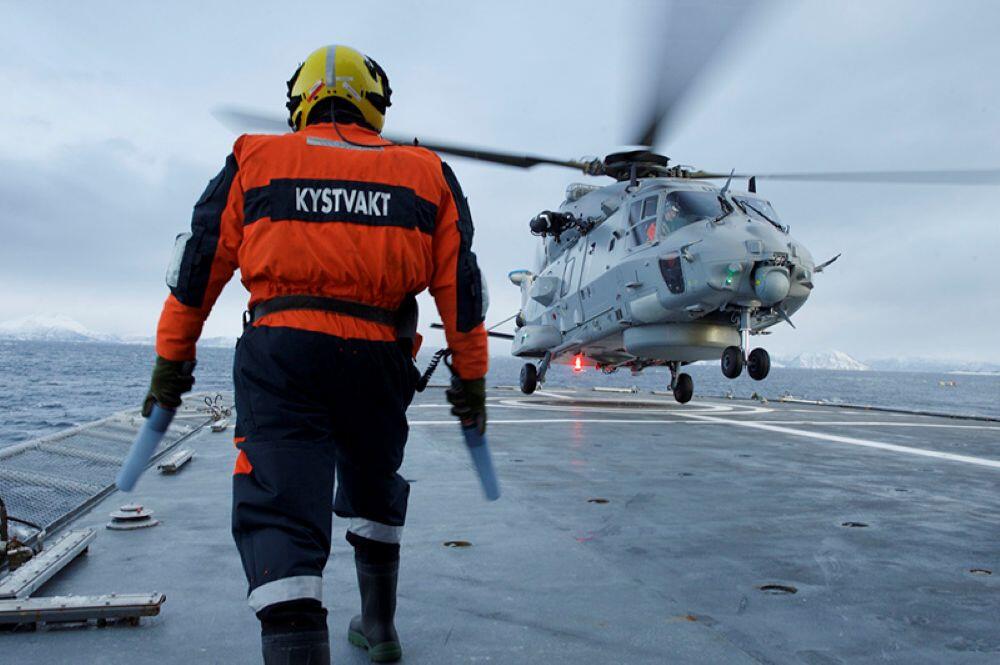
NH90
MARSEILLE, France–NHIndustries has begun marketing the 14 NH90 naval helicopters previously operated by Norway, hoping to find new customers for the low-hour aircraft.
The Airbus Helicopters, Leonardo and Fokker joint venture acquired the 14 NATO Frigate Helicopter (NFH) variants as part of a settlement that also saw it pay the Norwegian government €375 million ($420.2 million). The agreement resolved a dispute stemming from Oslo’s decision to ground its NH90 fleet and cancel its contract with NHIndustries, citing years of frustration over poor availability, slow upgrades and high operating costs.
NHIndustries is now seeking new operators for the aircraft, company President Axel Aloccio told journalists ahead of Airbus Helicopters’ MDays event here on Oct. 8-9.
“They will make a very good deal, because they are almost brand new,” Aloccio said.
The former Norwegian helicopters, which are similar in configuration to France’s NH90 NFHs, have flown an average of just 500 hr. NHIndustries is seeking approval to extend the NH90 airframe’s service life from 30 to 50 years, equivalent to 20,000 flight hours. On that basis, the Norwegian aircraft have potentially used only around one-fortieth of their potential flying-hour life.
Aloccio said NHIndustries already has a “vast number of prospects and leads” for the aircraft.
Currently in storage in Norway, the helicopters would likely require only minor modifications for a new operator and could be delivered within months, compared with the two to three years required for new-build aircraft.
With military helicopter demand increasing amid global insecurity, the opportunity to acquire a relatively young fleet on short notice could prove attractive.
Media reports have suggested offers have already been made to Malaysia.
“We are hopeful we will sell them to one or two customers,” Aloccio added.
If the helicopters are acquired by a new NH90 operator, Aloccio said he would recommend a comprehensive support package for the first five years of service. This would allow the customer to build experience with the maintenance and logistical requirements of the complex rotorcraft.
Similar arrangements have proved successful in Qatar, the NH90’s newest customer, he said.
“As years go by, they can grow up their internal capabilities ... find a local partner and become more independent in their support,” Aloccio said.
Norway is not the only country to have abandoned NH90 operations over availability and operating-cost concerns. Australia retired its fleet in favor of Sikorsky UH-60M Black Hawks, and Belgium has halted operations with its Tactical Transport Helicopter (TTH) variants because of high operating costs.
Belgium continues to operate its NFH variants, however, and plans to equip them with anti-submarine warfare (ASW) mission kits, expanding their role beyond search and rescue.
NHIndustries acknowledges that spare parts supply has fallen short of expectations, affecting aircraft availability. But Aloccio also argued that some customer nations had not adequately resourced or staffed their NH90 maintenance operations. Other operators, he said, are successfully flying the aircraft and increasing their annual flight hours.
Aloccio noted that Australia remained the NH90 operator with the highest cumulative flight hours, even two years after retiring its fleet.
NHIndustries subsequently acquired the Australian helicopters and dismantled them for spare parts and components, bolstering its spares inventory and supporting the development of a parts exchange program.
Norway’s spare parts stockpile, also acquired under the settlement, is being incorporated into those initiatives.
Despite the difficulties experienced by some operators, Aloccio said interest in the NH90 remains strong, with NHIndustries pursuing sales campaigns in the Middle East and Asia. Demand for the NFH variant is particularly strong because of its ASW capabilities, he added.
Meanwhile, NHIndustries is advancing testing of the Block 1, or Software Release 3, upgrade, which is expected to be incorporated into around 200 NH90s.
A more extensive Block 2 midlife upgrade is also being defined, with NH90 operating nations having submitted their requirements for capabilities they want incorporated into the aircraft for operations in the 2030s and beyond.
A two-year architecture study, contracted to NHIndustries in April by the NATO Helicopter Management Agency (NAHEMA), will examine how those upgrades could be delivered.
Aloccio said NHIndustries is likely to present minimum, medium and maximum upgrade options. The minimum package would introduce fewer new capabilities but could be implemented more quickly and cheaply, while the maximum option would involve more extensive modifications, greater expense and longer implementation times.
Potential improvements include more modular, open architecture avionics and mission system, as well as performance enhancements through modifications to the engines, gearbox and drivetrain.
A data-driven maintenance system incorporating predictive maintenance tools is also under consideration, potentially reducing the aircraft’s maintenance burden.
Finding new homes for Norway’s lightly used NH90s could now become a test of how far NHIndustries has come in addressing the problems that led Oslo to abandon them.

Related Content